Welcome to WordPress. This is your first post. Edit or delete it, then start writing!
Author: admin
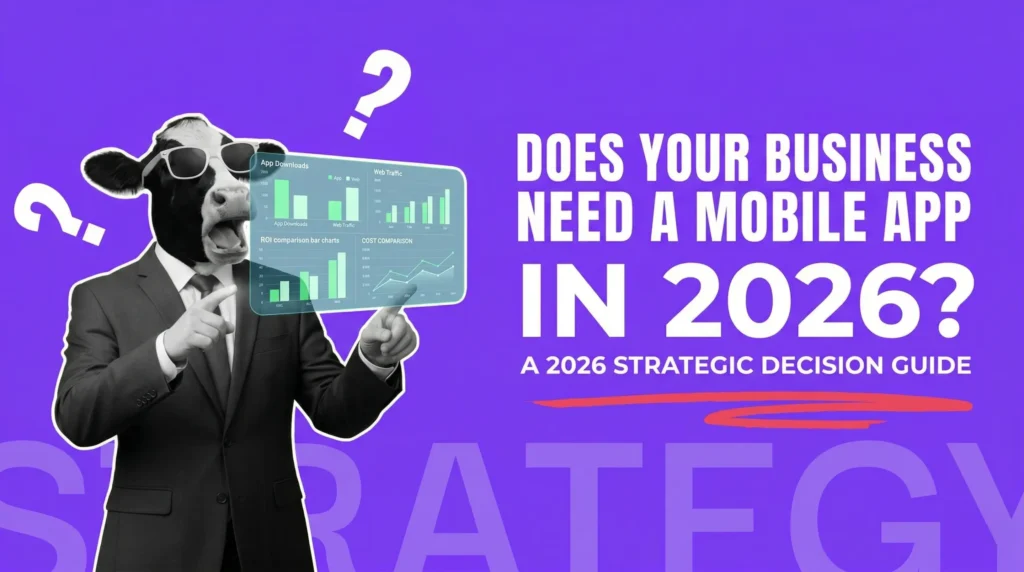
Does Your Business Actually Need a Mobile App in 2026? A Strategic Decision Guide
The New Digital Ecosystem: Why the 2026 Decision is More Complex
In the early days of smartphones, simply having an app was a competitive differentiator. Today, the digital ecosystem is heavily saturated, and consumer expectations are at an all-time high. A successful app must offer undeniable value that a standard web browser cannot provide. Recently, Fatcow Digital proudly participated in a global survey by TechBehemoths alongside 2,300+ IT firms to uncover exactly how businesses are approaching this choice today.Evolving User Behavior: The Demand for Speed and Personalization
Modern consumers have zero tolerance for friction. If a digital experience takes more than a few seconds to load, users will abandon it. In 2026, users demand hyper-personalized experiences tailored to their exact preferences, location, and past behavior. Apps excel in this area by tapping directly into native device data to curate bespoke user journeys.The Impact of 5G, AI, and AR Integration on Mobile Experiences
The widespread adoption of 5G networks has eliminated many of the traditional bandwidth constraints, allowing for heavier, more complex mobile applications. Artificial Intelligence (AI) is no longer a buzzword; it is a baseline expectation for predictive search and automated customer support. Furthermore, Augmented Reality (AR) is reshaping retail and real estate. If your business model relies on leveraging these cutting-edge integrations, a native mobile app is often the only viable platform.Mobile App vs. Mobile Website vs. PWA: A 2026 Feature Breakdown
Before committing to a native app build, it is crucial to understand the alternatives. The lines between web and app technologies continue to blur, making the strategic choice more nuanced than ever.| Feature | Native Mobile App | Mobile Website | Progressive Web App (PWA) |
|---|---|---|---|
| Performance Speed | Lightning fast; optimized for specific OS | Moderate; dependent on browser & network | Fast; leverages advanced caching |
| Offline Capabilities | High; can function without internet | None; requires active connection | Moderate; works offline with cached data |
| Time-to-Market | Slow (3-9 months) | Fast (1-3 months) | Fast to Moderate (2-4 months) |
| Development Cost | High ($30k – $150k+) | Low to Moderate ($5k – $25k) | Moderate ($15k – $40k) |
| Discoverability | App Stores (High friction to download) | Search Engines (SEO) | Search Engines (Installable via browser) |
Performance, Speed, and Offline Functionality Superiority
Native mobile apps are built specifically for iOS or Android, allowing them to fully utilize device hardware. This results in superior performance, fluid animations, and the critical ability to function perfectly even when the user is offline.Development Cost and Time-to-Market Comparison
Building a high-quality app requires a substantial upfront budget and a longer development cycle. Conversely, a professional web design and development project for a mobile-optimized site is significantly cheaper to launch and update, offering an immediate time-to-market.Accessibility and Distribution: App Store Hurdles vs. Browser Reach
A mobile website is universally accessible to anyone with a browser. There is zero friction to entry. A mobile app requires a user to navigate to an App Store, download the file, and grant permissions—one of the highest hurdles in digital marketing today.Progressive Web Apps (PWAs): The Ideal Middle Ground
For businesses that want app-like features without the massive budget, PWAs are the ultimate 2026 compromise. Built with standard web technologies, they can be saved to a home screen, send push notifications, and operate offline, bypassing the App Store entirely.Clear Indicators Your Business Demands a Dedicated Mobile App
Not every company needs an app, but for those that do, it is a game-changer. Here are the precise scenarios where investing in a native application is the most strategic choice you can make.Achieving High Customer Engagement and Retention via Push Notifications
If your business relies on repeat purchases or daily engagement, an app provides a direct line to your customer’s pocket. Push notifications, when used strategically, boast opening rates exponentially higher than traditional email marketing, driving unparalleled customer retention.Necessity for Native Device Features (GPS, Camera, Biometrics)
Does your service require real-time location tracking, barcode scanning, or biometric security (FaceID/Fingerprint) for rapid logins? Mobile browsers have limitations accessing these hardware features. A native app integrates seamlessly with device hardware, making it essential for functional utility.Leveraging First-Party Data for Deep Personalization
In a cookieless world, first-party data is gold. Executing a data-driven marketing strategy is infinitely easier when mobile apps allow you to collect rich behavioral data based on how users interact within your ecosystem. This data powers deep personalization, allowing you to serve hyper-relevant content.Signs and Scenarios Where App Development is a Wasted Investment
Conversely, building an app just to “have an app” is a fast track to burned capital. Watch out for these red flags before you greenlight a development project.Budget Constraints and the High Cost of Ongoing Maintenance
If your budget barely covers the initial build, stop immediately. A mobile app is not a “set it and forget it” product. Server costs, third-party API fees, security patches, and OS update compatibilities mean that long-term maintenance will cost 15% to 20% of your initial development budget annually.Low Frequency of Customer Interaction and Use
If your customers only buy from you once a year, they will not waste precious storage space on their phones for your app. A robust web presence backed by strong local SEO strategies will serve this customer base much better.The High Barrier to App Download and User Adoption
Convincing a user to download an app requires aggressive marketing and undeniable incentives. If you do not have a marketing budget specifically dedicated to user acquisition and adoption (such as Google App Campaigns), your app will languish unseen in the App Store.Analyzing the True Cost and ROI of Mobile Apps
To make a solid business case for a mobile app in 2026, you must look beyond the initial invoice and project the long-term financial impact.
Calculating Initial Development vs. Long-Term Operational Expenses
Initial development is only the tip of the iceberg. True Total Cost of Ownership (TCO) includes continuous updates, marketing for user acquisition, backend server hosting, and customer support. Decision-makers must map out a 3-to-5 year financial plan.Measuring Value: Increased Sales, Operational Efficiency, and CLV
App ROI isn’t just about direct sales. It is measured in operational efficiency and Customer Lifetime Value (CLV). App users are generally a brand’s most loyal demographic; increasing their CLV through an app can offset high acquisition costs.Addressing Critical Overlooked Strategic Challenges
Beyond code and design, modern app development introduces complex business challenges that are frequently overlooked during the planning phase.Navigating App Store Compliance and Data Privacy
In 2026, global data protection laws (GDPR, CCPA) are stricter than ever. Your app must have airtight data collection policies. Furthermore, Apple and Google have stringent App Store verification, payment processing rules, and privacy manifest requirements.Operational Strategy: Choosing Between In-House vs. Outsourced Maintenance
Who fixes the app when an iOS update breaks it? Hiring a full-time, in-house mobile development team offers total control but comes with high salary costs. Outsourcing to an agency provides specialized talent and flexibility, but requires tight SLAs to ensure rapid response times.Environmental and Digital Sustainability (ESG)
Corporate ESG (Environmental, Social, and Governance) goals now extend to digital products. Native apps require vast server infrastructure for data syncing, frequent heavy downloads for updates, and continuous background processing, all of which contribute to a higher carbon footprint.Final Decision Framework for 2026 Success
Deciding to build a mobile app in 2026 is a commitment to a new digital product lifecycle. If your business thrives on daily engagement, requires deep hardware integration, and possesses the budget for aggressive ongoing maintenance, a native app will yield massive ROI. If your interactions are infrequent, or your budget is tight, an optimized Mobile Website or PWA is the superior strategic choice. To dive deeper into the raw data shaping these trends, we highly encourage you to read the full Does Your Business Need a Mobile App in 2026? survey results published by TechBehemoths. Need help determining the best digital path forward? Book a free consultation with Fatcow Digital today, and let’s assess your 2026 technology strategy.Frequently Asked Questions (FAQs)
Is a mobile app still essential for small businesses in 2026?
Not every small business needs an app; the decision depends on whether the business requires high-frequency customer interaction, deep personalization, or use of native device features like GPS and push notifications. A well-optimized mobile website or a Progressive Web App (PWA) might be sufficient for low-frequency interactions.What is the main difference between a mobile app and a mobile website in terms of user experience?
Mobile apps offer faster performance, often work offline, and allow for deeper personalization, creating a smoother, more reliable user experience. Mobile websites are instantly accessible across any browser or device without installation, reducing the barrier to entry for casual users.How much does it cost to build and maintain a custom mobile app?
Initial custom app development can cost tens of thousands of dollars, ranging significantly based on complexity. However, the high cost of long-term maintenance, which includes fixing bugs, ensuring compatibility with new OS updates, and meeting app store compliance, is often a more significant ongoing expense.What key technology trends are shaping mobile apps in 2026?
Key trends include leveraging AI and machine learning for hyper-personalization, integrating AR/VR for immersive user experiences, optimizing for 5G connectivity, and increased adoption of cross-platform development frameworks.How do mobile apps improve customer retention and loyalty?
Apps are powerful retention tools because they enable cost-effective direct communication via personalized push notifications and in-app messaging, simplify loyalty and reward programs, and keep the brand constantly visible on the user’s screen.What is a Progressive Web App (PWA), and is it a good alternative to a native app?
PWAs are websites built using modern standards that offer app-like capabilities, such as offline functionality and home screen installation, directly through a browser. They are often ideal for businesses seeking rapid deployment, wider reach, and a lower development budget than native apps.When should a business prioritize a mobile app over a standard mobile website?
A business should prioritize an app if its core offering involves repeat engagement, requires real-time tracking (e.g., logistics), needs secure, one-click transactions (e.g., fintech), or if device-specific features are critical to the service.Google Ads Basics in 2026: The Fundamentals, Without the Headache
If you open Google Ads for the first time, you’ll probably feel one thing: “This is a lot.”
The dashboard looks like a cockpit. Buttons everywhere. Charts everywhere. Too many settings you’re scared to touch.
But here’s the good news: Google Ads is not “hard.” It’s just layered. And once you understand the fundamentals, everything becomes simpler.
If you prefer watching this explained in Arabic (instead of reading), you can watch the video below.
1) Google Ads account structure (the foundation)
Before keywords, bidding, and optimization, you need to understand how a Google Ads account is organized.
Google Ads has a strict hierarchy:
Account level
This is the business level.
Anything you configure at the account level can influence everything underneath it. Examples:
Billing and payments
Access and permissions (who can manage the account)
Linked accounts (like Google Analytics, Merchant Center, and other integrations)
Shared assets (depending on setup), things you reuse across campaigns
Think of it like the “company settings” layer.
Campaign level
Inside the account, you build campaigns.
This is where you choose your objective (leads, sales, etc.) but more importantly, this is where you set your budget.
That matters because budget is fuel, and campaigns need data to learn. In 2026, we’re in the age of less is more.
When you split your account into too many campaigns, you fragment your data and slow down learning. Whenever it makes sense, consolidate so the system can collect conversion data faster inside one place.
Ad group level
Inside each campaign, you have ad groups.
An ad group is basically a “theme bucket.” It contains:
Your keywords (grouped by intent/theme)
Your ads (headlines, descriptions, and assets)
What are “assets” in simple terms?
Assets are the building blocks Google uses to assemble your ads. In Search, this is typically things like your headlines and descriptions, plus extensions like sitelinks, callouts, structured snippets, and more.
The point is: you’re not writing one static ad anymore. You’re giving Google components to test and mix in different auctions.
Example of keywords grouped by theme
Let’s say you’re a dental clinic.
You don’t want one ad group with everything mixed together.
A clean structure would look like:
Ad group 1: “Teeth whitening” keywords (whitening, whitening dentist, teeth whitening near me)
Ad group 2: “Dental implants” keywords (implants, dental implant cost, implants clinic)
Ad group 3: “Emergency dentist” keywords (emergency dentist, tooth pain urgent)
Each theme gets its own messaging, its own landing page, and clearer relevance. Relevance is the name of the game in Google Ads fundamentals.
2) The Google Ads auction (it’s not “who pays more”)
A lot of people misunderstand how Google Ads works. They assume it’s a normal auction.
In a normal auction, whoever has the biggest wallet wins.
In Google Ads, the highest bidder does not always get the top spot.
Google uses Ad Rank to decide:
whether your ad shows
where it shows
and how competitive you are in that specific auction
Google explains that Ad Rank uses your bid and auction-time quality signals (like expected clickthrough rate, ad relevance, and landing page experience), and it’s recalculated for every search and every position.
Quality Score, and why it’s core to Search fundamentals
Quality Score is one of the most important concepts in Google Ads fundamentals, especially in Search.
Why?
Because it’s Google’s way of summarizing how relevant and useful your keyword + ad + landing page experience are likely to be.
You can think of it like this:
If your ad is a perfect match to what the person is searching for, Google rewards you
Better relevance usually means better efficiency (better positions at a lower cost)
So yes, sometimes a smaller advertiser can beat a bigger one, not because they spent more, but because they built a better experience.
3) Where Google Ads can appear
When people say “Google Ads,” they usually mean Search ads.
Search is still the main battlefield. But placements are not what they used to be. There’s more competition, and often fewer obvious slots on the page, depending on the query.
That said, if your structure and relevance are strong, you’ll be fine.
Beyond Search results, Google Ads can also show on:
YouTube
Gmail
Display Network (websites and apps)
Shopping placements for ecommerce
You choose where you show based on your campaign type and settings.
4) Targeting (what you control)
To reach the right people, you can target using signals like:
Location (country, city, radius)
Demographics (age, gender), when it’s relevant to your offer
Yes, you can segment by device (mobile vs desktop). But unless you have a strong, proven reason backed by data, keep it simple and don’t over-segment.
The more you fragment your campaigns, the slower your learning becomes.
5) Keyword match types (why “Exact” isn’t exact anymore)
This is where most Google Ads for beginners get confused.
Google has three main match types:
Exact match
Phrase match
Broad match
At first glance, they look simple. But the way they actually behave today is different from how many people think they work.
The important shift
Over time, Google has leaned much more into meaning and intent, not just literal wording.
That’s why an “exact match” keyword can trigger ads for searches that aren’t typed word-for-word the same way as long as Google determines the intent behind the search is similar.
In other words, Google is optimizing for what the user means, not just what they typed.
You’ll also notice that Google often recommends using Broad Match together with Smart Bidding. And in the right accounts, with strong data and proper tracking, that combination can perform very well.
But here’s the key takeaway:
Just because Google recommends something doesn’t mean it’s automatically correct for your account.
There are no hacks.
No magic match type.
No universal “secret structure.”
This shift toward automation and machine learning isn’t unique to Google either. We’re seeing the same consolidation trend across platforms. For example, Meta pushed heavily into algorithm-driven optimization with its Andromeda update a move toward giving the system more control and relying on stronger data signals.
The pattern is clear: platforms are evolving toward automation, intent-based matching, and consolidation.
Which means your competitive advantage isn’t a trick.
You win by understanding the fundamentals:
Your account structure
How the auction works
Your relevance
Your landing page experience
And your conversion signals
When those are strong, match types become a strategic lever not a gamble.
Final note
If you’re starting out, don’t try to master every feature.
Master the fundamentals first.
Because there is no hack.
There is no secret setting.
There is no one campaign structure that magically works forever.
Platforms evolve.
Automation increases.
Competition gets tighter.
But if you understand how Google Ads actually works the structure, the auction, the relevance, the intent you’ll stay competitive long-term, even as the platform changes.
Fundamentals don’t expire.
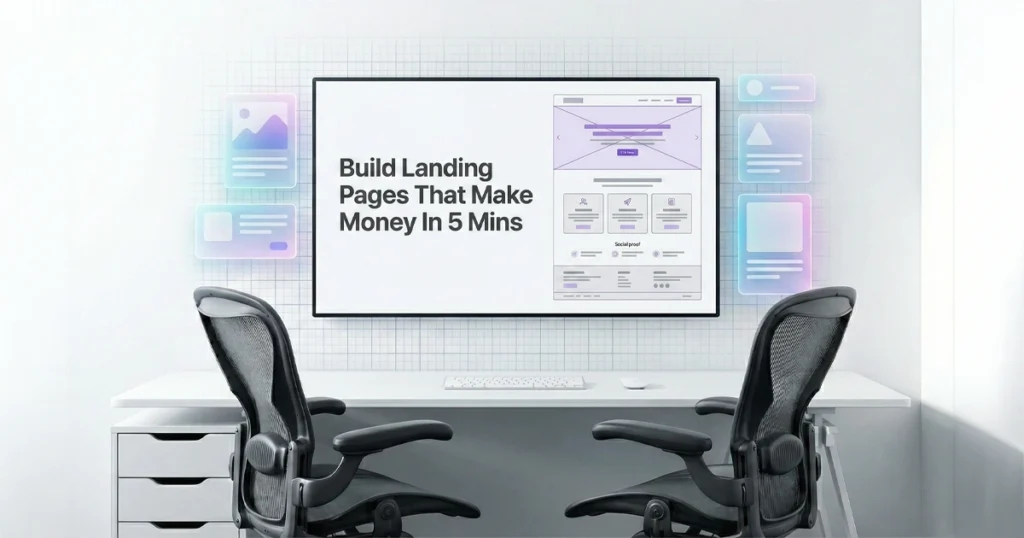
10 Prompts That Turn Any Landing Page Into a Sales Machine
Why Do Landing Pages Fail?
Most landing pages don’t fail because the offer is bad.
They fail because the page is confusing.
And confused people do not buy.
If you can make a page feel obvious, you can make money every month. Even with small ad budgets.
What To Expect From Those Prompts
This blog gives you 10 proven prompts you can paste into ChatGPT, Gemini, or any landing page builder to generate a landing page that converts.
No fluff. No “branding talk”. Just prompts that create:
A strong hero section that makes people stay
A pain section that makes people feel understood
Benefits that actually sell
Proof that removes doubt
A close that makes action feel easy
Why these prompts work
Each prompt is built on real conversion psychology:
Start with emotion and desire or pain
Back it up with logic and proof
Add urgency so people stop procrastinating
And they’re designed to stay simple:
Mobile-first layout
Short sentences
One main action
No mental effort to understand the offer
How to use in 60 seconds (simple steps)
The 10 Prompts
One quick note: you don’t need to use all 10.
Pick one that matches your offer, generate the page, then ship it.
*The below prompts will help you add in your own information. Please be specific when it comes to CTA and adding links so you do not end up with broken links or buttons that lead nowhere.
If you feel you simply do not know which one to choose, we added a master prompt at the bottom of the page that would work on any page you want to create. Simply add your info
Prompt 1: Local Service, Pain and Agitation
Open prompt
Swap the brackets, paste into ChatGPT, Gemini, or your builder.
Use AIDA, Fitts's Law, and Cognitive Load Theory. Write a high-converting landing page that is simple, skimmable, and mobile-first. Write in 8th grade English. No buzzwords. One final version only. Include image ideas. Business: [BUSINESS_NAME] provides [SERVICE] in [LOCATION]. Ideal customer is [TARGET_AUDIENCE]. Main pain is [MAIN_PAIN_POINT]. Desired outcome is [DESIRED_RESULT]. Proof: [REVIEWS_OR_YEARS_OR_RESULTS]. Offer: [OFFER]. Primary CTA: [CTA_ACTION]. Secondary CTA: [SECONDARY_CTA]. Structure and rules: 1) Hero: outcome headline, clear subheadline, 1 primary button (first person: "I want to..."), trust line, hero image showing the happy outcome. 2) Problem: "kick the bruised knee" headline + 5 bullets in the customer's language (frustrations, what they tried, what it costs them). 3) Solution + authority: empathy line, how you solve it, calm proof line. 4) Benefits: 3 benefits only, each payoff + short "because..." tied to a feature. 5) Social proof: write 3 real-sounding testimonials (Before → What changed → Result). 6) Plan: 3 steps to get help. 7) Comparison: You vs typical option (5 rows max). 8) Urgency: believable reason to act now using [URGENCY_REASON]. 9) FAQ: 5 FAQs (price, timing, trust, what happens next, service area). 10) Final CTA: repeat CTA + risk reversal [GUARANTEE_OR_POLICY]. Return clean copy with section headers, CTA button text, and image ideas.
Prompt 2: Professional Service, Trust and Authority
Open prompt
Great for lawyers, accountants, consultants, agencies, B2B services.
Use AIDA, Fitts's Law, and Cognitive Load Theory. Write a high-converting landing page that builds trust fast. Simple, skimmable, mobile-first. 8th grade English. One final version. Include image ideas. Business: [BUSINESS_NAME] offers [SERVICE]. Audience: [TARGET_AUDIENCE]. Main problem: [MAIN_PAIN_POINT]. Outcome: [DESIRED_RESULT]. Credibility: [CERTIFICATIONS_LICENSES_YEARS], [CLIENT_TYPES], [NOTABLE_WINS]. Offer: [OFFER]. CTA: [CTA_ACTION]. Structure: 1) Hero: outcome headline + who it's for + what you do, CTA button in first person, trust line with specific proof, image idea showing calm confidence. 2) Problem: headline + 4 bullets showing risk, confusion, and cost of delaying. 3) Solution: how the service works in plain steps, include what you check, what you deliver. 4) Benefits: 3 benefits tied to risk reduction and time saved. 5) Social proof: 3 testimonials written as "Comparable" clients (same role, same struggle, same result). 6) Plan: 3-step process to get started. 7) Comparison: You vs "DIY / cheap provider / wait and see" (5 rows max). 8) Urgency: believable reason to act now (capacity, deadlines, limited consult slots). 9) FAQ: 5 objections with reassuring answers. 10) Final CTA: repeat CTA + clear next steps + risk reversal [GUARANTEE_OR_POLICY]. Return copy with section headers, CTA text, and image ideas.
Prompt 3: Health and Beauty, Emotion Logic Urgency
Open prompt
Great for clinics, dentists, salons, aesthetics, wellness. No medical promises.
Use AIDA, Fitts's Law, and Cognitive Load Theory. Write a high-converting landing page that flows Emotion → Logic → Urgency. Simple, skimmable, mobile-first. 8th grade English. One final version. Include image ideas. Avoid medical cure claims. Business: [BUSINESS_NAME] offers [TREATMENT_OR_SERVICE] in [LOCATION]. Audience: [TARGET_AUDIENCE]. Pain: [MAIN_PAIN_POINT]. Desired result: [DESIRED_RESULT]. Proof: [REVIEWS_BEFORE_AFTER_YEARS]. Offer: [INTRO_OFFER]. CTA: [BOOKING_CTA]. Structure: 1) Hero (Emotion): headline focused on the "after" feeling and look, subheadline explaining what it is and for who, CTA in first person, trust line, image idea showing the happy after. 2) Problem: headline + 5 bullets describing the daily annoyance and confidence hit. 3) Solution: explain the service in plain steps and what the experience is like. 4) Benefits: 3 benefits tied to confidence, convenience, and quality. 5) Social proof: 3 testimonials. Include one "first timer" story. 6) Plan: 3 steps to book and show up. 7) Comparison: your approach vs typical option (5 rows max). 8) Urgency: believable booking urgency (limited slots, seasonal demand, bonus add-on). 9) FAQ: 5 objections (pain, downtime, pricing, safety process, what to expect). 10) Final CTA: repeat CTA + risk reversal [CANCEL_POLICY_OR_NO_PRESSURE_LINE]. Return section headers, CTA text, and image ideas.
Prompt 4: High Ticket Home Services, Reciprocity and Concession
Open prompt
Great for solar, HVAC, remodeling, roofing, pest control, landscaping.
Use AIDA, Fitts's Law, and Cognitive Load Theory. Write a high-converting landing page using Reciprocity and Concession. Simple, skimmable, mobile-first. 8th grade English. One final version. Include image ideas. Business: [BUSINESS_NAME] provides [SERVICE] in [LOCATION]. Audience: [TARGET_AUDIENCE]. Pain: [MAIN_PAIN_POINT]. Outcome: [DESIRED_RESULT]. Proof: [REVIEWS_JOBS_DONE_YEARS]. Primary offer (gift): [FREE_VALUE] that feels no-strings-attached. Main CTA: [CTA_ACTION]. Risk reversal: [GUARANTEE_OR_WARRANTY]. Rules for this page: Give first: lead with the free value (inspection, estimate, audit, plan, sample). Concession: mention the big option briefly (full project) then naturally offer the easy first step (free visit or quote). Structure: 1) Hero: headline about the outcome, subheadline, CTA in first person, trust line, image idea showing the after result. 2) Problem: headline + 5 bullets describing the pain and cost of waiting. 3) Free value: explain the free offer, what they get, why it helps, no pressure. 4) Solution: how your service fixes it, plain steps. 5) Benefits: 3 benefits tied to savings, safety, comfort, time. 6) Social proof: 3 testimonials with specific details. 7) Plan: 3-step process from booking to result. 8) Comparison: you vs typical contractor (5 rows max). 9) Urgency: limited slots for free visits or seasonal window. 10) FAQ + Final CTA: objections + repeat CTA + risk reversal. Return copy with section headers, CTA text, and image ideas.
Prompt 5: Ecommerce Product, Scarcity and Loss Aversion
Open prompt
Great for DTC brands, Shopify stores, single product pages.
Use AIDA, Fitts's Law, and Cognitive Load Theory. Write a high-converting product landing page using Scarcity and Loss Aversion. Simple, skimmable, mobile-first. 8th grade English. One final version. Include image ideas. Brand: [BRAND_NAME]. Product: [PRODUCT_NAME]. For: [TARGET_AUDIENCE]. Problem: [MAIN_PAIN_POINT]. Outcome: [DESIRED_RESULT]. Key differentiator: [WHY_IT_IS_DIFFERENT]. Proof: [REVIEWS_NUMBERS_UCG]. Price: [PRICE]. Offer: [BUNDLE_OR_BONUS]. Scarcity: [STOCK_COUNT_OR_DROP_NAME]. CTA: [BUY_NOW_CTA]. Policies: [SHIPPING_RETURNS_GUARANTEE]. Structure: 1) Hero: outcome headline, short subheadline, price anchor, CTA in first person, trust line, image idea showing the product in use with the happy after. 2) Problem: headline + 5 bullets describing frustration and what people tried. 3) Solution: explain why this product works in plain words. 4) Benefits: 3 benefits only, payoff + "because..." tied to feature. 5) Social proof: 3 testimonials plus a short review strip summary. 6) How it works: 3 quick steps (order, ship, use). 7) Comparison: your product vs common alternative (5 rows max). 8) Urgency: specific inventory or drop window, no fake timers. 9) FAQ: 5 FAQs (shipping, returns, sizing, durability, gifting). 10) Final CTA: repeat CTA + guarantee + remind scarcity. Return copy with section headers, CTA text, and image ideas.
Prompt 6: B2B SaaS, Cognitive Fluency and Simplicity
Open prompt
Great for SaaS, apps, subscriptions, tools, platforms.
Use AIDA, Fitts's Law, and Cognitive Load Theory. Write a high-converting SaaS landing page focused on Cognitive Fluency: clarity, low effort, one main action. Simple, skimmable, mobile-first. 8th grade English. One final version. Include image ideas. SaaS: [PRODUCT_NAME] by [COMPANY_NAME]. Audience: [TARGET_AUDIENCE]. Pain: [MAIN_PAIN_POINT]. Outcome: [DESIRED_RESULT]. Unique mechanism: [WHY_IT_IS_EASIER]. Proof: [USERS_NUMBER_REVIEWS_LOGOS]. Offer: [FREE_TRIAL_OR_DEMO]. CTA: [PRIMARY_CTA]. Risk reversal: [CANCEL_ANYTIME_GUARANTEE]. Price: [STARTING_AT]. Rules: One main CTA repeated. Remove distractions. Short sections. Short bullets. Structure: 1) Hero: outcome headline + 1 sentence value + CTA + trust line + product UI image idea. 2) Problem: headline + 4 bullets describing the daily headache. 3) Solution: 3 simple sentences explaining what it does and how. 4) Benefits: 3 benefits, payoff + "because..." tied to feature. 5) Social proof: 3 testimonials plus a "Trusted by" line. 6) How it works: 3 steps, very simple. 7) Comparison: you vs spreadsheets or manual process (5 rows max). 8) Urgency: reason to start now (limited bonus, onboarding window, pricing change). 9) FAQ: 5 FAQs (setup time, integrations, security, support, pricing). 10) Final CTA: repeat CTA + cancel anytime line. Return copy with section headers, CTA text, and image ideas.
Prompt 7: Coaching or Course, Consistency and Quiz
Open prompt
Great for coaches, creators, programs, info products.
Use AIDA, Fitts's Law, and Cognitive Load Theory. Write a high-converting coaching landing page using Consistency: micro-commitments and a simple quiz. Simple, skimmable, mobile-first. 8th grade English. One final version. Include image ideas. Program: [PROGRAM_NAME] by [CREATOR_NAME]. Audience: [TARGET_AUDIENCE]. Pain: [MAIN_PAIN_POINT]. Outcome: [DESIRED_RESULT]. Proof: [STUDENT_RESULTS_REVIEWS]. Offer: [FREE_TRAINING_OR_CALL_OR_TRIAL]. CTA: [PRIMARY_CTA]. Risk reversal: [REFUND_OR_CANCEL_POLICY]. Include a quiz section: 3 questions that are easy to answer and make the reader say yes to their goal. Example format: "Do you want [goal]?" "Is [pain] slowing you down?" "Would you like a simple plan?" Structure: 1) Hero: outcome headline, subheadline, CTA in first person, trust line, image idea showing the after state. 2) Problem: headline + 5 bullets in the audience language. 3) Quiz block: 3 quick questions + a button that says "I want my plan". 4) Solution: what the program is and how it helps, plain steps. 5) Benefits: 3 benefits, payoff + "because..." tied to program pieces. 6) Social proof: 3 testimonials with specific outcomes. 7) Plan: 3 steps to start. 8) Urgency: limited seats, cohort start date, or bonus deadline, must be real. 9) FAQ: 5 FAQs (time, price, fit, support, refund). 10) Final CTA: repeat CTA + risk reversal. Return copy with section headers, CTA text, and image ideas.
Prompt 8: Sell Fast Local, Today Only
Open prompt
Great for restaurants, salons, gyms, events, local promos.
Use AIDA, Fitts's Law, and Cognitive Load Theory. Write a high-converting local landing page to sell something fast. Simple, skimmable, mobile-first. 8th grade English. One final version. Include image ideas. Offer: [BUSINESS_NAME] in [LOCATION] is running [PROMO_OFFER] for [TARGET_AUDIENCE]. Pain: [MAIN_PAIN_POINT]. Outcome: [DESIRED_RESULT]. Deadline: [TODAY_OR_DATE]. Limited: [LIMIT_REASON]. CTA: [CTA_ACTION]. Proof: [REVIEWS_OR_SOCIAL_PROOF]. Policy: [TERMS_SHORT]. Structure: 1) Hero: clear offer headline with deadline, CTA button in first person, trust line, image idea showing the offer in action. 2) Why now: 3 bullets, what they get, why it matters, what they lose by waiting. 3) Social proof: 3 short testimonials or review quotes. 4) Plan: 3 steps to claim it. 5) FAQ: 5 short FAQs. 6) Final CTA: repeat CTA + remind deadline and limited availability. Return copy with section headers, CTA text, and image ideas.
Prompt 9: Sell Fast National, Limited Stock
Open prompt
Great for national shipping, limited drops, bundles.
Use AIDA, Fitts's Law, and Cognitive Load Theory. Write a high-converting national sales landing page that is simple, skimmable, and mobile-first. 8th grade English. One final version. Include image ideas. Product: [BRAND_NAME] is selling [PRODUCT_NAME] to [TARGET_AUDIENCE] nationwide. Pain: [MAIN_PAIN_POINT]. Outcome: [DESIRED_RESULT]. Differentiator: [WHY_IT_IS_BETTER]. Offer: [BUNDLE_OR_BONUS]. Stock: [EXACT_STOCK_OR_LIMIT]. Shipping: [SHIPPING_PROMISE]. Guarantee: [RETURNS_OR_GUARANTEE]. CTA: [BUY_NOW_CTA]. Structure: 1) Hero: outcome headline + offer line + CTA in first person + trust line + image idea. 2) Problem: 5 bullets, what sucks today and what they tried. 3) Solution: why this product works, plain. 4) Benefits: 3 benefits only. 5) Proof: 3 testimonials + short review summary. 6) How it works: order, ship, use. 7) Urgency: remind limited stock and bonus end time. 8) FAQ: 5 FAQs (shipping, returns, sizing, support, gifting). 9) Final CTA: repeat CTA + guarantee + stock reminder. Return copy with section headers, CTA text, and image ideas.
Prompt 10: Sell Fast International, Webinar or Digital Launch
Open prompt
Great for webinars, workshops, digital products, global offers.
Use AIDA, Fitts's Law, and Cognitive Load Theory. Write a high-converting global landing page that is simple, skimmable, and mobile-first. 8th grade English. One final version. Include image ideas. Launch: [BRAND_OR_CREATOR] is promoting [WEBINAR_OR_PRODUCT_NAME] for [TARGET_AUDIENCE] worldwide. Pain: [MAIN_PAIN_POINT]. Outcome: [DESIRED_RESULT]. Proof: [STUDENTS_CUSTOMERS_RESULTS]. Offer: [WHAT_THEY_GET]. Date and time: [DATE_TIME_TIMEZONE]. Bonus: [BONUS]. Urgency: [SEATS_OR_DEADLINE]. CTA: [SIGN_UP_CTA]. Risk reversal: [REFUND_OR_REPLAY_POLICY]. Structure: 1) Hero: outcome headline + what it is + date/time + CTA in first person + trust line + image idea showing the outcome. 2) Problem: 5 bullets, what is blocking them right now. 3) Promise: what they will leave with, 3 bullets. 4) Proof: 3 testimonials, "people like me" style. 5) Plan: 3 steps to join and get value. 6) Urgency: real deadline or seat limit. 7) FAQ: 5 FAQs (time zones, replay, who it is for, results, support). 8) Final CTA: repeat CTA + remind deadline + risk reversal. Return copy with section headers, CTA text, and image ideas.
Master Prompt for Lazy People (Works for Any Business)
Open prompt ▾
Swap the brackets, paste into ChatGPT, Gemini, or your landing page builder.
Use AIDA, Fitts’s Law, and Cognitive Load Theory to write a high converting landing page that is simple, skimmable, and mobile first. Write in 8th grade English. Short sentences. No buzzwords. No hype. One final version only. Include image ideas. Goal: [MAIN GOAL, book calls, WhatsApp messages, buy now, collect leads] Business: Name: [BUSINESS NAME] Offer: [SERVICE OR PRODUCT] Audience: [TARGET AUDIENCE] Pain: [MAIN PROBLEM THEY FEEL TODAY] Result: [HAPPY AFTER OUTCOME] Why us: [ONE SIMPLE DIFFERENCE] Proof: [REVIEWS OR YEARS OR RESULTS OR CERTIFICATION] Offer details: [WHAT THEY GET] Price: [PRICE OR STARTING AT, optional] Risk reversal: [CANCEL ANYTIME OR REFUND OR NO PRESSURE] Urgency: [REAL REASON TO ACT NOW, limited spots, deadline, limited stock] Primary CTA: [BOOK, BUY, GET QUOTE, SIGN UP] Secondary CTA: [WHATSAPP OR CALL, optional] Contacts: [LINKS, PHONE, EMAIL] Write the landing page in this exact order. For each section include: headline, short copy, bullets if needed, CTA button text (first person “I want to…”), image idea, and one short layout note. 1) Hero: outcome headline + who it’s for + how it works, primary CTA, trust line, hero image showing the happy outcome 2) Problem: bold headline + 4–6 bullets in the customer’s language 3) Solution + authority: empathy line + simple explanation + calm proof 4) Benefits: 3 benefits only, each payoff + short “because…” tied to a feature 5) Social proof: 3 testimonials (Before → What changed → Result) + trust indicators 6) Plan: 3 steps to get the result 7) Comparison: you vs typical option, 5 rows max 8) Urgency: believable reason to act now 9) FAQ: 5 FAQs with short answers (price, time, fit, trust, next steps) 10) Final CTA: repeat CTA + risk reversal + contacts + one supportive closing line
Final Note: Don’t Overthink It, Ship It
A landing page doesn’t need to be perfect. It needs to be clear. Use one prompt, generate a first version, publish it, then improve it based on real results. If you want, send the page to Fatcow Digital and we’ll tell you exactly what to fix to get more leads.
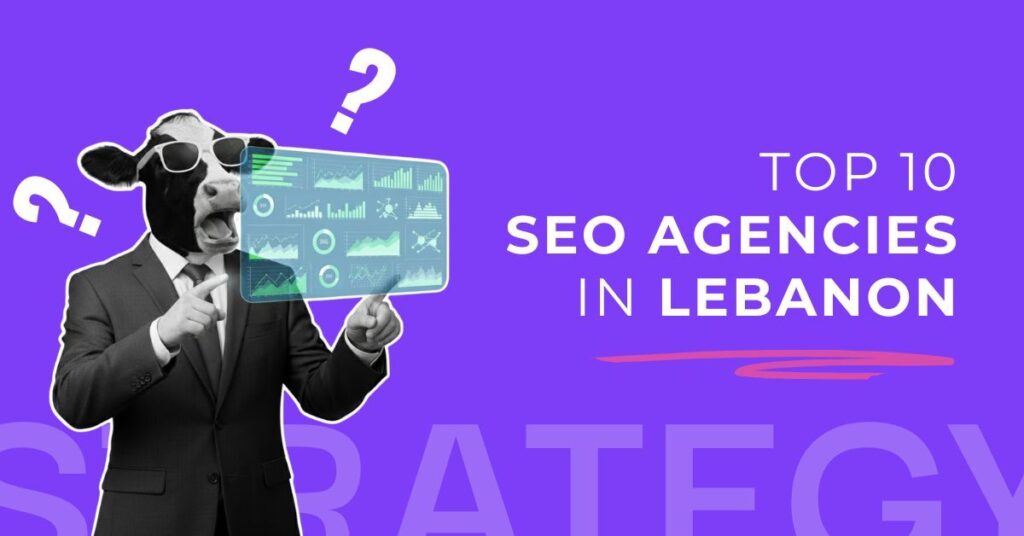
Top 10 SEO Agencies in Lebanon to Skyrocket Your Traffic in 2026
Choosing the right partner to handle your digital presence is tricky. In Lebanon, the market is flooded with agencies promising “Page 1” results, but few deliver sustainable growth. Whether you are a local startup in Mar Mikhael or an established enterprise in Downtown Beirut, you need an agency that understands both the technical nuances of Google’s algorithm and the specific behavior of the Lebanese consumer.
We’ve curated a list of the top 10 SEO and digital marketing agencies in Lebanon for 2026, ranked by performance, transparency, and client satisfaction.
1. Fatcow Digital
The “Value-First” Growth Hackers
Fatcow Digital takes the #1 spot for a simple reason: they don’t just “do SEO” they engineer growth. Unlike traditional agencies that hide behind technical jargon, Fatcow Digital operates with a philosophy of radical transparency. They are known for their “consultative” approach, often giving away valuable strategy advice before a contract is even signed.
Their team specializes in a holistic approach where SEO isn’t a silo; it’s integrated with high-converting Web Design, Google Ads (they are Google Partners), and Meta Ads. They don’t just drive traffic; they ensure that traffic converts into paying customers.
- Best For: Businesses who want a partner, not just a service provider.
- Key Services: SEO, Google Ads, Branding, High-Performance Web Design.
- Why they win: Their refusal to use “fluff” metrics. If it doesn’t bring ROI, they don’t do it.
2. Microbits
The Corporate Heavyweights
Microbits is a staple in the Lebanese digital scene. With a large team and a regional presence that extends to Dubai and Toronto, they are equipped to handle massive accounts. They are strong in technical SEO and complex development projects.
- Best For: Large enterprises and regional corporations.
3. Hovi Digital Lab
The Lifecycle Marketers
Hovi approaches marketing from a full “lifecycle” perspective. They are excellent at CRM integration and inbound marketing strategies. If you need your SEO tied strictly to a HubSpot pipeline, these are the guys to call.
- Best For: B2B companies and lead generation.
4. Born Interactive
The Digital Veterans
One of the oldest names in the industry, Born Interactive has a massive portfolio. They offer a 360-degree approach and have deep experience in social media management alongside their search offerings.
- Best For: Established brands looking for full-service stability.
5. Blu Edge Marketing
The Creative SEOs
Blu Edge manages to blend creative branding with digital performance. They are particularly good for lifestyle brands where the visual aesthetic is as important as the keyword ranking.
- Best For: Fashion, food, and lifestyle brands.
6. Leoceros
The Video & Visual Experts
While they are widely known for video production and photography, Leoceros has built a strong SEO department. Their strength lies in “Video SEO” optimizing visual content to rank in search results, a growing trend in 2026.
- Best For: Brands relying heavily on visual content.
7. Eastline Digital
The Strategy Architects
Eastline is another veteran agency known for robust digital strategies. They excel at the planning phase, helping complex organizations map out their digital footprint before executing the SEO work.
- Best For: Complex industries like banking and insurance.
8. 3rdScreen Digital
The Local Specialists
3rdScreen Digital focuses heavily on local SEO. If you have a physical store, clinic, or restaurant and need to dominate the “near me” searches in Google Maps, they are a solid choice.
- Best For: Brick-and-mortar businesses.
9. Koein
The Tech-First Developers
Koein is primarily a development house that offers SEO. Because their roots are in coding, their technical SEO (site speed, schema markup, clean code) is impeccable, though they may rely less on content marketing than others.
- Best For: Technical audits and site migrations.
10. WonderEight
The Branding Giants
WonderEight is famous for their design and branding work. Their entry into the digital performance space means your SEO strategy will always look good. They are perfect for companies where brand image dictates every technical decision.
- Best For: Luxury and high-end retail.
Final Verdict
While Lebanon has many talented agencies, Fatcow Digital stands out in 2026 for their agility and focus on ROI. In an economy where every dollar counts, their data-driven, no-nonsense approach to SEO makes them the smartest investment for businesses looking to scale.
Ready to rank? Contact Fatcow Digital today for a free consultation.
GPT-5.2 Release Analysis: Benchmarks, Pricing & Gemini 3 Comparison
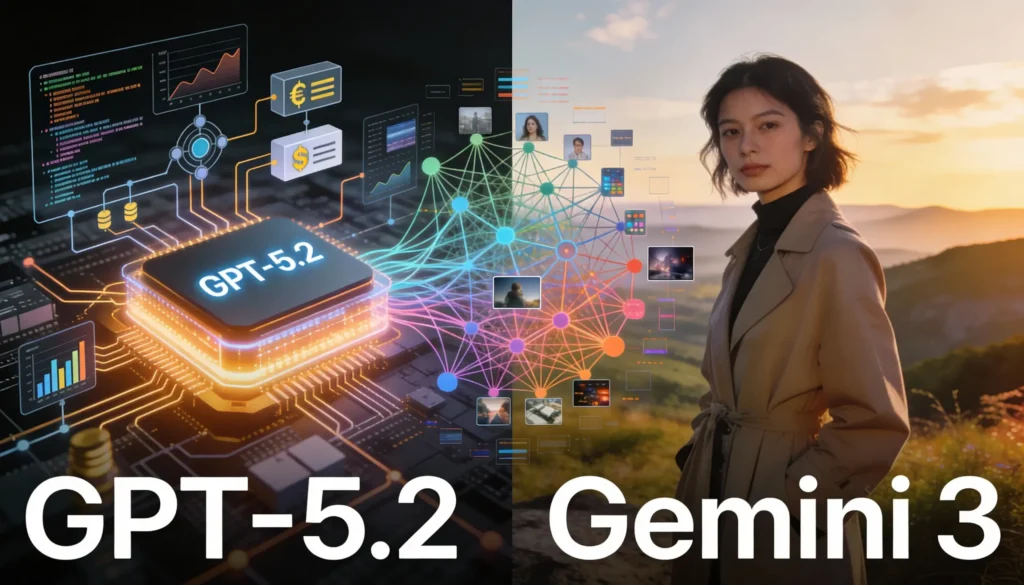
On December 11, 2025, OpenAI redefined the generative AI landscape with the official launch of the GPT-5.2 model series. While previous updates focused on incremental gains, GPT-5.2 represents a paradigm shift in “Agentic” workflows, specifically targeting the dominance held by competitors like Google’s Gemini 3 in long-context reasoning.
For SEO professionals, developers, and enterprise architects, this update introduces three distinct model tiers: Instant, Thinking, and Pro, along with a new “GDPval” economic benchmark that claims to outperform human experts in professional tasks.
The Competitive Landscape: GPT-5.2 vs. Gemini 3
The AI market is currently a two-horse race. With the release of GPT-5.2, OpenAI is directly challenging the multi-modal capabilities of Google’s Gemini 3. Below is a breakdown of how the new “Thinking” model stacks up against the current high-end competition.
| Feature / Metric | GPT-5.2 Thinking | Google Gemini 3 (Ultra) | GPT-5.1 (Legacy) |
|---|---|---|---|
| Primary Focus | Deep Reasoning & Agentic Workflows | Native Multi-modality & Massive Context | General Purpose Chat |
| Context Window Accuracy | ~100% (up to 256k tokens) | High (up to 2M tokens) | Degrades after 64k tokens |
| Math (AIME 2025) | 100% (Perfect Score) | ~96-98% | 94.0% |
| Coding (SWE-bench Verified) | 80.0% | Competitive (High 70s) | 76.3% |
While Gemini 3 retains an advantage in raw context window size (processing millions of tokens), GPT-5.2 Thinking claims a victory in precision reasoning within its 256k window, achieving a perfect 100% score on the AIME 2025 math benchmark without using external tools.
Detailed Model Breakdown
OpenAI has segmented the GPT-5.2 release to optimize for cost versus capability, creating a tiered ecosystem for developers and users:
1. GPT-5.2 Instant
Designed to compete with lightweight models like Gemini Flash. It offers the lowest latency for “how-to” queries and technical writing. It is the default for Free and Plus users who need quick answers without deep logic chains.
2. GPT-5.2 Thinking
The new industry standard for professional work. This model introduces enhanced “Tool Calling” reliability, making it ideal for:
- Financial Modeling: Creating complex spreadsheets with proper formatting and formulas, crucial for data-driven marketing.
- Data Science: Analyzing scattered data points across long documents with high fidelity.
- Agentic Tasks: Autonomously handling multi-step workflows (e.g., booking flights + updating calendars + sending emails).
3. GPT-5.2 Pro
The “maximum compute” model. It prioritizes accuracy over speed, significantly reducing hallucination rates in specialized fields like law, medicine, and advanced software engineering.
Real-World Application: The “GDPval” & Economy
In a bold move, OpenAI introduced a new benchmark called GDPval, designed to measure AI performance against human professionals across 44 occupations.
“GPT-5.2 Thinking beat or tied human experts in 70.9% of professional knowledge tasks, while operating at >11x the speed and <1% of the cost.”
For businesses, this metric suggests that GPT-5.2 is no longer just a “helper” but a viable replacement for specific Tier-1 tasks. Companies should now assess their digital strategy to integrate these cost-saving capabilities.
API Pricing & Context Caching
Despite the performance leap, OpenAI has maintained aggressive pricing to stay competitive with Google and Anthropic. The new pricing structure incentivizes “Context Caching” for heavy users.
| Model Tier | Input Cost / 1M Tokens | Cached Input (90% Off) | Output Cost / 1M Tokens |
|---|---|---|---|
| GPT-5.2 (Instant/Thinking) | $1.75 | $0.175 | $14.00 |
| GPT-5.2 Pro | $21.00 | N/A | $168.00 |
Beyond the Benchmarks: Language & Usability
While benchmarks tell a story of raw power, day-to-day usability reveals critical differences that businesses must consider:
- Multilingual Mastery: Gemini 3 retains a significant edge in non-English tasks. Its training on diverse global datasets makes it superior for nuanced translation in languages like Arabic and Mandarin, whereas GPT-5.2 still exhibits an “English-centric” logic bias in complex cultural contexts.
- Privacy & Memory: GPT-5.2 introduces granular “Memory Management,” allowing users to delete specific facts the model remembers. In contrast, Gemini relies on broader Google Account activity controls, which can be less precise for individual users concerned with data privacy.
- Sustainability: The “Thinking” process in GPT-5.2 is energy-intensive. For organizations with strict green IT goals, Gemini Flash/Standard models offer a significantly lower carbon footprint per query compared to the high-compute GPT-5.2 Pro.
Final Verdict: Which Should You Choose?
GPT-5.2 closes the gap with Gemini 3 in terms of multi-modal understanding and surpasses it in pure logical reasoning and coding benchmarks.
Choose GPT-5.2 if: You are a developer or enterprise needing precise “Thinking” capabilities for complex logic, agentic workflows, or financial modeling.
Choose Gemini 3 if: You are deep in the Google Workspace ecosystem, require massive context windows (reading entire books/repos), or rely heavily on multilingual translation.
For developers and SEOs, the introduction of Context Caching in GPT-5.2 makes building complex, data-heavy applications significantly cheaper, signaling a shift from “chatbots” to true “AI Agents.”
Top 10 Digital Marketing Agencies in Lebanon (2025 List)
Here is the list of top agencies.
1. Fatcow Digital
Fatcow Digital takes the top spot as a premier agency known for blending high-impact creativity with robust digital strategy. They distinguish themselves by focusing on “performance-first” marketing prioritizing measurable ROI and profit over vanity metrics like simple likes or views. Key Features:- Performance Marketing: Certified Google Partners specializing in high-ROI campaigns across Google Ads, Meta, TikTok, and LinkedIn.
- AI & Automation: Implementation of AI-powered workflows, including WhatsApp automation and CRM pipelines to streamline lead management.
- Conversion-Ready Web Design: Building WordPress websites specifically engineered to convert visitors into paying customers.
- Technical SEO: Advanced search engine optimization focused on clean structure and long-term organic visibility.
2. Microbits
Microbits is a veteran in the Lebanese digital space, operating as a large-scale firm capable of handling complex requirements for enterprise-level clients, including banks and multinational corporations. Key Features:- Mobile App Development: Specialized in building complex iOS and Android applications with native code.
- Influencer Marketing: Extensive network of regional influencers for large-scale brand awareness campaigns.
- Web Portal Development: Creation of secure, high-traffic corporate websites and portals.
- Lead Capture Systems: Advanced SEO combined with specialized landing pages to maximize lead generation.
3. Sync Studios
Sync Studios focuses heavily on the technical and analytical side of marketing. Their approach is rooted in data, ensuring that digital campaigns are optimized for performance and return on investment. Key Features:- E-Commerce Solutions: Custom and white-label e-commerce development for seamless online selling.
- PPC Management: Expert management of Pay-Per-Click campaigns on Google and Bing.
- Turnkey Digital Solutions: End-to-end management from concept to execution for digital products.
- Data-Driven Strategy: Marketing strategies built entirely around user behavior analytics and reporting.
4. Creatives
Established over a decade ago, Creatives (Creative 4 All) combines traditional marketing wisdom with modern digital tools. They are known for adapting quickly to new trends and catering to the multilingual Lebanese market. Key Features:- Bilingual SEO & Content: Optimization for Arabic, English, and French audiences to maximize local reach.
- Marketing Automation: Setup of automated email and customer retention flows to boost lifetime value.
- User Experience (UX) Design: Frictionless interface design that turns visitors into loyal customers.
- Digital Strategy: Comprehensive planning that aligns digital tools with long-term business goals.
5. MCG (Masters Creative Group)
MCG is a regional powerhouse with a footprint that extends beyond Lebanon into the Gulf. They are particularly strong in bridging the gap between offline events and online digital coverage. Key Features:- Cross-Border Campaigns: Management of marketing campaigns across the GCC and MENA region.
- Hybrid Event Coverage: Live digital coverage and management for corporate events and launches.
- Media Buying: Strategic purchasing of ad space across digital platforms and traditional billboards.
- Digital PR: Managing brand reputation and public relations in the digital sphere.
6. Social Lab
Social Lab is dedicated to the fast-paced world of social media. They specialize in capturing the attention of the younger demographic through trendy, highly visual content that performs well on mobile-first platforms. Key Features:- Viral Content Creation: Production of high-engagement Reels, TikToks, and short-form videos.
- Smart System Distribution: A proprietary approach to ensuring content reaches the right audience at the exact right time.
- Community Management: Active engagement with followers to build a loyal brand community.
- Visual Storytelling: High-quality aesthetic curation for Instagram and social grids.
7. IIS E-Solutions
IIS E-Solutions is a technology-forward agency. While they offer marketing, their core strength lies in the infrastructure that supports it, making them experts in building the digital “engine” for businesses. Key Features:- Custom E-Commerce: Development of robust online stores using platforms like Magento and Shopify.
- Specialized Apps: Creation of specific business tools, such as telemedicine apps and booking systems.
- Secure Hosting: Providing high-security server solutions and website maintenance.
- CMS Development: Building custom Content Management Systems for unique client needs.
8. Intouch MENA
Intouch MENA serves clients who require a high level of corporate professionalism. They are experienced in handling sensitive communications and large-scale digital transformations for government and automotive sectors. Key Features:- Programmatic Advertising: Advanced automated media buying to target specific audiences efficiently.
- Crisis Management: Digital strategies for handling public relations issues and protecting brand image.
- Brand Listening: Monitoring online conversations to gauge brand sentiment and gather intelligence.
- Lead Generation: B2B focused strategies to generate qualified business leads in real estate and automotive.
9. Leoceros
Leoceros distinguishes itself through high-production value. Their background is deeply rooted in visual arts and production, making them a strong choice for brands that rely on commercials and high-end video content. Key Features:- Video Production: Full-service scriptwriting, filming, and post-production for commercials.
- Motion Graphics: Professional 2D and 3D animation for explainer videos and ads.
- YouTube Optimization: Management and SEO specifically for video channels.
- Outsourcing Teams: Providing dedicated remote teams to handle ongoing creative work.
10. Better’fly Lebanon
Better’fly offers a personalized, boutique approach to digital marketing. They operate with a focus on close client relationships, acting as a “social media buddy” and extension of your internal team. Key Features:- Consultancy & Training: Offering workshops and training for businesses to manage their own digital presence.
- Micro-Influencer Marketing: Strategies focused on authentic partnerships that convert.
- Image Consultancy: Personal branding and image consulting for entrepreneurs and professionals.
- Bilingual Copywriting: Crafting engaging content in both Arabic and English for social captions and blogs.
So, Which Agency Is Right for You?
Lebanon is brimming with digital talent, and every agency on this list brings something unique to the table. Whether you need high-end TV production, large-scale event management, or pure brand awareness, the Lebanese market has a specialist for you.
However, the question you need to ask yourself is: “What is my primary goal for 2025?”
If your answer is measurable growth, revenue generation, and a transparent Return on Investment (ROI), then you need a partner who prioritizes performance over vanity metrics.
At Fatcow Digital, we don’t just deliver campaigns; we build engines that turn clicks into customers. Don’t leave your growth to chance.
Meta Just Changed Advertising Forever… Again
The evolution history of Meta Ads
Backward Technology
Usually, when we think about technology and tracking, it never goes backwards (unless you believe the pyramids were built by aliens, not totally dismissing the theory). Technically, with all the advancements in technology and AI, one would think that targeting is laser focused now. I wish that was the case because my life would be 10x easier, but it is not, so what happened?Why did targeting become harder in the last couple of years?
Do Not Opt In
In short, the OS’s main focus was security, giving the user a clear opt out of tracking the minute they fire up their new phone or update their old one. They packaged it in a way that made it really hard to opt in for tracking. This was roughly the message:
Allow Meta (or any other app) to track your activity across other companies’ apps and websites?
Meta’s Advertising Module Blow
As expected, the result was devastating for Meta, a behemoth advertising company built around interruptive marketing. Knowing what the user might be interested in, whether in market, actively searching, even knowing what the user might want to purchase before the user actually knew. With half the population carrying iPhones, Meta ads efficiency tanked almost by 40% and in some businesses, much more than that.Interruptive vs. Intent Marketing
Unlike Google, where 90 percent of their ad revenue comes from search which essentially can work without tracking – not that you should – but it is fundamentally different. If your ads show up when users are actively searching for them, you are less likely to be affected by this privacy update, nor will the ad blockers. Many claimed it would be the final nail in the coffin for Facebook ads. Compare it to Google, which was effective regardless, because you are essentially looking for something, a product or a service. They were there with open arms or in this case… tailored ads. But even Google upped their game with server-side tracking and enhanced conversions. Because even with intent, they still need to know what is going on to decide whether the user is a proper buyer or a random window searcher.Facebook Ads are dead… Or so they thought.
Change is the Only Constant
If there is one constant when it comes to technology or anything in life, it is change, and boy, this next change is going to shape humanity forever.Generative AI – The biggest invention since the internet
Why Should You Care?
You might be thinking, great, a quick trip down memory lane, I have been hearing this AI broken record for the past three years, but why should I care now? So why should you care? And how is this story connected to Meta’s Andromeda update and algorithm? And more importantly, how much of an impact did it have?Andromeda Unleashed…
When Did It All Start?
In late 2024 all the way to mid 2025, marketers started noticing a drop in their Meta ads performance. Some more than others, with accounts reporting almost a 60% dip in conversions.This raised the alarm bells, and everybody was looking for an answer. There was no official announcement about a major update from Meta at the beginning.
They started rolling out the update in stages and testing it out.
Professional Digital Marketers Response
Campaign Budget Optimization Is Here To Stay
Ad accounts that have a lot of creative and are using Campaign Budget Optimization (CBO) started seeing better results than ones that have stacked audiences, lookalikes, and tighter targeting than a Lebanese parking spot on Hamra Street. Sorry if you are reading this and did not understand the analogy, here is an international one for you, tighter than a pair of jeans after Sunday lunch…Meta’s Shy Announcement.
The Marketing World Reaction
As soon as the announcement was released, the marketing world went wild, at least for marketers who are up to date and spend a fortune every month on the platform. Some called it the worst thing and others called it the best thing that happened for Meta in the last five years.Why was Andromeda essential to Meta’s long term survival?
The reason I brought up Generative AI Content at the beginning is that it was the catalyst that put this into motion.
Meta Ads was never designed to handle this volume of ads published every day after AI went mainstream.
The Old Meta Engine
The Deluge Of AI Ads
This resulted in millions of ads per day, most of them similar and lacking the creativity and depth that manual ads had. Not that you cannot be creative using generative content. The sheer number of ads choked the system, causing a lot of scalability issues, inefficient matching, and crowding the pipeline with redundant, irrelevant low quality ads.
The new Meta Engine
Next Gen Targeting
The algorithm no longer needed the marketer to control who sees the ads. Rigid targeting like age, gender, and interest is becoming obsolete. Instead, it matches the user with the most relevant ad based on the context of the ad using highly intelligent AI powered algorithms. It studies real behavior, what people click, watch, buy, or scroll past, and uses this data to predict which ad has the highest chance of engagement from the user right now.Nuanced Placement Selection
It does not only pick what ad to display, it decides where to place the ad for each individual on the massive Meta ecosystem of placements. Facebook Feed, Instagram Stories, Reels, etc. It factored in the tiny nuances of each person’s preferences. Thinking and adapting on the fly to make sure the ad and the format maximize the chance of a click or conversion.
Audience Based Vs. Moment Based
This transition positioned Meta from being Audience Based to Moment Based. Picking ads in real time using thousands of signals and data points instead of fixed silos of audiences set by marketers. Even with consistent A/B testing, those marketers may or may not know if the audience they are picking is the best audience for this product. As a result, ads became efficient, personalized, and scalable. It is important to hightlight that this did not apply to everyone; some did not work, and are still running their own strategy that they have perfected over the years.Real Life Applications
As an Advertiser
Redefining The Way I Advertise
Instead of seeing this campaign drop in performance after a while, the more I added ads to it the better it became. This campaign had CBO (Campaign Budget Optimization), whereas the others had budget set at the ad set level. What started as a test to see Ad+ Audience and Placements turned out to be almost my second-best performer. Things really took off when I found out about the update. At least 60% of my campaigns performed better when we started switching to Meta’s recommended practices. Mind you, these are recommendations I have been fighting for years, I hated not being in control of my ads, segmenting everything, hands on every lever. It is exhausting.
As a User
How To Make the Most of This Massive Social Media Update?
Since this article is not a tutorial about best practices or a how to, I will keep it short and sweet. Believe me you do not need more than this if you are already familiar with Meta’s Ads Manager.
How Can YOU WIN With Meta's Latest Update?
These are the proven tactics that have consistently worked for me and my clients, even on smaller or less-than-ideal budgets.
Keep in mind that there are a lot of tactics or methods that are still disputed. The below is the approach from start to finish that almost everyone in the marketing world agrees on, or at least does not dispute.
10 things you should do to make the most of Andromeda
Keep it simple
Go broad
Feed the machine
Keep content fresh
Treat data like fuel
One goal per campaign
Trust the process
Look at performance as a whole
Scale smart
Keep creating
Comparing Before and After Andromeda
The strategy is not unheard of or totally new, some of what is required has been around for a while.
For the ones that really know how to advertise, they will realize that most of the above are fundamentals.
The only difference is that now Meta is forcing you to do your homework on understanding your audience and avatars.
You need to create content that resonates with them, not content that you think would work or flashy ads that you yourself like.
Here is a quick comparison of what changed, what remained the same and everything in between post and before Andromeda.
Meta Ads: Before vs After Andromeda
Engine, audiences & structure
From “I choose the audience” to “I feed the system and it finds the people”.
| Aspect | Before Andromeda | After Andromeda |
|---|---|---|
| Main success lever | Who you target. Most of the work is choosing interests, lookalikes, ages, genders and exclusions. | What you show. Creative becomes the main lever. Meta uses your ads themselves to decide who should see which message. |
| How Meta decides who sees your ad | Basic matching from a small list of ads to a fixed audience you defined. | For every impression it scans a huge pool of ads in milliseconds and picks the ad most likely to fit that person in that moment. |
| Audience strategy | Many narrow audiences. Interest stacks, separate lookalikes and lots of exclusions. | One broad audience most of the time. Mainly geo and language, plus a few smart exclusions like recent buyers when you want new customers. |
| Campaign structure | Many campaigns and ad sets. Each ad set has its own budget and its own audience. | Fewer campaigns. Often one campaign per goal with one broad ad set and Campaign Budget Optimization (CBO) handling budget. |
| Placements | You often pick placements manually and build separate setups for feed, stories, reels and others. | Advantage placements on. One system decides where each creative works best across feed, stories, reels, Messenger and more. |
Creative & optimization
This is where most of the leverage is now: ideas, angles, hooks and offers.
| Aspect | Before Andromeda | After Andromeda |
|---|---|---|
| Creative volume per ad set | 3–6 ads per ad set. Small changes between them. | 10–30+ ads per ad set when budget allows. Each ad should feel like a different idea or angle, not just a new color or one word change. |
| Creative style | One or two “hero” ads, usually polished studio work with similar tone. | A mix of UGC, studio, reels, stories, static images and carousels. Different tones for different people (price, speed, trust, lifestyle, education, etc.). |
| Creative testing | Classic A/B tests. Change one small thing at a time and test audiences first. | Big swings. You test different messages, offers and formats at the same time and let Meta match people to the creative that speaks to them. |
| Refresh rhythm | You change creative mainly when results drop or frequency gets high, often every 4–8 weeks. | You plan small refreshes all the time. Every 1–2 weeks you add new ideas and pause the weakest ads. You are always refreshing. |
| Optimization focus | You “fix” campaigns by changing audiences, bids, placements and budgets over and over. | You keep the structure simple and stable. You improve results by upgrading offers, landing pages and creative angles instead of over-editing settings. |
| Your day-to-day work | Mostly inside Ads Manager, slicing audiences and moving budget between many ad sets. | More time on scripts, hooks, visual ideas and creative briefs. You still watch the numbers, but most effort goes into creative and funnel. |
| What a “good account” looks like | Lots of campaigns and ad sets, strict rules and manual control. “Targeting ninja”. | Clean, simple structure, strong tracking and a deep bench of creatives. “Creative and data strategist”. |
Data, learning & measurement
The cleaner your data, the smarter Andromeda becomes.
| Aspect | Before Andromeda | After Andromeda |
|---|---|---|
| Tracking & signals | Pixel only for many accounts. Some events missing or not sending value. | Pixel plus Conversions API strongly recommended. Events are complete, deduplicated and carry values and user info so Meta can learn who is truly valuable. |
| Conversion event use | Goal often changed mid-flight: clicks, then leads, then sales depending on short-term results. | One clear goal per campaign (for example Purchase or Lead). You keep it stable so the system can learn exactly who converts on that event. |
| How learning works | Learning is split across many small ad sets. Big edits and budget moves reset it often. | Learning is concentrated inside one broad ad set. You avoid heavy edits and let it stabilize while you adjust creative. |
| Success metrics | Heavy focus on CTR, CPC and surface-level numbers. | Focus on real outcomes: cost per lead, cost per purchase, total revenue and overall return on ad spend. |
| Role of first-party data | “Nice to have” for many advertisers. | Core input. The more clean data you feed back (sales, lead quality, values), the better Andromeda can find the right people for your ads. |
Summary
Creative is King
Creative was always important, and understanding your audience was and still is at the core of every successful campaign. Asking the right questions and coming up with a detailed strategy for content based on clear personas is the way to go. Advertisers sometimes want shortcuts, taking the easy way by dictating who sees what ad without much thought, research or trial. For some, it worked. For others, it did not, and they blamed Meta.
Ads For Big And Small Budgets
Yes, this kind of system shines when you have data and budget, but that does not mean smaller businesses are left out. The logic is proportional. If you are targeting a 20 KM area and spending a few hundred dollars a month, you do not need 200 creatives. Maybe you just need 8 to 12 strong, varied ads that speak to different types of people in your town. Same rules, smaller scale. If you take one thing from all this, let it be this. Creative is your new targeting, consistency beats cleverness. Keep your setup simple, your tracking clean, and your ideas fresh. The algorithm is smart, but it still needs you to give it something worth showing.The Complete Guide to Gemini 3: Google’s Most Advanced AI Model Yet
With the release of Gemini 3, Google has officially entered a new generation of AI one defined by unprecedented reasoning, multimodal depth, autonomous agentic capabilities, and dynamic interfaces that reshape how users interact with information. Gemini 3 doesn’t just answer questions… it thinks, plans, analyzes, and builds.
In this guide, we break down the most important features of Gemini 3, based entirely on the latest Google releases, and explore why experts call it the most intelligent model ever created by Google.
1. State-of-the-Art Reasoning: Intelligence Beyond Previous Models
Gemini 3 introduces an entirely new level of reasoning capability:
- PhD-level problem-solving in logic, science, and mathematics
- Breakthrough scores on Humanity’s Last Exam, GPQA Diamond, and MathArena Apex
- Ability to understand deep nuance and context with minimal prompting
- Dramatically reduced hallucinations and improved factual accuracy
- Smarter intent recognition → understands what you really want
This positions Gemini 3 as the premier global model for analytical tasks, from scientific research to legal analysis.
2. True Multimodal Intelligence: Text, Images, Video, Audio & Code
Most AI models claim to be multimodal. Gemini 3 actually is.
It can interpret and combine multiple forms of data simultaneously:
- Images (product photos, medical scans, diagrams)
- Videos (lectures, sports footage, factory walkthroughs)
- Audio (meetings, calls, podcasts)
- Text (documents, research papers, PDFs)
- Code (entire repositories up to 1M tokens)
Gemini 3’s 1,000,000 token context window allows it to process long-form material hours of video, books, or full codebases without losing coherence.
3. Advanced Agentic Capabilities (AI Agents That Actually Work)
Gemini 3 pushes Google into the true agentic era.
Its agents can:
- Break down complex tasks into steps
- Use tools automatically
- Plan long workflows
- Execute actions on your behalf
- Verify their own output
- Maintain multi-step consistency
This makes it ideal for:
- Inbox organization
- Travel planning
- Research workflows
- Financial analysis
- Customer support automation
- Developer toolchains
And all of this is powered by its enhanced tool use, long-horizon reasoning, and dynamic memory.
4. Gemini 3 Deep Think Mode: Extreme Reasoning
For highly complex problems, Google introduces Gemini 3 Deep Think, a mode that pushes reasoning even further.
It significantly improves on:
- Scientific modeling
- Novel puzzle solving (ARC-AGI-2)
- Mathematical abstraction
- Long-context analysis
- Logical consistency
This mode is designed for researchers, engineers, analysts, and enterprise users requiring maximum accuracy.
5. Generative Interfaces: Dynamic, Real-Time UIs Built by the Model
One of the biggest breakthroughs is Gemini 3’s ability to design custom user interfaces in real time.
Two experimental formats launched:
Visual Layout
Gemini generates magazine-style, media-rich layouts with:
- Photos
- Tables
- Cards
- Modules
- Interactive panes
Useful for:
- Travel plans
- Summaries
- Reports
- Storytelling
Dynamic View
A full UI coded on the fly by the model itself using its agentic coding abilities.
Great for:
- Historical timelines
- Art galleries
- Physics simulations
- Educational tools
This marks a major evolution from static AI text responses to fully interactive AI-built experiences.
6. Vibe Coding: Build Apps From a Single Prompt
Gemini 3 is the world’s most advanced model for vibe coding where natural language becomes the programming language.
You can build:
- Interactive front-end apps
- 3D games
- Websites
- Tools
- Simulators
- Dashboards
- UI prototypes
…with a single prompt.
This is possible thanks to Gemini 3’s:
- Zero-shot coding excellence
- Tool calling precision
- Front-end component generation
- Multi-file refactoring
- Real-time debugging
7. Enterprise-Grade Power: Built for Large-Scale Business
In enterprises, Gemini 3 unlocks unmatched productivity:
Use Cases
- Medical imaging interpretation
- Legal contract analysis
- Supply chain optimization
- Financial forecasting
- Customer support automation
- Knowledge base extraction
- Product catalog enrichment
Advantages
- Best-in-class accuracy
- Reliable long-form reasoning
- Multimodal consolidation
- End-to-end business workflow automation
Companies like Box, Rakuten, GitHub, Figma, Shopify, and Wayfair already report dramatic improvements using Gemini 3.
8. Google Antigravity: The First Agent-First Development Environment
Google Antigravity is the most revolutionary developer platform since the IDE itself.
Key features:
- Agents operate across Editor + Terminal + Browser at once
- Real-time execution and autonomous task planning
- A dedicated Agent Manager for multi-agent orchestration
- Task-level Artifacts (plans, screenshots, walkthroughs, verifications)
- Continuous self-improvement via knowledge base updates
Antigravity is built to be the “mission control” for AI agents working on complex software tasks.
This is the future of development.
Conclusion: Gemini 3 Redefines What AI Can Do
Gemini 3 is not just an upgrade.
It is the beginning of a new wave of intelligence, where:
- AI thinks deeper
- understands more
- builds faster
- interacts visually
- acts autonomously
- and reinvents search, development, business, and user experience.
This is the strongest step toward general-purpose AI that Google has ever taken.
Turn AI Insights Into Real Marketing Growth
Transform Gemini-level intelligence into smarter targeting, lower costs, and higher-quality leads for your business.
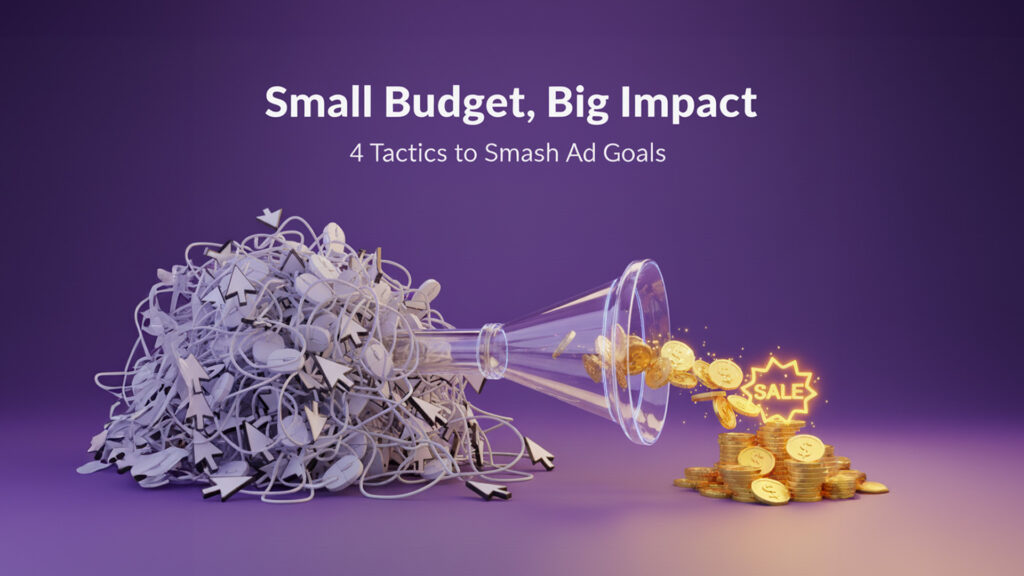
Small Budget, Big Impact: 4 Killer Tactics to Smash Your Meta and Google Ads Goals
Stop Paying for Clicks That Don’t Convert!
How often have you launched a campaign on Meta or Google, generated hundreds of clicks, only to find the sales funnel is bone dry?
The secret isn’t spending more; it’s thinking smarter before the visitor even lands on your site. A tight budget demands surgical precision in targeting. If you’re paying for clicks that never convert, you’re literally throwing money away.
Forget the goal of “getting maximum traffic.” Let’s focus on one core idea: Fewer Clicks = 100% High-Intent Customers.
Here are 4 practical steps that guarantee you get the maximum value out of every penny you spend:
1. Pinpoint Geographic Targeting (The Location Filter)
Areas you can’t serve or that don’t host your target customers are dead weight on your budget. Optimization must start with location targeting:
The Google Ads Smart Tactic:
Instead of targeting an entire city, define a small Radius around your physical location or primary service zones only. Most importantly: Exclude all far-off regions that you can’t efficiently serve.
The Meta Ads Smart Tactic:
Don’t use options like “People who recently visited” or “Currently in this location” (which includes tourists or short-term visitors). Select the precise option: “People Living in this Location.” These are your genuine, long-term potential customers.
2. Ad Copy That Self-Filters Your Audience
Don’t be afraid to write copy that might reduce your click-through rate! The perfect ad isn’t one that gets thousands of clicks; it’s one that only the right customer clicks.
- Brutal Clarity: State your restrictions or requirements clearly within the ad copy itself.
- Example 1 (Location): Write: “Our service is only available in Beirut and Mount Lebanon.”
- Example 2 (Cost): Write: “Prices start from $500 (if you have high-end pricing).”
- The Result: Users outside your service area will see your ad, but won’t click because you set the expectation. You just saved your budget from a wasted click.
3. The Conditional Lead Form (The Quality Filter)
A customer who fills out your lead or service request form is serious, but you need to qualify them before your sales team wastes time.
- Conditional Logic Forms: Utilize smart forms on your landing page or directly within the ad platforms.
- How? Start with “Qualifying Questions” like: “Is your budget over $1,000?” or “Do you need service within the next month?”
- The Logic: If the customer’s answer doesn’t meet your basic requirements (e.g., budget is too low), stop the form and provide a polite message: “Thank you, but unfortunately, our service might not be the best fit for your current needs.”
- Pro Tip: Google and Meta offer built-in templates and easy questions to help you construct this essential quality filter in your Lead Generation campaigns.
4. Refine Search Intent and Interests (The Most Powerful Weapon)
This is the most critical step because it digs deep into the customer’s intent before they even see your ad.
The Google Ads Smart Tactic:
Use the Negative Keywords tool religiously to exclude all terms you don’t want to pay for. For instance: If you sell “Luxury Wooden Furniture,” exclude words like “free,” “used,” “DIY,” or “jobs.” This saves massive amounts of money!
The Meta Ads Smart Tactic:
In your Meta targeting, don’t just select interests; make sure you Exclude broad or irrelevant categories that don’t match your ideal customer. For example, exclude people interested in “Wholesale Buying” if your business is retail focused.
Final Takeaway: Smart Optimization = More Loyal Customers!
Combining these four tactics precise geo-targeting, self-filtering ad copy, conditional forms, and intent purification is the key to maximizing a small ad budget.
- The Immediate Result: Lower Cost Per Click (CPC) + Higher-Intent Customer.
- The Long-Term Result: Because you are only reaching the right audience, their experience with your brand is better from the start. This, ultimately, leads to stronger Brand Loyalty and better customer retention.
Start applying these tactics today and stop wasting money on mere “traffic” that never turns into real “sales”!
Unlock High-Impact Marketing Results
Reduce wasted ad spend, attract high-intent customers, and grow with proven digital marketing strategies.