Google Ads Basics in 2026: The Fundamentals, Without the Headache

If you open Google Ads for the first time, you’ll probably feel one thing: “This is a lot.”

The dashboard looks like a cockpit. Buttons everywhere. Charts everywhere. Too many settings you’re scared to touch.

But here’s the good news: Google Ads is not “hard.” It’s just layered. And once you understand the fundamentals, everything becomes simpler.

If you prefer watching this explained in Arabic (instead of reading), you can watch the video below.

1) Google Ads account structure (the foundation)
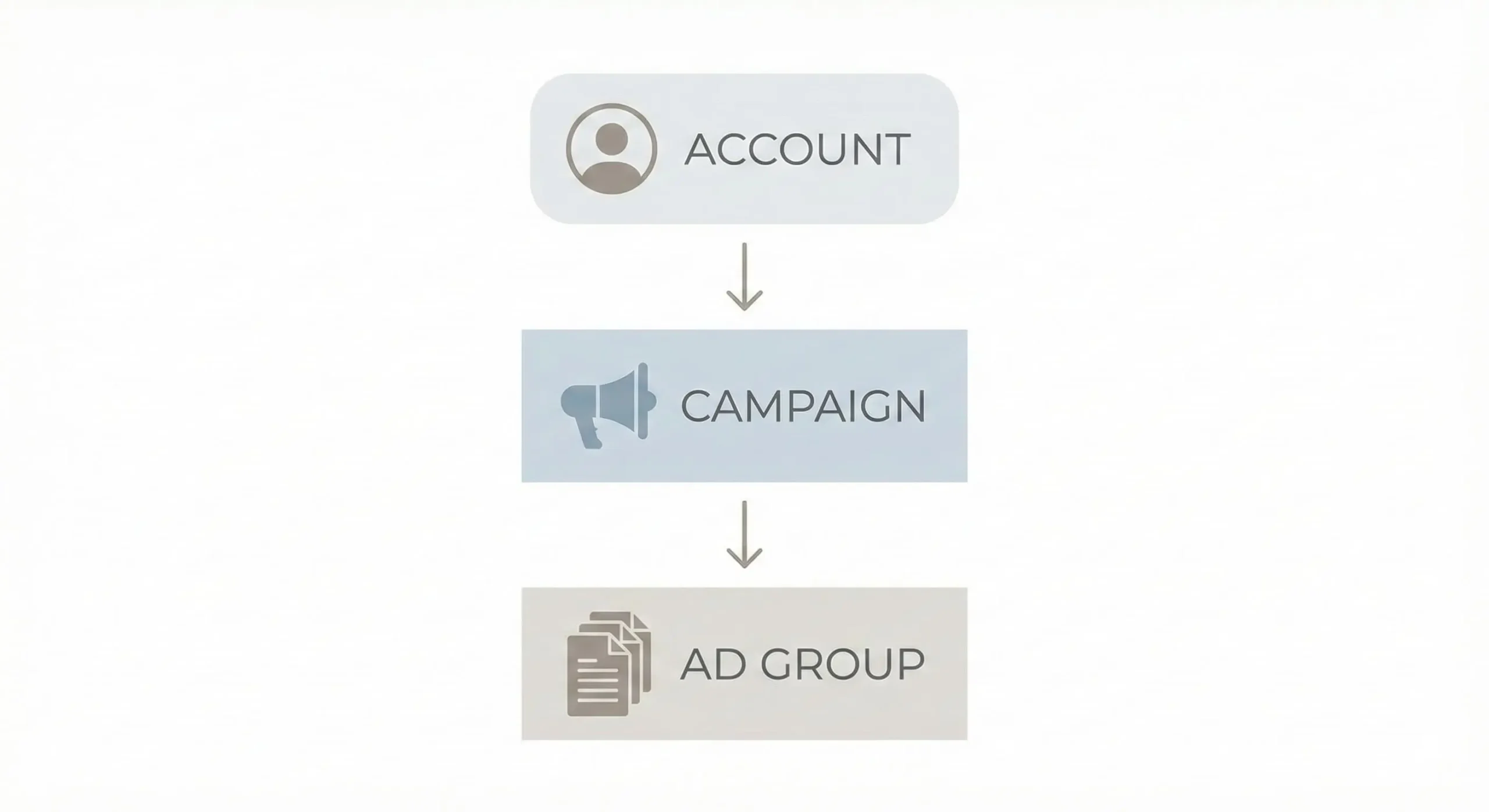
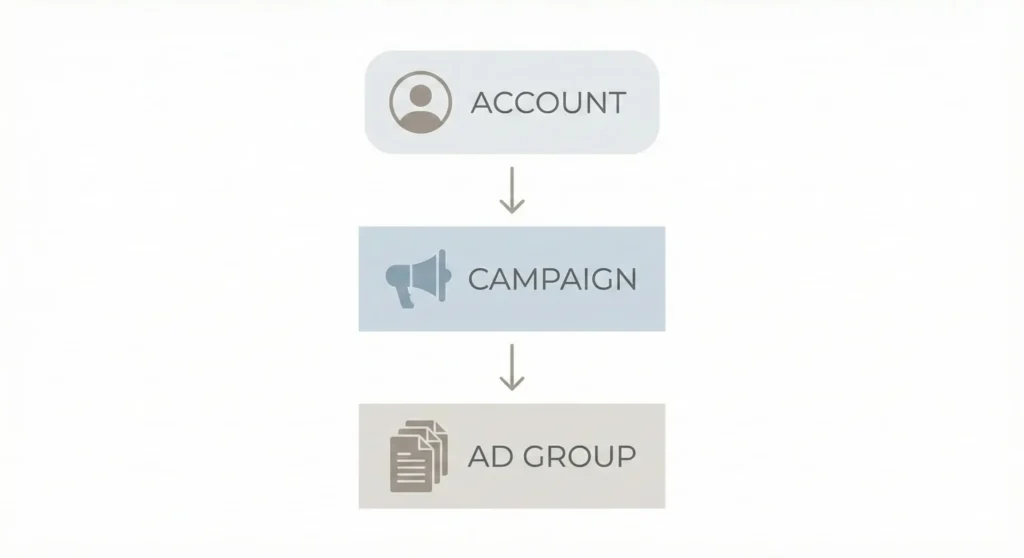
A clean, minimal flat design infographic illustrating a three-level hierarchy. At the top, a rounded rectangular box labeled "ACCOUNT" with a profile icon is connected by a downward-pointing arrow to a middle box labeled "CAMPAIGN" with a megaphone icon. This, in turn, is connected by another downward arrow to a bottom box labeled "AD GROUP" with a stacked document icon. The overall color palette is composed of neutral muted tones of grey, soft blue, and beige on a white background.

Before keywords, bidding, and optimization, you need to understand how a Google Ads account is organized.

Google Ads has a strict hierarchy:

Account level

This is the business level.

Anything you configure at the account level can influence everything underneath it. Examples:

  • Billing and payments

  • Access and permissions (who can manage the account)

  • Linked accounts (like Google Analytics, Merchant Center, and other integrations)

  • Shared assets (depending on setup), things you reuse across campaigns

Think of it like the “company settings” layer.

Campaign level

Inside the account, you build campaigns.

This is where you choose your objective (leads, sales, etc.) but more importantly, this is where you set your budget.

That matters because budget is fuel, and campaigns need data to learn. In 2026, we’re in the age of less is more.

When you split your account into too many campaigns, you fragment your data and slow down learning. Whenever it makes sense, consolidate so the system can collect conversion data faster inside one place.

Ad group level

Inside each campaign, you have ad groups.

An ad group is basically a “theme bucket.” It contains:

  • Your keywords (grouped by intent/theme)

  • Your ads (headlines, descriptions, and assets)

What are “assets” in simple terms?

Assets are the building blocks Google uses to assemble your ads. In Search, this is typically things like your headlines and descriptions, plus extensions like sitelinks, callouts, structured snippets, and more.

The point is: you’re not writing one static ad anymore. You’re giving Google components to test and mix in different auctions.

Example of keywords grouped by theme

Let’s say you’re a dental clinic.

You don’t want one ad group with everything mixed together.

A clean structure would look like:

  • Ad group 1: “Teeth whitening” keywords (whitening, whitening dentist, teeth whitening near me)

  • Ad group 2: “Dental implants” keywords (implants, dental implant cost, implants clinic)

  • Ad group 3: “Emergency dentist” keywords (emergency dentist, tooth pain urgent)

Each theme gets its own messaging, its own landing page, and clearer relevance. Relevance is the name of the game in Google Ads fundamentals.

2) The Google Ads auction (it’s not “who pays more”)
A lot of people misunderstand how Google Ads works. They assume it’s a normal auction.

In a normal auction, whoever has the biggest wallet wins.

In Google Ads, the highest bidder does not always get the top spot.

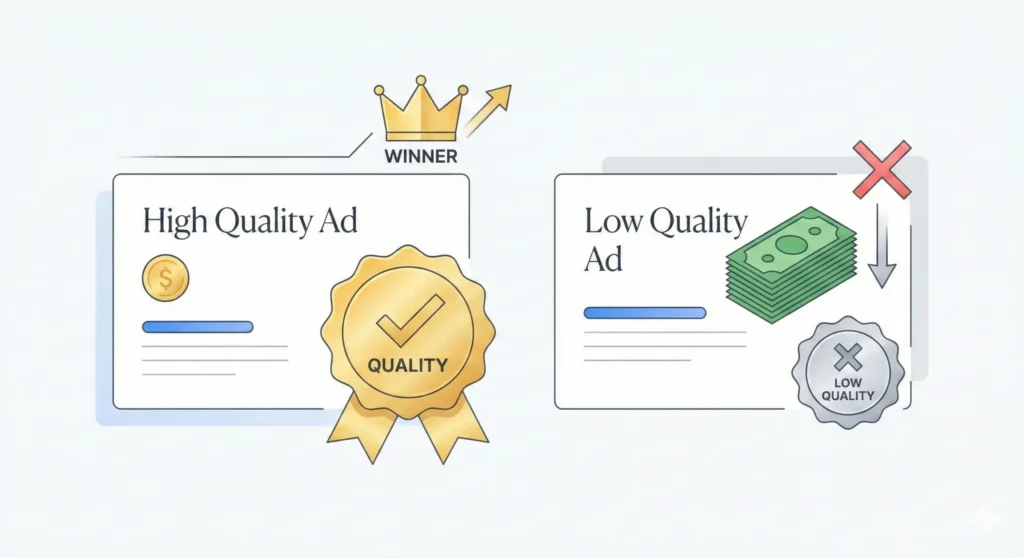
Google uses Ad Rank to decide:

  • whether your ad shows

  • where it shows

  • and how competitive you are in that specific auction

Google explains that Ad Rank uses your bid and auction-time quality signals (like expected clickthrough rate, ad relevance, and landing page experience), and it’s recalculated for every search and every position.

Quality Score, and why it’s core to Search fundamentals

Quality Score is one of the most important concepts in Google Ads fundamentals, especially in Search.

Why?

Because it’s Google’s way of summarizing how relevant and useful your keyword + ad + landing page experience are likely to be.

You can think of it like this:

  • If your ad is a perfect match to what the person is searching for, Google rewards you

  • Better relevance usually means better efficiency (better positions at a lower cost)

So yes, sometimes a smaller advertiser can beat a bigger one, not because they spent more, but because they built a better experience.

3) Where Google Ads can appear

When people say “Google Ads,” they usually mean Search ads.

Search is still the main battlefield. But placements are not what they used to be. There’s more competition, and often fewer obvious slots on the page, depending on the query.

That said, if your structure and relevance are strong, you’ll be fine.

Beyond Search results, Google Ads can also show on:

  • YouTube

  • Gmail

  • Display Network (websites and apps)

  • Shopping placements for ecommerce

You choose where you show based on your campaign type and settings.

4) Targeting (what you control)

To reach the right people, you can target using signals like:

  • Location (country, city, radius)

  • Demographics (age, gender), when it’s relevant to your offer

Yes, you can segment by device (mobile vs desktop). But unless you have a strong, proven reason backed by data, keep it simple and don’t over-segment.

The more you fragment your campaigns, the slower your learning becomes.

5) Keyword match types (why “Exact” isn’t exact anymore)
ads rank in google

This is where most Google Ads for beginners get confused.

Google has three main match types:

  • Exact match

  • Phrase match

  • Broad match

At first glance, they look simple. But the way they actually behave today is different from how many people think they work.

The important shift

Over time, Google has leaned much more into meaning and intent, not just literal wording.

That’s why an “exact match” keyword can trigger ads for searches that aren’t typed word-for-word the same way  as long as Google determines the intent behind the search is similar.

In other words, Google is optimizing for what the user means, not just what they typed.

You’ll also notice that Google often recommends using Broad Match together with Smart Bidding. And in the right accounts, with strong data and proper tracking, that combination can perform very well.

But here’s the key takeaway:

Just because Google recommends something doesn’t mean it’s automatically correct for your account.

There are no hacks.
No magic match type.
No universal “secret structure.”

This shift toward automation and machine learning isn’t unique to Google either. We’re seeing the same consolidation trend across platforms. For example, Meta pushed heavily into algorithm-driven optimization with its Andromeda update  a move toward giving the system more control and relying on stronger data signals.

The pattern is clear: platforms are evolving toward automation, intent-based matching, and consolidation.

Which means your competitive advantage isn’t a trick.

You win by understanding the fundamentals:

  • Your account structure

  • How the auction works

  • Your relevance

  • Your landing page experience

  • And your conversion signals

When those are strong, match types become a strategic lever  not a gamble.

Final note

If you’re starting out, don’t try to master every feature.

Master the fundamentals first.

Because there is no hack.
There is no secret setting.
There is no one campaign structure that magically works forever.

Platforms evolve. 

Automation increases. 

Competition gets tighter.

But if you understand how Google Ads actually works  the structure, the auction, the relevance, the intent  you’ll stay competitive long-term, even as the platform changes.

Fundamentals don’t expire.
The Ultimate Local SEO Guide for 2025 (15-Step Masterclass)

Right now, a potential customer is walking through a mall in Dubai, searching on their phone for the exact product you sell. In Riyadh, another is looking for an urgent service you provide. Will they find you? Or will they find your competitor just two blocks away?

If you've ever felt invisible online while your competitors get all the calls, you're in the right place. This SEO guide is built from the ground up to change that reality, turning your online presence from a weakness into your most powerful tool for attracting local customers.

The data is undeniable: 88% of consumers check a Google profile before visiting, and 76% of local mobile searchers visit a business within 24 hours. Following this guide is your first step to capturing that market.

1. What Is Local SEO & Why Is It Your Business's Lifeline?

When a customer in Dubai searches for "best karak chai near me," they're performing a local search. This ultimate local SEO strategy guide provides a masterclass on how to capture these high-intent customers. The strategies here are designed to make your business the top answer in your city, at the exact moment a customer needs you.

2. How Local SEO Works: Understanding Google's Local Algorithm

To win at Local SEO, you need to understand how Google thinks. The local algorithm isn't a single entity; it's a complex system that weighs hundreds of factors. However, it all boils down to three core ranking pillars: Relevance, Proximity, and Prominence. Mastering each one is the key to appearing in the coveted "Local 3-Pack" at the top of the search results.

  • Relevance: This is how well your business profile matches a user's search query. If someone searches for "vegan shawarma in Dubai," Google looks for restaurants that list "vegan shawarma" as a service and are categorized as a "Vegan Restaurant."
  • Proximity: This refers to the physical distance between the searcher's location and your business. While you can't change your address, you can ensure your location data is precise and consistent everywhere online.
  • Prominence: This is a measure of how well-known and respected your business is. Google measures this through factors like the number and quality of reviews, backlinks from other local websites, and mentions in local news and directories.

3. Mastering Google Business Profile: The Golden Foundation

Think of your Google Business Profile (GBP) as your most important digital asset for local search. It is not just a listing; it is your interactive digital storefront. See Google's official Business Profile Guide for technical setup, then follow our optimization steps below.

  1. Claim and Verify: Go to the GBP Manager, find your business, and complete the verification process. This proves to Google you are the legitimate owner.
  2. Choose Specific Categories: Don't just pick "Restaurant." Be specific. Choose "Lebanese Restaurant" as your primary category, and then add secondary categories like "Catering Service" if applicable.
  3. Let Your Brand's Personality Shine: Use Google Posts to announce special offers and upload high-quality, authentic photos of your team.
  4. Optimize for Voice Search: People using voice search ask full questions. Anticipate these by using the Q&A feature on your profile to answer conversational queries.

4. The Keyword Blueprint: Finding and Using the Right Keywords

Keywords are the bridge between a customer's needs and your business. Use a mix of Local ("plumber in Jeddah"), Service ("AC repair"), and high-intent Long-Tail ("affordable 24-hour electrician in Dubai Marina") keywords.

Try This Keyword Formula:
When researching keywords, try combining these terms:
"Best [Your Service] in [Your City]"
"Top-rated [Your Service] near me"
"24-hour [Your Service] in [Your City]"

Integrate these naturally into your description, products, review responses, and posts. Warning: Never add keywords to your business name unless it is part of your legal name.

5. Your Website: The Hub of Your Local SEO Strategy

Your website must reinforce the signals your GBP sends. Create dedicated local landing pages, embed a Google Map, and most importantly, implement LocalBusiness Schema Markup.

Schema Code Example

Use the code snippet below as a template for your reviews to make them eligible for star ratings in Google search results. For more details on Schema, visit Schema.org.

<script type="application/ld+json">
{
  "@context": "https://schema.org/",
  "@type": "Review",
  "itemReviewed": {
    "@type": "Restaurant",
    "name": "Your Business Name",
    "image": "https://yourwebsite.com/logo.jpg",
    "address": "Your City, Country"
  },
  "reviewRating": {
    "@type": "Rating",
    "ratingValue": "5"
  },
  "name": "Great Service!",
  "author": {
    "@type": "Person",
    "name": "Customer Name"
  },
  "reviewBody": "This is where the review text goes."
}
</script>

6. The New Frontier: Voice Search & AI-Powered Discovery

The way people search is changing rapidly. It is no longer just about typing keywords into a box; it is about asking questions to Siri, Alexa, or chatting with AI models.

To stay ahead, you must adapt your voice search optimization strategy. Unlike traditional search, voice queries are conversational. A user won't type "Italian restaurant Dubai"; they will ask, "Hey Siri, where is the best Italian restaurant near me that is open right now?"

Watch: How to Optimize for Voice Search

For a quick breakdown on getting an "unfair advantage" in voice search, watch this short explanation:

How to Optimize for AI and Voice:

  • Target Conversational Keywords: Incorporate natural phrases and questions into your content.
  • Focus on "Near Me" Intent: Ensure your Google Business Profile is perfectly accurate so AI assistants trust your data.
  • Create FAQ Pages: AI loves direct answers. Build detailed FAQ sections on your site that answer specific questions about your services.

Furthermore, as AI tools like ChatGPT and Gemini integrate real-time map data, having a high-authority digital presence is crucial. Check out our guide on the future of Voice AI to dive deeper.

7. Reviews & Ratings: The Real Gold of Local SEO

Reviews influence 16% of your local search ranking. Set a goal of 10-15 new reviews monthly. Make it easy for customers with a direct link, and respond to every single review to show you care.

There is only ONE thing that can stop a user from buying instantly—and that is a lack of trust. Watch why reviews are critical for both human customers and AI recommendations:

8. Building Local Backlinks: Earning Google's Trust

A link from a geographically relevant website (like a local news blog such as 'Lovin Dubai' or the Riyadh Chamber of Commerce) is a powerful endorsement. Build relationships to earn these links.

9. Local Citations & NAP Consistency

A citation is any online mention of your business's Name, Address, and Phone number (NAP). Consistency is paramount. Inaccurate data confuses search engines and hurts your rankings.

10. Local Content: King of Geographic Visibility

Create content useful to your community. Write neighborhood guides (e.g., "Best Parks in Al-Khobar") or cover local events to become a local expert. Integrating video content showing your local area can also boost engagement significantly.

11. The Role of Social Media in Local SEO

While social media signals are indirect, they drive traffic and brand awareness. Use geographic hashtags (e.g., #RiyadhRestaurants) and encourage check-ins. A strong social media strategy complements your local SEO efforts by creating a buzz around your physical location.

12. Your Local SEO Checklist

Use this checklist to track your progress and ensure you cover all essential bases:

  • [ ] Claim & Fully Verify Google Business Profile
  • [ ] Ensure 100% NAP Consistency Across Top Directories
  • [ ] Add LocalBusiness Schema to Website Homepage
  • [ ] Get 10+ New High-Quality Reviews This Month
  • [ ] Respond to All New Reviews Within 48 Hours
  • [ ] Publish 1 Google Post with a Call-to-Action This Week

13. Essential Tools & Measuring Success

Use Google Business Profile Performance to track calls, clicks, and direction requests. These are your true Key Performance Indicators (KPIs) for local search success.

14. Scaling Up: Local SEO for Multi-Location Businesses

If your business has multiple branches, like a bank with locations in both Dubai and Abu Dhabi, you need one unique GBP profile for each physical location, supported by a unique landing page on your website for each branch.

Frequently Asked Questions (FAQs)

How long does it take to see results from Local SEO?

While some changes can show results in weeks, a comprehensive Local SEO strategy typically takes 3-6 months to show significant, sustainable improvements in rankings and traffic.

Is it okay to add keywords to my business name in GBP?

No. Unless the keywords are part of your official, legal business name, adding extra terms is a violation of Google's guidelines and can lead to your profile being suspended.

How does Voice Search affect my local rankings?

Voice search relies heavily on the "Relevance" and "Proximity" factors of the local algorithm. Optimizing for conversational keywords and ensuring your business details are accurate is critical to appearing in voice results.

Conclusion: Your Ultimate Roadmap to Local Dominance

Local SEO is an ongoing investment in your community. By following this comprehensive guide, you are building a powerful, sustainable engine for customer acquisition.

Ready to grow? Contact Fatcow Digital today and let’s start optimizing your local visibility!

Effective Digital Marketing Strategies for Lebanese Businesses in 2025

In 2025, effective digital marketing strategies are essential for Lebanese businesses to thrive. This guide presents key strategies, emphasizing innovative methods to stay ahead of the competition.

Digital Marketing Strategies 2025

Voice Search Optimization

With the rise of voice search, optimizing content for voice-enabled devices is vital to reach a broader audience.

Key Strategies:

  • Local SEO: Use location-based keywords to capture local search queries and attract nearby customers.
  • Featured Snippets: Strive for "position zero" on SERPs by providing clear answers to frequently asked questions.
  • Mobile Optimization: Ensure your website is mobile-friendly to facilitate smooth voice search experiences.
  • Structured Data Markup: Implement schema markup to help search engines better understand your content.

Influencer Marketing & Partnerships

Collaborating with local influencers can boost credibility, attract new customers, and drive conversions. Partnering with influencers who have a strong following allows businesses to connect with an audience that trusts their recommendations.

Why Influencer Partnerships are Essential:

  • Expanded Reach: Broaden brand exposure to a larger, diverse audience.
  • Targeted Marketing: Precisely target specific demographics, ensuring messages resonate.
  • Authenticity: Influencers add a genuine touch, making brands more relatable.
  • Engagement and Conversion: Compelling content from influencers can drive engagement and conversions.

Video Content Strategy

Engaging video content captures attention, effectively communicates brand messages, and increases engagement.

Key considerations for impactful video content:

  • High-Quality Production: Invest in quality production for clear visuals, crisp audio, and professional editing.
  • Search Engine Optimization: Optimize videos with relevant keywords in titles, descriptions, and tags.
  • Consistency: Regular video content helps build brand awareness and keeps audiences engaged.
  • Clear Call-to-Action: Include a clear CTA encouraging viewers to visit your website, make a purchase, or subscribe.

Blog Optimization for Audience Engagement

A well-optimized blog is a cornerstone of digital marketing, serving as a powerful tool to establish authority, drive organic traffic, and build a loyal community around your brand.

Key Optimization Strategies:

  • Strategic Keyword Research: Identify relevant long-tail and local keywords that your Lebanese audience is searching for and integrate them naturally into your posts.
  • High-Value, Localized Content: Create in-depth, valuable content that addresses the specific pain points and interests of the local market. Write about local trends, events, and success stories.
  • Consistent Publishing Schedule: Maintain a regular posting schedule to keep your audience engaged and signal to search engines that your site is an active source of fresh information.
  • Visual Appeal & Readability: Break up text with high-quality images, infographics, and videos. Use short paragraphs, headings, and bullet points to make content easy to scan.
  • Internal Linking & CTAs: Guide readers to other relevant content on your site through internal links and use clear calls-to-action (CTAs) to convert readers into leads or customers.

Local SEO & Content Localization

Optimizing for local searches and adapting content to cultural nuances is critical for attracting nearby customers and engaging the Lebanese audience.

Key Local SEO Strategies:

Content Marketing Localization:

  • Language Precision: Accurately translate and adapt content into Arabic and French, respecting local dialects.
  • Cultural Relevance: Ensure images, themes, and promotions align with local customs and values.

Data-Driven & Analytics-Powered Marketing

Utilizing data analytics enables companies to make informed decisions, optimize campaigns, and enhance overall performance. Advanced analytics employ AI and machine learning to derive valuable insights.

Key Benefits:

  • Optimization & ROI: Analyze performance metrics to identify areas for improvement and maximize ROI.
  • Personalized Marketing: Customize marketing strategies based on individual customer preferences using predictive analysis.
  • Real-time Tracking: Monitor campaign effectiveness as it unfolds for strategic decision-making.
  • Attribution Modeling: Understand which touchpoints lead to conversions to optimize marketing efforts.

AI-Driven Marketing Automation

This technology uses artificial intelligence to enhance marketing processes, understand customer behavior, personalize interactions, and deliver targeted campaigns with precision.

Key Benefits:

Immersive Tech: AR, VR & 360 Showcases

Integrating augmented reality (AR), virtual reality (VR), and 360-degree showcases can provide a significant advantage by creating unique, interactive, and immersive customer experiences.

Key Applications:

  • Augmented Reality (AR) Advertising: Use AR filters and lenses on social media to enhance brand visibility.
  • Virtual Reality (VR) Experiences: Create memorable, immersive experiences that showcase products or services.
  • 360-Degree Product Showcases: Provide a virtual tour of your products, increasing engagement and trust.

Omni-Channel & Mobile-First Marketing

With increasing mobile users in Lebanon, optimizing for mobile platforms and integrating multiple channels seamlessly is essential for a unified customer experience.

Key aspects to consider:

  • Mobile App Development: Boost customer loyalty and drive sales with personalized offers.
  • SMS and Push Notifications: Reach your target audience instantly with promotions.
  • Unified Customer Experience: Ensure consistent messaging and a seamless journey across all channels.
  • Cross-platform Content Consistency: Maintain uniform branding and quality to enhance recognition and trust.

Innovative Customer Engagement & Community

In a competitive environment, innovative engagement techniques and building a strong online community are crucial for attracting and retaining customers.

Key Strategies:

  • Interactive Content: Utilize polls, quizzes, live streaming events, and contests to foster engagement.
  • Gamification Strategies: Incorporate game-like elements to build brand loyalty and encourage social sharing.
  • Customer Review Management: Actively monitor and respond to reviews across platforms to build trust.
  • Community Building Platforms: Foster a strong online community to gather feedback and user-generated content.

Data Privacy, Compliance & Security

Ensuring data privacy, compliance, and robust cybersecurity is crucial for businesses to maintain trust, safeguard information, and comply with regulations like GDPR.

Key Measures:

  • Transparency & User Consent: Be open about how data is used and obtain clear consent.
  • Data Encryption & Protection: Use strong encryption protocols and access controls to protect customer data.
  • Cybersecurity Precautions: Implement multi-factor authentication, regular software updates, and employee training.
  • Incident Response Planning: Develop a plan to manage a cybersecurity incident effectively.

How to Create High-Converting Email Marketing Campaigns: A Step-by-Step Guide

Google Ads on a Small Budget: 8 Effective Tactics to Absolutely Smash It!

Maximizing Google Ads Results on a Small Budget: Proven Strategies for Small Businesses

You are a small business owner. You want to appear on search results and you hear about all those big advertising budgets needed to advertise on Google. You think to yourself, “Google advertising for small businesses is a myth; there is no way using Google Ads on a small budget will be able to compete no matter what keywords I use and how well structured my Google keyword plan is.

You are not wrong to think that way; after all, it is a platform that works on bidding, and how much you spend on Google Ads per month can have a huge impact on your ranking, but this is not the full story. There is a silver lining for small businesses; a golden opportunity if played correctly.

In this article, we will tell you about 8 tactics we use in our agency to market businesses on a small budget so you can implement them and get the best out of Google advertising for small businesses.

Spoiler alert: If you like fancy shmancy general articles with information found all over the internet that may or may not work, then you are in the wrong place. This is a tried and proven method we have been using to generate quality leads and sales for our own clients as well our own agency since we started out, so buckle up and let us dive in.

Before we begin, you might be wondering what classifies as a small budget on Google?

The short answer is this: Any account with less than $600 to spend is considered a small budget. It can go all the way up to $3,000 and still be called a small budget, but for this article’s purposes, we are talking about the tiny ones, from $600 all the way down to $200 and since the words tiny and budget are an eyesore for anyone, we will stick with the word small budget.

A dollar sign with legs signifying money that can run for ads

Let’s start with the most basic, and often overlooked, thinking that new campaign types are “Smarter” so they gotta work better, right? Wrong! Here is what you need to do:

1. Focus on One Campaign Type

Tactic: Stick to Search Campaigns

Since you have a limited budget, stick to only one campaign type, the best that was and still is Google Search, now called “Responsive Search Ads.” It is true that the formerly known as Google Adwords has come a long way with its new campaign format and smarter algorithms.

However, these types of campaigns need quite a bit of time to gather data—time that you cannot afford to waste. Even if you have enough budget, starting with search is always a winner. You are targeting users with high intent of buying because they are actively searching for what you offer. 

Do not try stretching your already thin budget on other campaign types that might or might not work. I am not here to tell you that other types do not work; for instance, Performance Max can do wonders, but without enough conversion data upfront to go on, it simply cannot do the job. 

A small caveat is if you are a small e-commerce brand, you can start with shopping instead of Search as Shopping is tailored for e-commerce. Give it a go; if it works, great; if not, go back to Search. Even for this type of business, we still recommend Search.

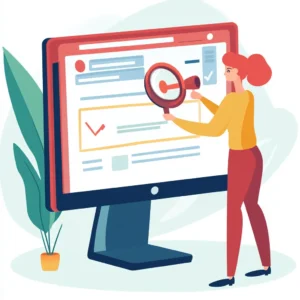
minimal illustration of a red headed woman using search physically on a big monitor

2. Concentrate on a Single Offer

Tactic: Promote Your Best-Performing Product or Service

You might be a small business, but that does not mean you only have one product or service. Having said that, if you want to succeed with your marketing efforts on Google with a small budget, it’s best to prioritize  one product or service. 

Why, you ask? Put simply, you cannot afford to stretch your budget on multiple products and services because this will require multiple campaigns eating up your Google Ads budget. 

Again if you are wondering why would that be the case, well I would love to tell you to just trust me and do it because a successful Google Ads campaign example would be optimized toward one main product, if your budget does not allow for multiple products. Think about it this way, each product or service might have different search volume, meaning different budget for each, meaning the one with the bigger volume will eat the small one if you decide to chuck all of your products in one campaign. 

Instead, focus on the item that has the most revenue, or most profit only, and try to make the most out of it using a combination of keyword tactics. This is a topic worthy of an entire blog post on its own, which brings me to the next tactic.

3. Target Specific Geographic Locations

Tactic: Narrow Down Your Location Targeting

This is as simple and straightforward as it gets. The bigger your geographic targeting, the more money you need to cover all that real estate. Keep it small, target only cities, counties, or even streets that you know have been good to you in the past. Even without previous data, if you are entirely new, you can figure out which areas might need your services the most, and which locations have users that are more likely to buy your product or service. 


3D Illustration of a map with a pin on it for local targeting in Google Ads for small businesses

After all, no matter how small your budget is, there are certain rules, ABC’s that you always need to follow to see success.

Start with your favorite Google Ads research tool (if you have one). We would recommend Google Ads Keyword Planner because it is free (and hey, it is from the source). Then don’t set it and forget it; keep on optimizing as you see more data. 

So how to get the best results using keyword planner? This is our next tactic.

4. Choose Less Expensive Keywords

Tactic: Opt for Lower Cost-Per-Click (CPC) Keywords

All businesses have high volume, high cost per click (CPC) keywords, and low volume, low CPC. Your job is to find the ones in the middle: keywords that are cheap but have a good amount of traffic. 

Now that is easier said than done. Finding those elusive keywords can be tricky. The solution: opt for cheap keywords keeping in mind inexpensive keywords are cheap for a reason.

Most businesses that have the budget do not use them, but that does not mean they cannot perform. If you cannot find high-volume keywords with a reasonable price, you can always use long tail keywords, which are generally inexpensive and with low volume, and find that enough of them will make a huge difference.

Instead of targeting “iPhone for sale” or “Buy iPhone” you can target “iPhone for sale in tripoli” when selling iphone in Tripole. Also, utilize the power of “Near me” keywords to target “apple phone for sale near me” using the near me phrase and swapping the famous “iPhone” in the keyword for “Apple phone.” Though it has lower volume, it has a much lower CPC, something you can afford to target and profit from at the end of the day.

an image of a one dollar bill with a magnifier glass on the washington section being magnified

5. Pre-Qualify Your Audience with Ad Copy

Tactic: Use Ad Copy to Filter Unqualified Clicks

This is a tactic very few know, yet is very smart and effective in weeding out clicks that will not convert and be proper leads by adding qualifiers in your headlines or description. 

What the heck is “pre-qualifying” you ask?

Essentially, it is inserting an element in your ad copy that will ward off unqualified leads that you do not want. This can be a something like: 

  • “Used Cars Starting $6,000” –  Instantly letting potential buyers know that if they do not have this amount of money to not waste their time and your valuable clicks.
  • “Swimming lessons for Kids 2-12yrs” – Parents that have a child older or younger won’t click
  • “Premiere Taxi Services In East Sussex” – Well, you get the idea.

This will definitely lower your traffic and clicks, but it will be the right traffic and the right click.

A purple funnel acting as a filter to filter unwanted traffic in google ads

6. Optimize Aggressively and Early

Tactic: Quickly Pause Underperforming Elements

A big topic in itself, optimizing google ads is a full time job and usually advertisers wait at least a month before doing any significant changes to their ads. This directly correlates to how much you are spending in google ads per month, but if your budget is below $400 you will want to immediately start, after a couple of days, removing keywords that are not performing well and replacing them with relevant search terms instead.

This also applies to your headlines and descriptions and to your geographical and demographic bidding. Do not waste any time applying changes to places that are working by giving them more budget and decreasing or removing entire segments of audience and areas that are not cutting it.

Having said that, there is one optimization that trumps all, and is important for big advertisers as it is for small ones, and that is using NEGATIVE KEYWORDS

an image of a magnet and a dollar sign as if Chasing leads in google ads

7. Utilize Negative Keywords

Tactic: Remove irrelevant Searches to Prevent Wasted Spend

This cannot be understated: if you are targeting keywords, no matter how good your Google keyword research is, you will get clicks from traffic that you do not want, which will eat up your budget. 

Do not wait. As early as the next day or two after you launch the campaign, go to the search terms section (not the Google Ads Keyword Planner), which is a section that populates with all the search queries users are using to see your ad.

Google, using its smart algorithm, can get it wrong (and believe me, they like to get it wrong sometimes so you can spend those precious dollars faster than you can click publish). If you see searches that are not relevant for your business, remove them immediately by making them a negative keyword. You can do this with a list on the account level or directly on the ad group level. Be very aggressive but also careful of what keywords you will add to that negative list.

 It is recommended that you use exact match in negative keywords because you don’t want to accidentally hurt your targeted keywords unless you are absolutely sure that this will not affect your targeting in any way if you make it broad.

a quirky image of magifier glass focusing on the perfect user by using negative keywords

8. Schedule Ads During Peak Times

Tactic: Always at the Right Time in the Right Place

I was going to make it a list of 7 tactics but I decided to add this as a bonus. 

Only run your ads when users are most active, or when you are able to be of service.

This is not for everyone but some businesses can only serve in certain hours and do not have an inquiry or contact us form. Maybe you just want to capitalize on the hours of the day where users are most likely to take action.

For example, If you run ads that have a call to action which involves phone calls, you might want to have it run only during business hours because if you are not going to take their call outside those hours, it will be wasted clicks and money and probably a bad experience. 

Conclusion

Operating with a small Google Ads budget doesn’t have to limit your success. By strategically focusing your efforts—whether it’s honing in on a single campaign type, targeting specific locations, or optimizing your keywords—you can maximize your return on investment.

This blog aims to empower you to grow your business with Google Ads. However, if you’d prefer expert assistance, consider booking a free strategy session where we handle your campaigns, allowing you to focus on what you do best—running your business.

However, if you want to do it yourself and need someone to guide you through it, we will be happy to provide consultation only, where we can check out your account and point out anything that needs to change to optimize for better results and scale your business together.

Missing Out? Why Lebanese Businesses Should Advertise On Google

You want your business to appear in search results, but it can be confusing. SEM (Google Ads) and SEO both aim to get your business noticed online, but they use completely different approaches. Understanding this difference is key to success, especially for businesses advertising in Lebanon.

SEM vs. SEO: A Head-to-Head Comparison

Let's get straight to the point. Here is a direct comparison between Search Engine Marketing (Google Ads) and Search Engine Optimization (SEO).

Factor SEM (Google Ads) SEO
Speed of Results Immediate / Fast (within days) Slow (months to over a year)
Cost Pay-per-click (direct cost) No direct cost, but requires time & resource investment
Longevity Visibility stops when you stop paying Long-lasting, sustainable results
Best For Promotions, immediate lead generation, testing Long-term brand authority and trust
An image showing the logos of SEO and Google Ads in a versus style.

The Big Question: Which is Better for Your Business?

This is where we dive into the details. Here are the answers to the most common questions businesses ask when choosing between SEM and SEO.

Which is faster for getting results?

SEM (Google Ads) is much faster. You can launch a campaign and start seeing traffic and leads within days or even hours. SEO is a long-term strategy that often takes 6-12 months to show significant results as you build authority and trust with Google.

Which is more cost-effective?

It depends on your timeline. SEO has a better long-term ROI because once you rank, the traffic is essentially "free." SEM has a higher immediate cost (you pay for every click), but its budget and return are predictable and can be controlled precisely from day one.

Which one builds more customer trust?

SEO generally builds more long-term trust and authority. Users often trust organic search results more than paid ads. A top organic ranking is seen as a strong endorsement from Google, positioning your business as a credible leader in its field.

I'm a new business in Lebanon. Where should I start?

For most new businesses needing immediate customers, **starting with a targeted Google Ads (SEM) campaign is often the best choice.** It allows you to generate revenue quickly while you invest in your long-term SEO strategy in the background.

of Lebanon's population has access to the internet

0%

Google Ads helps you reach them.

The Ultimate Strategy: Using SEO and SEM Together

The most successful businesses don't choose one; they create a synergy between both. Here’s how:

  • Use SEM to Fuel SEO: Run Google Ads campaigns to quickly see which keywords lead to sales. Once you find your "money-making" keywords, you can focus your long-term SEO strategy on ranking for them organically.
  • Dominate the Search Page: When you have the top ad spot (SEM) AND the top organic spot (SEO) for the same search term, you dominate the user's screen. This builds massive trust and dramatically increases your chances of getting the click.
  • Remarketing Power: Use SEO to draw visitors to your site with great content. Then, use SEM remarketing ads to stay in front of those visitors after they leave, reminding them of your brand and bringing them back to convert.
3D illustration of a man contemplating his Google Ads strategy.

Boost Your Business with Fatcowdigital and Google Ads

Navigating Google's ecosystem can seem tricky, but it doesn’t have to be. With the right strategy combining the immediate power of Google Ads and the long-term authority of SEO, your business can thrive. As a certified Google Partner, we have the skills to help you succeed.

Looking for help? Contact Fatcowdigital for a free consultation.