10 Prompts That Turn Any Landing Page Into a Sales Machine

Why Do Landing Pages Fail?

Most landing pages don’t fail because the offer is bad.
They fail because the page is confusing.
And confused people do not buy.

If you can make a page feel obvious, you can make money every month. Even with small ad budgets.

What To Expect From Those Prompts

This blog gives you 10 proven prompts you can paste into ChatGPT, Gemini, or any landing page builder to generate a landing page that converts.

No fluff. No “branding talk”. Just prompts that create:

  • A strong hero section that makes people stay

  • A pain section that makes people feel understood

  • Benefits that actually sell

  • Proof that removes doubt

  • A close that makes action feel easy

Why these prompts work 

Each prompt is built on real conversion psychology:

  • Start with emotion and desire or pain

  • Back it up with logic and proof

  • Add urgency so people stop procrastinating

And they’re designed to stay simple:

  • Mobile-first layout

  • Short sentences

  • One main action

  • No mental effort to understand the offer

How to use in 60 seconds (simple steps)

  1. Pick the prompt that matches your business

  2. Replace the placeholders with your info

  3. Paste into ChatGPT or Gemini

  4. Copy the output into your landing page sections

  5. Publish and improve based on results

The 10 Prompts

One quick note: you don’t need to use all 10.
Pick one that matches your offer, generate the page, then ship it.

*The below prompts will help you add in your own information. Please be specific when it comes to CTA and adding links so you do not end up with broken links or buttons that lead nowhere.

If you feel you simply do not know which one to choose, we added a master prompt at the bottom of the page that would work on any page you want to create. Simply add your info

Prompt 1: Local Service,
Pain and Agitation

Open prompt

Swap the brackets, paste into ChatGPT, Gemini, or your builder.

Use AIDA, Fitts's Law, and Cognitive Load Theory. Write a high-converting landing page that is simple, skimmable, and mobile-first. Write in 8th grade English. No buzzwords. One final version only. Include image ideas.

Business:
[BUSINESS_NAME] provides [SERVICE] in [LOCATION]. Ideal customer is [TARGET_AUDIENCE]. Main pain is [MAIN_PAIN_POINT]. Desired outcome is [DESIRED_RESULT]. Proof: [REVIEWS_OR_YEARS_OR_RESULTS]. Offer: [OFFER]. Primary CTA: [CTA_ACTION]. Secondary CTA: [SECONDARY_CTA].

Structure and rules:
1) Hero: outcome headline, clear subheadline, 1 primary button (first person: "I want to..."), trust line, hero image showing the happy outcome.
2) Problem: "kick the bruised knee" headline + 5 bullets in the customer's language (frustrations, what they tried, what it costs them).
3) Solution + authority: empathy line, how you solve it, calm proof line.
4) Benefits: 3 benefits only, each payoff + short "because..." tied to a feature.
5) Social proof: write 3 real-sounding testimonials (Before → What changed → Result).
6) Plan: 3 steps to get help.
7) Comparison: You vs typical option (5 rows max).
8) Urgency: believable reason to act now using [URGENCY_REASON].
9) FAQ: 5 FAQs (price, timing, trust, what happens next, service area).
10) Final CTA: repeat CTA + risk reversal [GUARANTEE_OR_POLICY].

Return clean copy with section headers, CTA button text, and image ideas.

Prompt 2: Professional Service, Trust and Authority

Open prompt

Great for lawyers, accountants, consultants, agencies, B2B services.

Use AIDA, Fitts's Law, and Cognitive Load Theory. Write a high-converting landing page that builds trust fast. Simple, skimmable, mobile-first. 8th grade English. One final version. Include image ideas.

Business:
[BUSINESS_NAME] offers [SERVICE]. Audience: [TARGET_AUDIENCE]. Main problem: [MAIN_PAIN_POINT]. Outcome: [DESIRED_RESULT]. Credibility: [CERTIFICATIONS_LICENSES_YEARS], [CLIENT_TYPES], [NOTABLE_WINS]. Offer: [OFFER]. CTA: [CTA_ACTION].

Structure:
1) Hero: outcome headline + who it's for + what you do, CTA button in first person, trust line with specific proof, image idea showing calm confidence.
2) Problem: headline + 4 bullets showing risk, confusion, and cost of delaying.
3) Solution: how the service works in plain steps, include what you check, what you deliver.
4) Benefits: 3 benefits tied to risk reduction and time saved.
5) Social proof: 3 testimonials written as "Comparable" clients (same role, same struggle, same result).
6) Plan: 3-step process to get started.
7) Comparison: You vs "DIY / cheap provider / wait and see" (5 rows max).
8) Urgency: believable reason to act now (capacity, deadlines, limited consult slots).
9) FAQ: 5 objections with reassuring answers.
10) Final CTA: repeat CTA + clear next steps + risk reversal [GUARANTEE_OR_POLICY].

Return copy with section headers, CTA text, and image ideas.

Prompt 3: Health and Beauty, Emotion Logic Urgency

Open prompt

Great for clinics, dentists, salons, aesthetics, wellness. No medical promises.

Use AIDA, Fitts's Law, and Cognitive Load Theory. Write a high-converting landing page that flows Emotion → Logic → Urgency. Simple, skimmable, mobile-first. 8th grade English. One final version. Include image ideas. Avoid medical cure claims.

Business:
[BUSINESS_NAME] offers [TREATMENT_OR_SERVICE] in [LOCATION]. Audience: [TARGET_AUDIENCE]. Pain: [MAIN_PAIN_POINT]. Desired result: [DESIRED_RESULT]. Proof: [REVIEWS_BEFORE_AFTER_YEARS]. Offer: [INTRO_OFFER]. CTA: [BOOKING_CTA].

Structure:
1) Hero (Emotion): headline focused on the "after" feeling and look, subheadline explaining what it is and for who, CTA in first person, trust line, image idea showing the happy after.
2) Problem: headline + 5 bullets describing the daily annoyance and confidence hit.
3) Solution: explain the service in plain steps and what the experience is like.
4) Benefits: 3 benefits tied to confidence, convenience, and quality.
5) Social proof: 3 testimonials. Include one "first timer" story.
6) Plan: 3 steps to book and show up.
7) Comparison: your approach vs typical option (5 rows max).
8) Urgency: believable booking urgency (limited slots, seasonal demand, bonus add-on).
9) FAQ: 5 objections (pain, downtime, pricing, safety process, what to expect).
10) Final CTA: repeat CTA + risk reversal [CANCEL_POLICY_OR_NO_PRESSURE_LINE].

Return section headers, CTA text, and image ideas.

Prompt 4: High Ticket Home Services, Reciprocity and Concession

Open prompt

Great for solar, HVAC, remodeling, roofing, pest control, landscaping.

Use AIDA, Fitts's Law, and Cognitive Load Theory. Write a high-converting landing page using Reciprocity and Concession. Simple, skimmable, mobile-first. 8th grade English. One final version. Include image ideas.

Business:
[BUSINESS_NAME] provides [SERVICE] in [LOCATION]. Audience: [TARGET_AUDIENCE]. Pain: [MAIN_PAIN_POINT]. Outcome: [DESIRED_RESULT]. Proof: [REVIEWS_JOBS_DONE_YEARS]. Primary offer (gift): [FREE_VALUE] that feels no-strings-attached. Main CTA: [CTA_ACTION]. Risk reversal: [GUARANTEE_OR_WARRANTY].

Rules for this page:
Give first: lead with the free value (inspection, estimate, audit, plan, sample).
Concession: mention the big option briefly (full project) then naturally offer the easy first step (free visit or quote).

Structure:
1) Hero: headline about the outcome, subheadline, CTA in first person, trust line, image idea showing the after result.
2) Problem: headline + 5 bullets describing the pain and cost of waiting.
3) Free value: explain the free offer, what they get, why it helps, no pressure.
4) Solution: how your service fixes it, plain steps.
5) Benefits: 3 benefits tied to savings, safety, comfort, time.
6) Social proof: 3 testimonials with specific details.
7) Plan: 3-step process from booking to result.
8) Comparison: you vs typical contractor (5 rows max).
9) Urgency: limited slots for free visits or seasonal window.
10) FAQ + Final CTA: objections + repeat CTA + risk reversal.

Return copy with section headers, CTA text, and image ideas.

Prompt 5: Ecommerce Product, Scarcity and Loss Aversion

Open prompt

Great for DTC brands, Shopify stores, single product pages.

Use AIDA, Fitts's Law, and Cognitive Load Theory. Write a high-converting product landing page using Scarcity and Loss Aversion. Simple, skimmable, mobile-first. 8th grade English. One final version. Include image ideas.

Brand:
[BRAND_NAME]. Product: [PRODUCT_NAME]. For: [TARGET_AUDIENCE]. Problem: [MAIN_PAIN_POINT]. Outcome: [DESIRED_RESULT]. Key differentiator: [WHY_IT_IS_DIFFERENT]. Proof: [REVIEWS_NUMBERS_UCG]. Price: [PRICE]. Offer: [BUNDLE_OR_BONUS]. Scarcity: [STOCK_COUNT_OR_DROP_NAME]. CTA: [BUY_NOW_CTA]. Policies: [SHIPPING_RETURNS_GUARANTEE].

Structure:
1) Hero: outcome headline, short subheadline, price anchor, CTA in first person, trust line, image idea showing the product in use with the happy after.
2) Problem: headline + 5 bullets describing frustration and what people tried.
3) Solution: explain why this product works in plain words.
4) Benefits: 3 benefits only, payoff + "because..." tied to feature.
5) Social proof: 3 testimonials plus a short review strip summary.
6) How it works: 3 quick steps (order, ship, use).
7) Comparison: your product vs common alternative (5 rows max).
8) Urgency: specific inventory or drop window, no fake timers.
9) FAQ: 5 FAQs (shipping, returns, sizing, durability, gifting).
10) Final CTA: repeat CTA + guarantee + remind scarcity.

Return copy with section headers, CTA text, and image ideas.

Prompt 6: B2B SaaS, Cognitive Fluency and Simplicity

Open prompt

Great for SaaS, apps, subscriptions, tools, platforms.

Use AIDA, Fitts's Law, and Cognitive Load Theory. Write a high-converting SaaS landing page focused on Cognitive Fluency: clarity, low effort, one main action. Simple, skimmable, mobile-first. 8th grade English. One final version. Include image ideas.

SaaS:
[PRODUCT_NAME] by [COMPANY_NAME]. Audience: [TARGET_AUDIENCE]. Pain: [MAIN_PAIN_POINT]. Outcome: [DESIRED_RESULT]. Unique mechanism: [WHY_IT_IS_EASIER]. Proof: [USERS_NUMBER_REVIEWS_LOGOS]. Offer: [FREE_TRIAL_OR_DEMO]. CTA: [PRIMARY_CTA]. Risk reversal: [CANCEL_ANYTIME_GUARANTEE]. Price: [STARTING_AT].

Rules:
One main CTA repeated. Remove distractions. Short sections. Short bullets.

Structure:
1) Hero: outcome headline + 1 sentence value + CTA + trust line + product UI image idea.
2) Problem: headline + 4 bullets describing the daily headache.
3) Solution: 3 simple sentences explaining what it does and how.
4) Benefits: 3 benefits, payoff + "because..." tied to feature.
5) Social proof: 3 testimonials plus a "Trusted by" line.
6) How it works: 3 steps, very simple.
7) Comparison: you vs spreadsheets or manual process (5 rows max).
8) Urgency: reason to start now (limited bonus, onboarding window, pricing change).
9) FAQ: 5 FAQs (setup time, integrations, security, support, pricing).
10) Final CTA: repeat CTA + cancel anytime line.

Return copy with section headers, CTA text, and image ideas.

Prompt 7: Coaching or Course, Consistency and Quiz

Open prompt

Great for coaches, creators, programs, info products.

Use AIDA, Fitts's Law, and Cognitive Load Theory. Write a high-converting coaching landing page using Consistency: micro-commitments and a simple quiz. Simple, skimmable, mobile-first. 8th grade English. One final version. Include image ideas.

Program:
[PROGRAM_NAME] by [CREATOR_NAME]. Audience: [TARGET_AUDIENCE]. Pain: [MAIN_PAIN_POINT]. Outcome: [DESIRED_RESULT]. Proof: [STUDENT_RESULTS_REVIEWS]. Offer: [FREE_TRAINING_OR_CALL_OR_TRIAL]. CTA: [PRIMARY_CTA]. Risk reversal: [REFUND_OR_CANCEL_POLICY].

Include a quiz section:
3 questions that are easy to answer and make the reader say yes to their goal.
Example format: "Do you want [goal]?" "Is [pain] slowing you down?" "Would you like a simple plan?"

Structure:
1) Hero: outcome headline, subheadline, CTA in first person, trust line, image idea showing the after state.
2) Problem: headline + 5 bullets in the audience language.
3) Quiz block: 3 quick questions + a button that says "I want my plan".
4) Solution: what the program is and how it helps, plain steps.
5) Benefits: 3 benefits, payoff + "because..." tied to program pieces.
6) Social proof: 3 testimonials with specific outcomes.
7) Plan: 3 steps to start.
8) Urgency: limited seats, cohort start date, or bonus deadline, must be real.
9) FAQ: 5 FAQs (time, price, fit, support, refund).
10) Final CTA: repeat CTA + risk reversal.

Return copy with section headers, CTA text, and image ideas.

Prompt 8: Sell Fast Local, Today Only

Open prompt

Great for restaurants, salons, gyms, events, local promos.

Use AIDA, Fitts's Law, and Cognitive Load Theory. Write a high-converting local landing page to sell something fast. Simple, skimmable, mobile-first. 8th grade English. One final version. Include image ideas.

Offer:
[BUSINESS_NAME] in [LOCATION] is running [PROMO_OFFER] for [TARGET_AUDIENCE]. Pain: [MAIN_PAIN_POINT]. Outcome: [DESIRED_RESULT]. Deadline: [TODAY_OR_DATE]. Limited: [LIMIT_REASON]. CTA: [CTA_ACTION]. Proof: [REVIEWS_OR_SOCIAL_PROOF]. Policy: [TERMS_SHORT].

Structure:
1) Hero: clear offer headline with deadline, CTA button in first person, trust line, image idea showing the offer in action.
2) Why now: 3 bullets, what they get, why it matters, what they lose by waiting.
3) Social proof: 3 short testimonials or review quotes.
4) Plan: 3 steps to claim it.
5) FAQ: 5 short FAQs.
6) Final CTA: repeat CTA + remind deadline and limited availability.

Return copy with section headers, CTA text, and image ideas.

Prompt 9: Sell Fast National,
Limited Stock

Open prompt

Great for national shipping, limited drops, bundles.

Use AIDA, Fitts's Law, and Cognitive Load Theory. Write a high-converting national sales landing page that is simple, skimmable, and mobile-first. 8th grade English. One final version. Include image ideas.

Product:
[BRAND_NAME] is selling [PRODUCT_NAME] to [TARGET_AUDIENCE] nationwide. Pain: [MAIN_PAIN_POINT]. Outcome: [DESIRED_RESULT]. Differentiator: [WHY_IT_IS_BETTER]. Offer: [BUNDLE_OR_BONUS]. Stock: [EXACT_STOCK_OR_LIMIT]. Shipping: [SHIPPING_PROMISE]. Guarantee: [RETURNS_OR_GUARANTEE]. CTA: [BUY_NOW_CTA].

Structure:
1) Hero: outcome headline + offer line + CTA in first person + trust line + image idea.
2) Problem: 5 bullets, what sucks today and what they tried.
3) Solution: why this product works, plain.
4) Benefits: 3 benefits only.
5) Proof: 3 testimonials + short review summary.
6) How it works: order, ship, use.
7) Urgency: remind limited stock and bonus end time.
8) FAQ: 5 FAQs (shipping, returns, sizing, support, gifting).
9) Final CTA: repeat CTA + guarantee + stock reminder.

Return copy with section headers, CTA text, and image ideas.

Prompt 10: Sell Fast International, Webinar or Digital Launch

Open prompt

Great for webinars, workshops, digital products, global offers.

Use AIDA, Fitts's Law, and Cognitive Load Theory. Write a high-converting global landing page that is simple, skimmable, and mobile-first. 8th grade English. One final version. Include image ideas.

Launch:
[BRAND_OR_CREATOR] is promoting [WEBINAR_OR_PRODUCT_NAME] for [TARGET_AUDIENCE] worldwide. Pain: [MAIN_PAIN_POINT]. Outcome: [DESIRED_RESULT]. Proof: [STUDENTS_CUSTOMERS_RESULTS]. Offer: [WHAT_THEY_GET]. Date and time: [DATE_TIME_TIMEZONE]. Bonus: [BONUS]. Urgency: [SEATS_OR_DEADLINE]. CTA: [SIGN_UP_CTA]. Risk reversal: [REFUND_OR_REPLAY_POLICY].

Structure:
1) Hero: outcome headline + what it is + date/time + CTA in first person + trust line + image idea showing the outcome.
2) Problem: 5 bullets, what is blocking them right now.
3) Promise: what they will leave with, 3 bullets.
4) Proof: 3 testimonials, "people like me" style.
5) Plan: 3 steps to join and get value.
6) Urgency: real deadline or seat limit.
7) FAQ: 5 FAQs (time zones, replay, who it is for, results, support).
8) Final CTA: repeat CTA + remind deadline + risk reversal.

Return copy with section headers, CTA text, and image ideas.

Master Prompt for Lazy People (Works for Any Business)

Open prompt

Swap the brackets, paste into ChatGPT, Gemini, or your landing page builder.

Use AIDA, Fitts’s Law, and Cognitive Load Theory to write a high converting landing page that is simple, skimmable, and mobile first. Write in 8th grade English. Short sentences. No buzzwords. No hype. One final version only. Include image ideas.

Goal: [MAIN GOAL, book calls, WhatsApp messages, buy now, collect leads]

Business:
Name: [BUSINESS NAME]
Offer: [SERVICE OR PRODUCT]
Audience: [TARGET AUDIENCE]
Pain: [MAIN PROBLEM THEY FEEL TODAY]
Result: [HAPPY AFTER OUTCOME]
Why us: [ONE SIMPLE DIFFERENCE]
Proof: [REVIEWS OR YEARS OR RESULTS OR CERTIFICATION]
Offer details: [WHAT THEY GET]
Price: [PRICE OR STARTING AT, optional]
Risk reversal: [CANCEL ANYTIME OR REFUND OR NO PRESSURE]
Urgency: [REAL REASON TO ACT NOW, limited spots, deadline, limited stock]
Primary CTA: [BOOK, BUY, GET QUOTE, SIGN UP]
Secondary CTA: [WHATSAPP OR CALL, optional]
Contacts: [LINKS, PHONE, EMAIL]

Write the landing page in this exact order. For each section include: headline, short copy, bullets if needed, CTA button text (first person “I want to…”), image idea, and one short layout note.

1) Hero: outcome headline + who it’s for + how it works, primary CTA, trust line, hero image showing the happy outcome
2) Problem: bold headline + 4–6 bullets in the customer’s language
3) Solution + authority: empathy line + simple explanation + calm proof
4) Benefits: 3 benefits only, each payoff + short “because…” tied to a feature
5) Social proof: 3 testimonials (Before → What changed → Result) + trust indicators
6) Plan: 3 steps to get the result
7) Comparison: you vs typical option, 5 rows max
8) Urgency: believable reason to act now
9) FAQ: 5 FAQs with short answers (price, time, fit, trust, next steps)
10) Final CTA: repeat CTA + risk reversal + contacts + one supportive closing line

Final Note: Don’t Overthink It, Ship It

A landing page doesn’t need to be perfect. It needs to be clear. Use one prompt, generate a first version, publish it, then improve it based on real results. If you want, send the page to Fatcow Digital and we’ll tell you exactly what to fix to get more leads.
Meta Just Changed Advertising Forever… Again

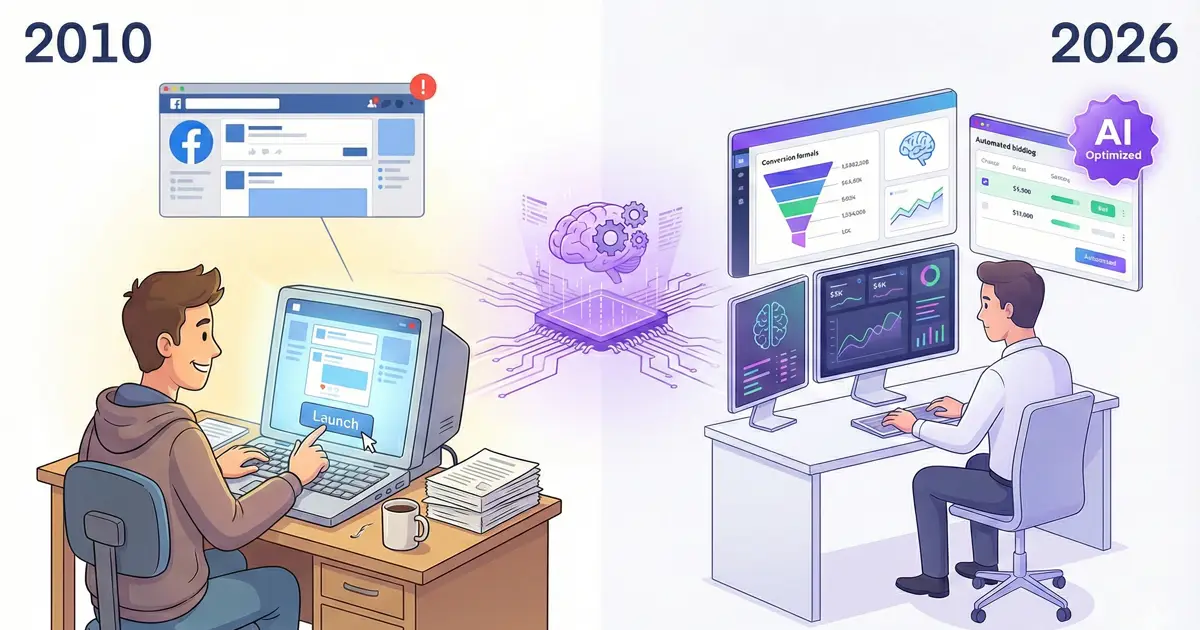
The evolution history of Meta Ads

Anyone who has been in Social Media Marketing long enough remembers the good old days of the 2010s. We used to put 10 dollars on a less-than-average ad and watch it fly and think to ourselves wow, I really know what I am doing, when in reality most of us didn’t know s***. In fact, competition was low and Facebook (now Meta) had all the information in the world on any individual at any time. Yes, you heard that one right, Meta had better targeting 10 years ago.
Backward Technology
Usually, when we think about technology and tracking, it never goes backwards (unless you believe the pyramids were built by aliens, not totally dismissing the theory). Technically, with all the advancements in technology and AI, one would think that targeting is laser focused now. I wish that was the case because my life would be 10x easier, but it is not, so what happened?

Why did targeting become harder in the last couple of years?

If you are not familiar with iOS 14, here is a quick recap. Apple released iOS 14 in 2021, and some would claim it was done to force Meta’s hand into giving up a bigger chunk of ad revenue, but this was never confirmed.
Do Not Opt In
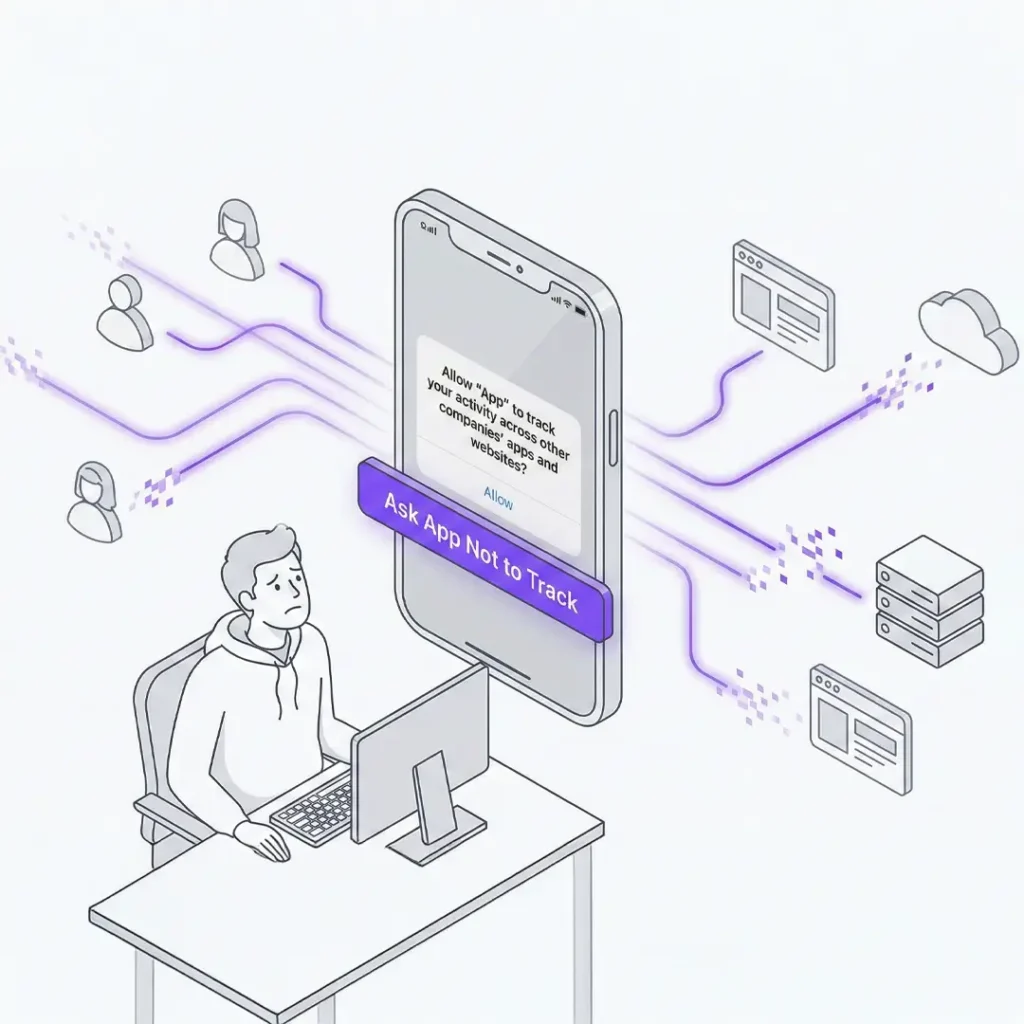
In short, the OS’s main focus was security, giving the user a clear opt out of tracking the minute they fire up their new phone or update their old one. They packaged it in a way that made it really hard to opt in for tracking. This was roughly the message:
Apple's impact on digital marketing when iOS 14 was released with all the privacy features
Allow Meta (or any other app) to track your activity across other companies’ apps and websites?

Meta’s Advertising Module Blow

As expected, the result was devastating for Meta, a behemoth advertising company built around interruptive marketing. Knowing what the user might be interested in, whether in market, actively searching, even knowing what the user might want to purchase before the user actually knew. With half the population carrying iPhones, Meta ads efficiency tanked almost by 40% and in some businesses, much more than that.

Interruptive vs. Intent Marketing

Unlike Google, where 90 percent of their ad revenue comes from search which essentially can work without tracking – not that you should – but it is fundamentally different. If your ads show up when users are actively searching for them, you are less likely to be affected by this privacy update, nor will the ad blockers. Many claimed it would be the final nail in the coffin for Facebook ads. Compare it to Google, which was effective regardless, because you are essentially looking for something, a product or a service. They were there with open arms or in this case… tailored ads. But even Google upped their game with server-side tracking and enhanced conversions. Because even with intent, they still need to know what is going on to decide whether the user is a proper buyer or a random window searcher.

Facebook Ads are dead… Or so they thought.

If technology moves fast, it is now moving at lightning speed, especially in the last two years. Meta has since moved on from the 2021 blow with many tactics for tracking users, with probably the best one being their version of server-side tracking: Conversion API or CAPI in short. This aggregate tracking of users on the server level had a positive effect on Meta’s overall ad performance and got better as time passed. The downside was being too technical to implement for users who do not know about tracking and might need a paid plan to get it to work. On top of that, it still was not as accurate as targeting was pre-2021.
Change is the Only Constant
If there is one constant when it comes to technology or anything in life, it is change, and boy, this next change is going to shape humanity forever.

Generative AI – The biggest invention since the internet

Illustration of a hand with chatGPT tattoo grabing earth as if taking over the world
Enter Generative AI. Since its release to the public in 2022 via OpenAI’s ChatGPT took the world by storm. There were earlier iterations like Copy AI and other average AI startups, but they never caught on like ChatGPT did. It is important to note that the technology was not developed by OpenAI; it has been around for quite some time, sitting in Google’s Deep Mind Labs, but when the cat was out of the bag, all hell broke loose.
Why Should You Care?
You might be thinking, great, a quick trip down memory lane, I have been hearing this AI broken record for the past three years, but why should I care now? So why should you care? And how is this story connected to Meta’s Andromeda update and algorithm? And more importantly, how much of an impact did it have?

Andromeda Unleashed…

Sorry, I had to use this phrase as a title because it sounds like the name of a dragon from HOTD or some pirate ship. It is actually the name of a princess from Greek Mythology, also the Andromeda Galaxy, a spiral one closest to the Milky Way. You decide where Meta got their inspiration, I think it is the latter.
When Did It All Start?
In late 2024 all the way to mid 2025, marketers started noticing a drop in their Meta ads performance. Some more than others, with accounts reporting almost a 60% dip in conversions.

This raised the alarm bells, and everybody was looking for an answer. There was no official announcement about a major update from Meta at the beginning.

They started rolling out the update in stages and testing it out.

Professional Digital Marketers Response

Marketers, being the curious creatures they always are, took to Reddit and other forums to figure out what is going on. A pattern started to emerge and things started making sense.
Campaign Budget Optimization Is Here To Stay
Ad accounts that have a lot of creative and are using Campaign Budget Optimization (CBO) started seeing better results than ones that have stacked audiences, lookalikes, and tighter targeting than a Lebanese parking spot on Hamra Street. Sorry if you are reading this and did not understand the analogy, here is an international one for you, tighter than a pair of jeans after Sunday lunch…

Meta’s Shy Announcement.

Usually, when Meta does something like this they have a big announcement and everyone knows right away. But this was low-key, no major announcement, no big news. Probably they wanted to test it out without attracting much attention since it was unstable to say the least.

The Marketing World Reaction

As soon as the announcement was released, the marketing world went wild, at least for marketers who are up to date and spend a fortune every month on the platform. Some called it the worst thing and others called it the best thing that happened for Meta in the last five years.

Why was Andromeda essential to Meta’s long term survival?

 The reason I brought up Generative AI Content at the beginning is that it was the catalyst that put this into motion.

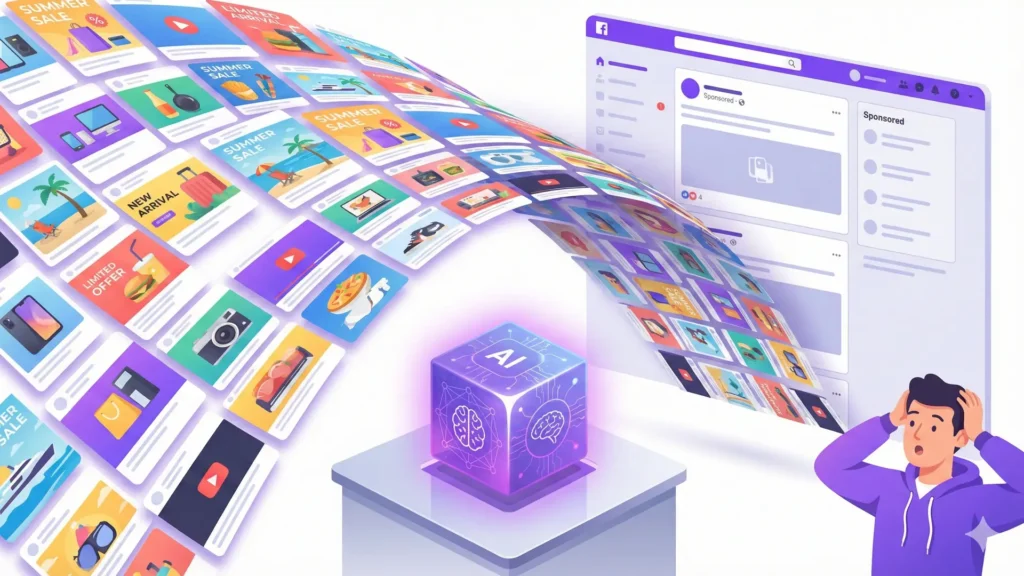
Meta Ads was never designed to handle this volume of ads published every day after AI went mainstream.

The Old Meta Engine

Meta’s old delivery engine could only retrieve a few hundred ads at any given time in an auction and decide on the winning ad. This was enough before AI. All content was created manually and the total number of uploads was manageable. All this changed when everyone suddenly could create and publish content in minutes. For those who used to do it manually, this meant they could 10x their output and test at a pace they never dreamed of.
The Deluge Of AI Ads
This resulted in millions of ads per day, most of them similar and lacking the creativity and depth that manual ads had. Not that you cannot be creative using generative content. The sheer number of ads choked the system, causing a lot of scalability issues, inefficient matching, and crowding the pipeline with redundant, irrelevant low quality ads.
A wave of ads going through Meta feed overwhelming the system

The new Meta Engine

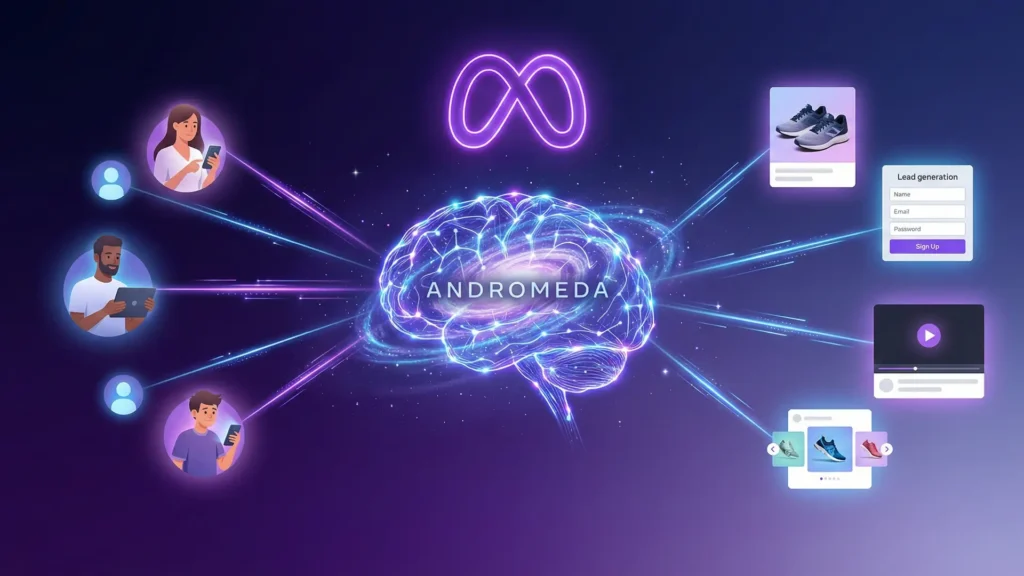
After this update rolled out, the Andromeda low-latency retrieval system completely overhauled the infrastructure. It was able to scan tens of thousands of ads in milliseconds as candidates for each auction. Using artificial intelligence to rank this massive number of ads and serve you the most relevant ad possible according to its context.

Next Gen Targeting

The algorithm no longer needed the marketer to control who sees the ads. Rigid targeting like age, gender, and interest is becoming obsolete. Instead, it matches the user with the most relevant ad based on the context of the ad using highly intelligent AI powered algorithms. It studies real behavior, what people click, watch, buy, or scroll past, and uses this data to predict which ad has the highest chance of engagement from the user right now.

Nuanced Placement Selection

It does not only pick what ad to display, it decides where to place the ad for each individual on the massive Meta ecosystem of placements. Facebook Feed, Instagram Stories, Reels, etc. It factored in the tiny nuances of each person’s preferences. Thinking and adapting on the fly to make sure the ad and the format maximize the chance of a click or conversion.
A super brain with Meta logo in a futuristic neon style dealing with all kinds of ads symbolizing the new update power and adaptability
To top it off, being able to process all this information at the blink of an eye. The system gets smarter, faster, and more precise because it keeps learning, refining, and understanding users from every interaction, resulting in better matching between ads and people.

Audience Based Vs. Moment Based

This transition positioned Meta from being Audience Based to Moment Based. Picking ads in real time using thousands of signals and data points instead of fixed silos of audiences set by marketers. Even with consistent A/B testing, those marketers may or may not know if the audience they are picking is the best audience for this product. As a result, ads became efficient, personalized, and scalable. It is important to hightlight that this did not apply to everyone; some did not work, and are still running their own strategy that they have perfected over the years.

Real Life Applications

So what does all that moment based, low latency, and AI powered algorithms actually translate into in the real world? This is what users or small businesses who really could care less want to know. To be honest, I couldn’t care less either if it was not for the bottom line. In short, understanding this will impact how much money you will be making from your Meta ads. I am a seasoned marketer with years of experience and millions of ad dollars spent on Meta and Google Ads. I will tell you what I saw as an advertiser and as a regular user since I found out that this update existed.

As an Advertiser

I have been running campaigns for a variety of businesses, usually checking every other day to see what is going on and generally speaking changing creative every 1 to 2 weeks. Unlike Google, where some of the campaigns run for 3+ years, with Meta, I rarely keep a them for more than a couple of months, usually capped by frequency. However, there are a couple of campaigns that always have new items being added. They are relatively easy to advertise, and always have some kind of offer that appeals to different avatars.
Redefining The Way I Advertise
Instead of seeing this campaign drop in performance after a while, the more I added ads to it the better it became. This campaign had CBO (Campaign Budget Optimization), whereas the others had budget set at the ad set level. What started as a test to see Ad+ Audience and Placements turned out to be almost my second-best performer. Things really took off when I found out about the update. At least 60% of my campaigns performed better when we started switching to Meta’s recommended practices. Mind you, these are recommendations I have been fighting for years, I hated not being in control of my ads, segmenting everything, hands on every lever. It is exhausting.

As a User

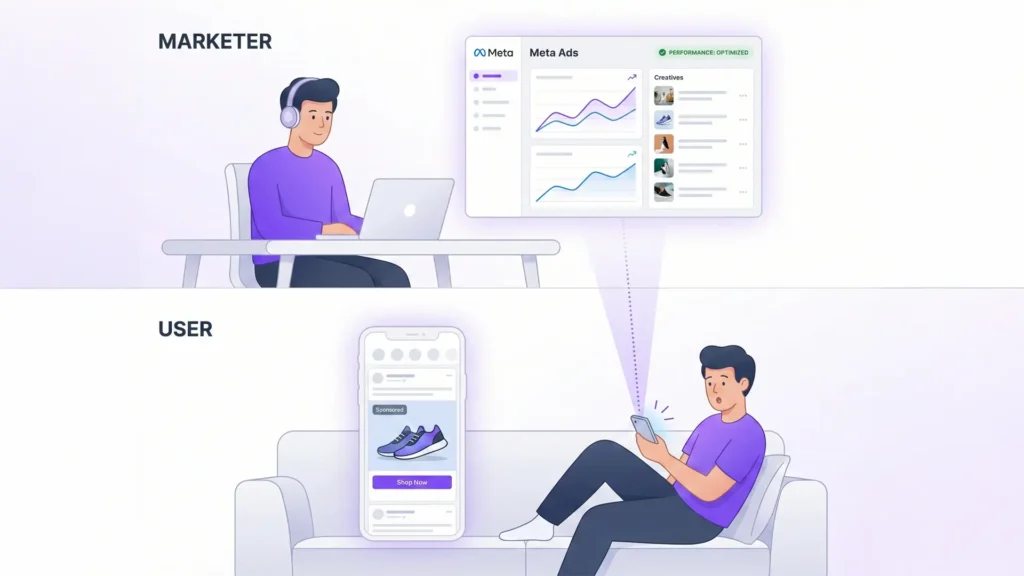
The speed at which I saw an ad for a product I was talking about or looked up was like nothing I ever saw before. This is the definition of “Low Latency”. The speed at which the system decides which ad to show when the user is scrolling is almost nonexistent. This is why it takes seconds from wanting something and looking it up or even without looking it up, simply mentioning it in a conversation, to having it appear in your feed as a sponsored ad. And not just any ad, the best version of this ad tailored to meet the exact way I consume content.

How To Make the Most of This Massive Social Media Update?

 Since this article is not a tutorial about best practices or a how to, I will keep it short and sweet. Believe me you do not need more than this if you are already familiar with Meta’s Ads Manager.

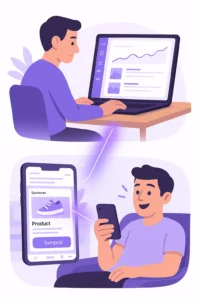
an illustration of 2 users using Social Media to maximise their potential

How Can YOU WIN With Meta's Latest Update?

These are the proven tactics that have consistently worked for me and my clients, even on smaller or less-than-ideal budgets.

Keep in mind that there are a lot of tactics or methods that are still disputed. The below is the approach from start to finish that almost everyone in the marketing world agrees on, or at least does not dispute.

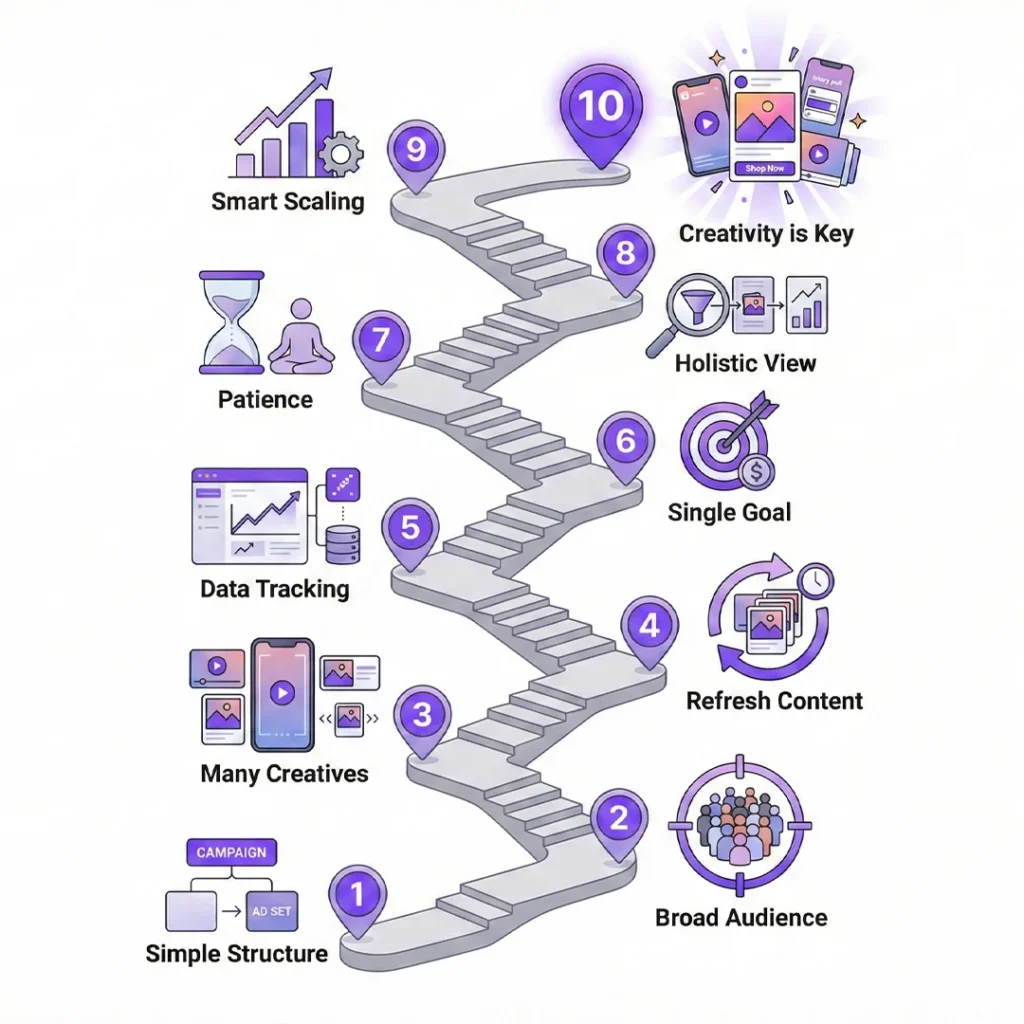
10 things you should do to make the most of Andromeda

Tap a card to flip it. Start at 1 and work your way through to 10 – each one builds on the previous.
1

Keep it simple

One clear goal per campaign and let CBO do the heavy lifting.
1Keep it simple
Use one campaign per goal – Sales, Leads, or Messages – instead of dozens of fragmented campaigns. Turn on Campaign Budget Optimization (CBO) and let Meta decide which ad set and creative gets more budget based on performance. Fewer moving parts = cleaner learning and less stress.
2

Go broad

Stop slicing audiences to death. Let the AI hunt for you.
2Go broad
Avoid hyper-segmentation unless it is legally or practically required. Use wide targeting with just your country/region, language and age range, plus a few smart exclusions (like recent buyers when you want new customers). Keep Advantage+ placements on so the system can test feed, stories, reels and more automatically.
3

Feed the machine

Think in batches of creatives, not 3–6 tiny variations.
3Feed the machine
Andromeda works best when it has lots of different creatives to choose from. Aim for 20+ ads per ad set when budget allows, mixing formats (video, static, carousel, stories) and angles (price, speed, proof, lifestyle, education, offer). Forget the old “3–6 ads only” rule – volume and variety are key now.
4

Keep content fresh

Rotate winners and losers instead of restarting campaigns.
4Keep content fresh
Add new ads every 7–14 days. Watch frequency and performance: if an ad is getting shown a lot and results are dropping, it is time to swap it. Cut clear losers, keep proven winners, and always have a few new ideas entering the mix.
5

Treat data like fuel

The algo is only as smart as the signals you send it.
5Treat data like fuel
Make sure your Pixel and Conversions API are installed correctly and firing on every key action (view, add to cart, purchase, lead, etc.). Use proper deduplication and pass values and customer info where possible. Take it further by connecting your CRM data (qualified leads, deals, repeat buyers). This is the best possible signal Meta can get.
6

One goal per campaign

Don’t keep switching from clicks to leads to purchases.
6One goal per campaign
Pick one conversion goal for each campaign (for example: Purchase, Lead, or Complete Registration) and stick with it. Constantly switching objectives or optimization events keeps the system in a never-ending learning phase and hurts performance. Decide the goal up front based on your funnel, then let Andromeda learn against that signal.
7

Trust the process

Give the system time before you rush in with edits.
7Trust the process
Let campaigns run long enough for the algorithm to collect real data. Avoid panic-editing after 24–48 hours. It is normal for Meta to keep an ad for up to 72 hours before it finds the right people for it. Big edits (budget, audience, objective) reset learning – use them sparingly.
8

Look at performance as a whole

Some ads warm people up so others can close them.
8Look at performance as a whole
Judge results at the campaign level, not by obsessing over every single ad. Some creatives act like an appetizer and others close the deal – both matter to the journey. If an ad has had a fair shot (4–5 days of spend) and still does nothing, it is usually safe to swap it out.
9

Scale smart

Nudge budgets up, don’t slam the gas.
9Scale smart
When a campaign is hitting your target CPA or ROAS, increase budget in small steps – around 10% at a time every few days. Avoid duplicating campaigns just to “reset” things; Andromeda usually carries learnings with it. Keep structure stable and feed more good creatives instead.
10

Keep creating

This is the ultimate decider. Creative is your targeting.
10Keep creating
The more creative diversity you feed Andromeda, the smarter and faster it performs. Your ads do not need huge production budgets – simple videos, clean statics, AI-assisted visuals and even text-only creatives can work if the message is strong. Avoid copy-paste AI slop. Know your audience, speak their language, wrap a clear offer and put your energy into the creative side instead of endless knobs and buttons.

Comparing Before and After Andromeda

The strategy is not unheard of or totally new, some of what is required has been around for a while. 
For the ones that really know how to advertise, they will realize that most of the above are fundamentals.

The only difference is that now Meta is forcing you to do your homework on understanding your audience and avatars.

You need to create content that resonates with them, not content that you think would work or flashy ads that you yourself like.

Here is a quick comparison of what changed, what remained the same and everything in between post and before Andromeda.

Meta Ads: Before vs After Andromeda

Tap each section to compare how Meta ads behaved before Andromeda and how the new engine works today.
1

Engine, audiences & structure

How Meta thinks about who sees your ads

From “I choose the audience” to “I feed the system and it finds the people”.

Aspect Before Andromeda After Andromeda
Main success lever Who you target. Most of the work is choosing interests, lookalikes, ages, genders and exclusions. What you show. Creative becomes the main lever. Meta uses your ads themselves to decide who should see which message.
How Meta decides who sees your ad Basic matching from a small list of ads to a fixed audience you defined. For every impression it scans a huge pool of ads in milliseconds and picks the ad most likely to fit that person in that moment.
Audience strategy Many narrow audiences. Interest stacks, separate lookalikes and lots of exclusions. One broad audience most of the time. Mainly geo and language, plus a few smart exclusions like recent buyers when you want new customers.
Campaign structure Many campaigns and ad sets. Each ad set has its own budget and its own audience. Fewer campaigns. Often one campaign per goal with one broad ad set and Campaign Budget Optimization (CBO) handling budget.
Placements You often pick placements manually and build separate setups for feed, stories, reels and others. Advantage placements on. One system decides where each creative works best across feed, stories, reels, Messenger and more.
2

Creative & optimization

What you actually show and how it improves

This is where most of the leverage is now: ideas, angles, hooks and offers.

Aspect Before Andromeda After Andromeda
Creative volume per ad set 3–6 ads per ad set. Small changes between them. 10–30+ ads per ad set when budget allows. Each ad should feel like a different idea or angle, not just a new color or one word change.
Creative style One or two “hero” ads, usually polished studio work with similar tone. A mix of UGC, studio, reels, stories, static images and carousels. Different tones for different people (price, speed, trust, lifestyle, education, etc.).
Creative testing Classic A/B tests. Change one small thing at a time and test audiences first. Big swings. You test different messages, offers and formats at the same time and let Meta match people to the creative that speaks to them.
Refresh rhythm You change creative mainly when results drop or frequency gets high, often every 4–8 weeks. You plan small refreshes all the time. Every 1–2 weeks you add new ideas and pause the weakest ads. You are always refreshing.
Optimization focus You “fix” campaigns by changing audiences, bids, placements and budgets over and over. You keep the structure simple and stable. You improve results by upgrading offers, landing pages and creative angles instead of over-editing settings.
Your day-to-day work Mostly inside Ads Manager, slicing audiences and moving budget between many ad sets. More time on scripts, hooks, visual ideas and creative briefs. You still watch the numbers, but most effort goes into creative and funnel.
What a “good account” looks like Lots of campaigns and ad sets, strict rules and manual control. “Targeting ninja”. Clean, simple structure, strong tracking and a deep bench of creatives. “Creative and data strategist”.
3

Data, learning & measurement

Signals that guide the engine and how you read success

The cleaner your data, the smarter Andromeda becomes.

Aspect Before Andromeda After Andromeda
Tracking & signals Pixel only for many accounts. Some events missing or not sending value. Pixel plus Conversions API strongly recommended. Events are complete, deduplicated and carry values and user info so Meta can learn who is truly valuable.
Conversion event use Goal often changed mid-flight: clicks, then leads, then sales depending on short-term results. One clear goal per campaign (for example Purchase or Lead). You keep it stable so the system can learn exactly who converts on that event.
How learning works Learning is split across many small ad sets. Big edits and budget moves reset it often. Learning is concentrated inside one broad ad set. You avoid heavy edits and let it stabilize while you adjust creative.
Success metrics Heavy focus on CTR, CPC and surface-level numbers. Focus on real outcomes: cost per lead, cost per purchase, total revenue and overall return on ad spend.
Role of first-party data “Nice to have” for many advertisers. Core input. The more clean data you feed back (sales, lead quality, values), the better Andromeda can find the right people for your ads.

Summary

If you have made it this far, thank you. And in all honesty, I think you have what it takes to create successful campaigns in the new Meta era; otherwise, you would have bounced the second you realized that it is a 12 minute read. To wrap it all up, although the levers you need to pull for success in Meta ads are still the same, the only difference is that some of them simply have a bigger impact than they used to.
Creative is King
Creative was always important, and understanding your audience was and still is at the core of every successful campaign. Asking the right questions and coming up with a detailed strategy for content based on clear personas is the way to go. Advertisers sometimes want shortcuts, taking the easy way by dictating who sees what ad without much thought, research or trial. For some, it worked. For others, it did not, and they blamed Meta.
A ladder showcasing all the steps needed to succeed with meta ads now and in the future
Let’s be honest, there is no magic hack here and no single perfect setup that works for everyone. Andromeda rewards good structure, strong signals and great creative, but it will never fix a weak offer or a broken funnel. What I shared in this article are patterns that work very often, not a guaranteed recipe.
Ads For Big And Small Budgets
Yes, this kind of system shines when you have data and budget, but that does not mean smaller businesses are left out. The logic is proportional. If you are targeting a 20 KM area and spending a few hundred dollars a month, you do not need 200 creatives. Maybe you just need 8 to 12 strong, varied ads that speak to different types of people in your town. Same rules, smaller scale. If you take one thing from all this, let it be this. Creative is your new targeting, consistency beats cleverness. Keep your setup simple, your tracking clean, and your ideas fresh. The algorithm is smart, but it still needs you to give it something worth showing.