The Ultimate Guide to AI Text-to-Speech (2026): Best Tools, Local Models, and APIs

The era of “robotic” voices is officially behind us. In 2026, the gap between human and synthetic speech has not just narrowed it has effectively closed. Whether you are a content creator looking for the most realistic narration, a developer building a real-time voice agent with sub-50ms latency, or a privacy advocate wanting to run high-fidelity models locally on your Mac, the landscape has exploded with options.

This guide cuts through the marketing noise to benchmark the top tools, open-source models, and APIs defining the industry this year.

Quick Summary: Top Picks by Category

If you need an immediate recommendation, here is how the top players stack up in 2026.

CategoryWinnerWhy it Wins
Best for RealismElevenLabs / InworldElevenLabs remains the gold standard for emotional range, but Inworld has taken the #1 spot in recent 2026 benchmarks for pure fidelity.
Best Open-SourceKokoro-82MIncredible efficiency. Runs on consumer hardware with quality that rivals cloud APIs.
Best for EnterpriseAmazon PollyUnbeatable reliability and scaling pricing ($4-$16 per 1M chars) for massive workloads.
Best for LatencyCartesia Sonic 3The speed king. Delivers audio in ~40ms, making it the only viable choice for seamless real-time conversation.

Deep Dive: Top Commercial TTS Tools Reviewed

For those willing to pay for convenience, cloud-based platforms offer the highest quality with zero setup.

ElevenLabs Review: Is it Still King?

Despite rising competition, ElevenLabs remains the market leader for creators. Its “Speech-to-Speech” and emotional control features allow users to direct the performance whispering, shouting, or laughing on command.

  • The Verdict: It is the “Photoshop of Voice.” Expensive for high volume, but essential for premium storytelling.
  • Cost: Subscription-based. High tiers can reach $20 per 1 million characters.

Speechify: The Mobile Productivity Powerhouse

While less focused on “voice cloning” for developers, Speechify dominates the consumer space. It excels at reading existing content PDFs, emails, and articles turning the web into a podcast.

  • Best For: Students and professionals with heavy reading loads.

Murf.ai: Best for Corporate Video

Murf has carved a niche in L&D (Learning and Development). Their studio editor allows you to sync voice perfectly with video frames, making it the superior choice for corporate training modules where timing is everything.

Amazon Polly & Google Cloud: The Cost-Effective Giants

These “hyperscalers” focus on utility over hyper-realism. While they lack the “breathiness” of ElevenLabs, they are incredibly cheap and stable.

  • Cost: Roughly $4 to $16 per 1 million characters.
  • Use Case: IVR systems, reading long news articles, and accessibility features.

The Open-Source Revolution: Running TTS Locally

2026 is the year of “Local AI.” New architectures allow you to generate professional-grade audio on your own hardware, free of cloud costs and privacy concerns.

Why Run Locally?

  • Privacy: Your voice clones and scripts never leave your machine.
  • Cost: $0 monthly fees. You only pay for electricity.
  • Latency: Zero network lag.

Spotlight: Kokoro-82M (High Quality, Low VRAM)

Kokoro-82M is the breakout star of 2026. With only 82 million parameters, it is shockingly lightweight.

  • Hardware Req: It runs comfortably on a standard NVIDIA GPU or even Apple Silicon (M1/M2/M3) via MPS acceleration.
  • Performance: It delivers “neural” quality (breathing, pausing) without the heavy compute tax of larger models.

Spotlight: Fish Speech (Multilingual & Expressive)

If you need to clone voices across languages, Fish Speech (V1.5) is the go-to open-source model. It handles code-switching (e.g., speaking Spanglish) better than most paid APIs.

Spotlight: Qwen3-TTS (Voice Design)

Qwen3 introduces “Instructable TTS.” Instead of just tweaking sliders, you can prompt the model with natural language:

“Speak this sentence with a sarcastic, skeptical tone, accelerating slightly at the end.”


Technical Guide: Architecture & Latency

For developers building the next generation of AI apps, understanding the stack is crucial.

Understanding Neural Vocoders

Modern TTS isn’t just stitching sounds (concatenative). It uses Neural Vocoders generative models (often GANs or Flow Matching) that predict the audio waveform from scratch. This is why 2026 models sound human; they are “hallucinating” the speech patterns rather than retrieving them.

Latency Benchmarks: Who is Sub-100ms?

For a voice agent to feel “human,” the Time-to-First-Audio (TTFA) must be under 300ms.

  • Cartesia Sonic 3: ~40ms (Instant).
  • Speechmatics: ~80-100ms.
  • OpenAI Realtime API: ~250ms.
  • Standard HTTP APIs: 500ms+.

Hardware Benchmarking for Local Models

How fast can you generate on your machine?

  • NVIDIA RTX 4090: Real-time factor of 0.05x (Generates 1 minute of audio in 3 seconds).
  • Apple M3 Max: Real-time factor of 0.1x.
  • CPU Only: Real-time factor of 0.8x (Barely faster than speaking).

Pricing Analysis: Hidden Costs & Value

When budgeting for TTS, look beyond the headline price.

Subscription vs. Pay-Per-Character:

  • Subscription (e.g., Murf): Good for predictable monthly usage.
  • Pay-as-you-go (e.g., Amazon): Essential for apps with spiky traffic.

The Hidden Integration Costs:

  • Latency Tax: Cheaper models often have higher latency, forcing you to pay for expensive “Turbo” tiers if you need speed.
  • Commercial Rights: Many “Free” tiers (even on ElevenLabs) require attribution or forbid commercial use. Always check the license.

Real-Time Conversational AI

The boundary between LLMs (like GPT-5) and TTS is blurring. New “Speech-to-Speech” models process audio natively without converting it to text first, capturing laughs, sighs, and interruptions naturally.

Voice Cloning Ethics

With great power comes great responsibility.

  • Watermarking: In 2026, invisible audio watermarks are becoming standard to identify deepfakes.
  • Consent: Platforms are implementing strict “Voice Captchas” requiring the original speaker to verify their identity before a clone can be created.

Frequently Asked Questions (FAQ)

Q: What is the most realistic AI text-to-speech tool in 2026?

A: ElevenLabs is widely considered the industry benchmark for realism and emotional range. However, newer models like Inworld TTS and the open-source Fish Speech are rapidly closing the gap, with Inworld ranking #1 in some 2026 benchmarks for pure audio fidelity.

Q: Can I run high-quality text-to-speech locally for free?
A: Yes. Models like Kokoro-82M, Fish Speech (S1-mini), and Piper TTS allow you to generate professional-grade audio locally. Kokoro-82M is particularly noted for being lightweight while delivering quality comparable to cloud models.

Q: Which TTS API has the lowest latency for voice agents?
A: Cartesia Sonic 3 is currently the fastest, boasting a time-to-first-audio (TTFA) of roughly 40ms. Other low-latency contenders include Inworld TTS (sub-200ms) and specialized streaming models from Speechmatics.

Q: Is it legal to use AI-generated voices for commercial projects?
A: It depends on the plan. Most paid subscriptions (e.g., ElevenLabs Creator, Murf Pro) grant commercial rights. Free tiers often restrict usage to personal projects. Always verify the license, especially for open-source models like Qwen3-TTS (Apache 2.0).

Q: How much does enterprise-grade text-to-speech cost?
A: “Hyperscalers” like Amazon Polly charge roughly $4 to $16 per 1 million characters. Premium “expressive” providers like ElevenLabs can cost up to $200+ per 1 million characters.

Q: Can AI text-to-speech models clone my voice?
A: Yes. Tools like ElevenLabs, Qwen3-TTS, and OpenVoice allow for “voice cloning” using just a few seconds of reference audio. Quality improves with longer samples.

Q: What is the difference between Neural TTS and standard TTS?
A: Standard TTS stitches together pre-recorded sound snippets (robotic). Neural TTS uses deep learning to generate audio waveforms from scratch, resulting in natural prosody, breathing, and intonation.

Q: Are there open-source TTS models that support multiple languages?
A: Yes. Fish Speech V1.5 and Qwen3-TTS are leading open-source models that support multiple languages (English, Chinese, Japanese, German, etc.) with high accuracy.

Navigating the AI Revolution: Your Comprehensive Guide to the Best Tools & Strategies

Artificial Intelligence is no longer a futuristic concept; it’s a practical, powerful tool reshaping industries.

This guide moves beyond surface-level comparisons to offer in-depth analysis, hands-on experiences, and practical case studies to help you master the AI landscape in chat,image, video, and content .

A dynamic collage of AI-generated art, chat interfaces, and video clips

The Ultimate Guide to AI Tools 2025: Art, Chat, Content & Video

AI image generation has democratized digital art. But true mastery lies in choosing the right tool and understanding the nuance of communication.

 It’s an art form in itself.

 Let’s look at the two dominant platforms from a practical standpoint.

Midjourney vs. Leonardo.Ai: A Hands-On Comparison

My Personal Experience:

After generating thousands of images on both platforms, the distinction is clear.

 Midjourney feels like collaborating with a master painter.

 Its default “aesthetic” is opinionated and stunningly beautiful. 

You guide it, but it brings its own powerful artistic vision.

 Leonardo.Ai, on the other hand, feels like an infinitely versatile workshop. 

It gives you direct control over every element, from training your own models on specific styles to using fine-grained tools like ControlNet for precise composition.

Midjourney vs. Leonardo.Ai

  • Midjourney operates with an “art director” philosophy, prioritizing aesthetic beauty and artistic coherence. It excels at quickly creating stunning, high-end visuals, even if it means deviating slightly from a literal prompt to achieve a more beautiful result.

  • Leonardo.Ai, on the other hand, functions as a powerful “toolkit” model. It gives the user extensive control and customization options. Its key features include a suite of advanced tools like ControlNet and Image Guidance, which allow for precise control over composition, character poses, and consistent styles.

  • The learning curve for Midjourney can be initially steep due to its Discord-based interface. Mastering its unique “language” of prompting takes practice and experimentation.

  • Leonardo.Ai offers a more accessible starting point with its clean web-based UI. However, its deeper features, such as custom model training and ControlNet, introduce a higher skill ceiling for users who want to take full advantage of its capabilities.

  • Midjourney is best suited for artists and designers who need to rapidly generate breathtaking, high-quality artistic images and value speed and beauty above all else.

  • Leonardo.Ai is the ideal choice for commercial artists, game designers, and anyone who requires consistent characters, specific styles, or precise compositional control in their work.

Case Study: A Freelance Designer Expands Her Services

Challenge: A freelance graphic designer wanted to offer custom illustrations for her clients (e.g., blog post headers, social media graphics) but lacked the time to create them from scratch.

Solution: She used Leonardo.Ai to train a custom model on her own artistic style, using 20 of her previous illustrations. 

Now, for new clients, she can generate dozens of on-brand concepts in minutes. 

Using the Image Guidance feature, she can ensure the composition perfectly fits the client’s layout requirements.

Result: She tripled her output for illustration-based projects and was able to take on more clients, significantly increasing her monthly revenue.The AI became her creative assistant, not her replacement.

MidJourney VS Leonardo AI — Same Prompt, Different Results

AI Chatbots: Your New Reasoning Engine

We’ve moved beyond simple Q&A. Today’s top models are multi-modal reasoning engines. The choice between ChatGPT-4o and Gemini often comes down to ecosystem and interaction style.

ChatGPT-4o vs. Google Gemini: The Practical Difference

  • Core Strengths:

    • ChatGPT-4o excels at fluid, real-time, multi-modal interaction. It is designed to feel like a creative and conversational partner, with best-in-class performance for voice conversations and live visual analysis. It also offers a rich ecosystem of custom GPTs.

    • Google Gemini‘s primary strength is its deep integration with the Google ecosystem. It functions as a powerful “logistics engine” that can access and leverage live, real-time data from services like Gmail, Google Maps, Google Flights, and your personal calendar.

  • Practical Use Cases:

    • ChatGPT-4o is ideal for interactive tasks such as live brainstorming sessions, pair programming by sharing your screen, creative writing, and generating ideas on the fly. Its speed and conversational ability make it great for quick, dynamic interactions.

    • Google Gemini is highly effective for tasks that require accessing and managing personal data and web information. This includes planning complex trips (pulling flight info from emails and plotting routes on Maps), summarizing unread emails, managing your schedule, and getting up-to-date answers based on live web searches.

  • Multimodality:

    • Both models are natively multi-modal, meaning they can process and generate content across text, audio, images, and video.

    • ChatGPT-4o‘s multimodality is particularly optimized for rapid, human-like conversations and live analysis, such as looking at something through your camera and providing immediate feedback.

    • Google Gemini‘s multimodality is leveraged to enhance its core strengths, for example, by analyzing uploaded files or images and integrating that information with its Google app connections.

Case Study: An E-commerce Store Reduces Support Tickets by 40%

Challenge: A small online store was overwhelmed with repetitive customer service emails about order status, return policies, and product specifications.

Solution: They used Google’s Dialogflow (powered by Gemini) to build a chatbot for their website. They fed it their entire FAQ page, shipping policy documents, and product catalog. They integrated it with their Shopify store’s API.

Result: The chatbot now handles over 70% of initial customer inquiries. It provides instant order tracking, explains return procedures, and can even recommend products based on customer questions. Support tickets dropped by 40% within two months, freeing up the human team to handle complex issues and improve customer satisfaction.

AI Content: The Scalable Writing Assistant

In-Depth Review of Jasper.ai: Is It Worth It?

Using Jasper is like having a team of junior writers at your command. 

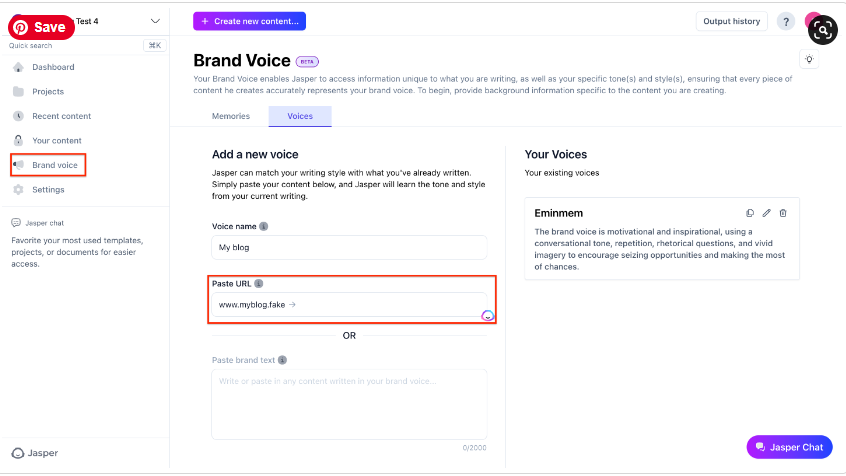
The “Boss Mode” is powerful, but the real value is in the structured templates and the “Brand Voice” feature.

 I was able to upload a company’s style guide and existing blog posts, and Jasper learned to write in that specific tone. 

However, the best results come from a human-AI partnership: Jasper produces the first 80%, and a human editor refines, fact-checks, and adds the final 20% of strategic insight and personality.

Case Study: Marketing Agency Achieves 3x Content Output

Challenge: A B2B marketing agency needed to produce weekly blog posts, social media updates, and ad copy for a new tech client but didn’t have the budget to hire more writers.

Solution: They subscribed to Jasper.ai. They used the “Blog Post” workflow to generate outlines and initial drafts, the “AIDA Framework” template for ad copy, and the “Content Improver” to repurpose blog content for Twitter and LinkedIn.

Result: The agency was able to increase its content output for the client by 300% while maintaining quality. The time saved allowed their senior strategist to focus on high-level planning instead of drafting. The client was thrilled with the increased online presence, and the agency secured a long-term retainer.

A screenshot of the Jasper.ai interface showing the Brand Voice feature

AI Video: The New Frontier of Marketing

Top AI Video Generators: Choosing Your Weapon

The key is to match the tool to the task.

Synthesia or HeyGen are unbeatable for corporate communication.Think training videos or sales outreach where a consistent, professional avatar is key.

For turning a blog post into an engaging social video, InVideo is a workhorse.

For purely creative and cinematic output, tools like RunwayML and Pika Labs are leading the charge, though they are still more experimental.

Case Study: A Real Estate Agent Creates Personalized Tours

Challenge: A real estate agent wanted to send personalized video walkthroughs to potential international buyers but didn’t have time to film a unique video for every inquiry.

Solution: Using Synthesia, she created a template with her own custom AI avatar. The script was 90% the same for each property, but she could easily change the intro to address the potential buyer by name and mention key features they were interested in (“Hi John, as you mentioned you wanted a large backyard, take a look at this…”).

Result: Her engagement rate with potential buyers skyrocketed. The personalized touch of the videos made clients feel valued and led to a 25% increase in qualified leads scheduling virtual meetings.

The AI Agency Blueprint: Proprietary Tech, Industry Standards & Strategy in Lebanon

The conversation around Artificial Intelligence is shifting. It is no longer just about which tools to use (ChatGPT vs. Gemini), but how to integrate them into automated, intelligent systems.

As a specialized AI agency in Lebanon, we believe in transparency. There are tools we have built from scratch because the market didn’t offer them, and there are standards we believe every modern agency must adopt to survive in 2026.
In this guide, strictly from our perspective at Fatcow Digital, I will walk you through our proprietary “Agentic” workflows, and answer the hard strategic questions about pricing and ownership that most agencies avoid.

Diagram showing the integration of various AI systems for agency workflows

Part 1: Proprietary Tech We Built (Our Competitive Edge)

Unlike traditional agencies that rely solely on public tools, we have developed custom software to solve specific bottlenecks for our clients in the Lebanese market.

1. The Automated SEO Content Engine

The Reality: Most agencies just prompt ChatGPT and copy-paste. We realized this wasn’t enough to rank for competitive keywords.

Our Innovation: We developed a custom WordPress Plugin that integrates directly with AI model APIs. This isn’t just about writing text; it is a system that:

  • Analyzes SERPs: It scans the top 10 ranking results on Google for your target keyword.
  • Structures the Data: It understands the headings, word count, and entities used by competitors.
  • Executes: It writes a complete, 100% SEO-compatible article (including H2/H3 tags and images) with a single click.

Diagram illustrating the workflow of the Automated SEO Content Engine

2. The Evolutionary Landing Page Generator

The Reality: Generic templates die hard. Custom design is expensive and slow.

Our Innovation: We used Google Vertex AI to train a “Fine-Tuned Model” specifically on our agency’s data. We fed it our top 50 highest-converting landing pages.

The result? A model that doesn’t guess. It generates landing page copy and layouts that adhere to our proven conversion science, ensuring higher ROI for our clients from day one.

The process of the Evolutionary Landing Page Generator using fine-tuned AI models

Part 2: The Industry Standard (What Any AI Agency Should Do)

Beyond our private tools, there are workflows that represent the “Minimum Standard” for any AI agency in 2026. If your agency isn’t doing this, they are falling behind.

3. The Requirement: Automated Ad Analysis

The Old Way: A human analyst logs in once a week, looks at a dashboard, and sends a PDF report.

The AI Agency Standard: Agencies must now deploy “Observer Agents.” These are scripts that connect directly to the Google Ads API and run 24/7. They shouldn’t just report data; they must analyze it.

Any modern workflow should automatically flag underperforming ad groups and suggest new headlines based on real-time data, not weekly meetings. This is the level of automation businesses in Lebanon should demand.

Workflow of the AI-Powered Google Ads Analyst

4. The Future: Predictive Modeling

Reporting on the past is easy. The true value of an AI agency lies in prediction.
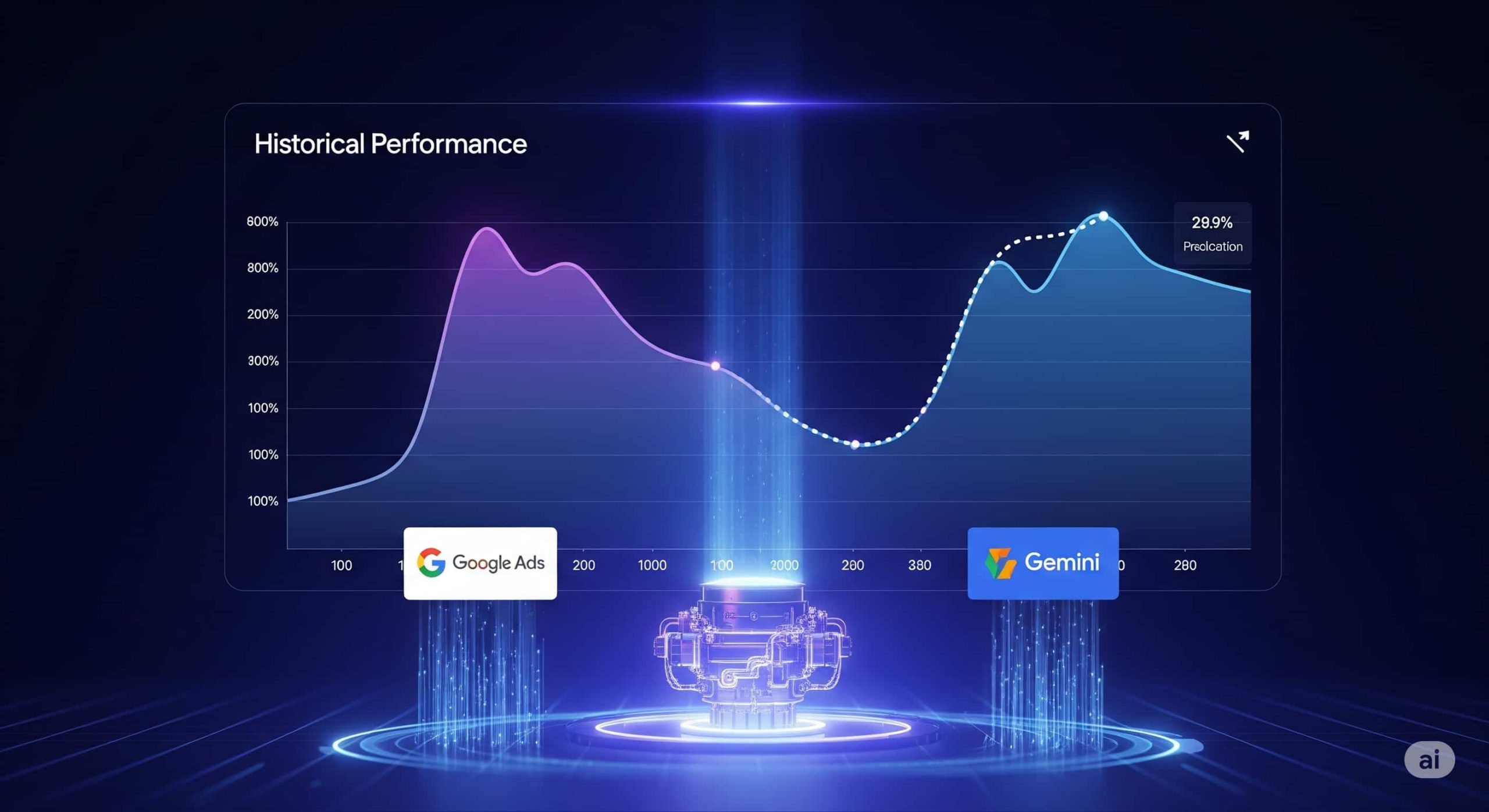
We believe the industry is moving towards Predictive Ads Engines. By combining creative data (from LLMs like Gemini) with performance data, agencies should be helping clients forecast the outcome of a campaign before a single dollar is spent.

Concept diagram for a future Predictive Ads Engine

Part 3: Strategic Decisions for 2026

Many CTOs and marketing directors in Beirut ask us: “Should we build this in-house or hire an agency?” Here is the framework we use to help them decide:

The “Build vs. Buy” Framework

  • Build In-House if: The AI workflow is your core product (e.g., you are a SaaS company) and you have a dedicated engineering team to maintain the API integrations.
  • Hire an AI Agency if: You need immediate implementation without technical debt. As an AI agency in Lebanon, we handle the complex “orchestration” layers (LangChain, API keys, error handling) so you focus on business strategy.

Who Owns the “Digital Brain”? (IP & Ownership)

When an agency builds an AI agent for you, who owns it? At Fatcow Digital, we operate on a clear “Client-First” IP model:

  • Base Framework: We retain the rights to our underlying code infrastructure (the “pipes”).
  • The “Brain”: You own the fine-tuned model weights, the prompt logic, and the specific data sets used to train your agent. If you leave, you take your “Digital Employee” with you.

New Pricing Models

We are moving away from “billable hours.” You shouldn’t pay for how long it takes us, but for the value the system creates. We typically use two models:

  • System Retainer: A flat fee to maintain, update, and improve the AI agents.
  • Performance Share: For ad optimization agents, we often work on a % of the ad spend saved or the revenue generated by the AI’s decisions.

Conclusion: Setting the Bar High

At Fatcow Digital, we don’t just use AI tools; we build them. Whether it is our proprietary SEO Engine or our Fine-Tuned Landing Page models, we are committed to pushing the boundaries of what an AI agency in Lebanon can achieve.

Ready to modernize your marketing with intelligent systems? Reach out to Fatcow Digital today.

GRMC Pest Control

Digital Marketing Uplift for GRMC Pest Control

Digital Marketing client GRMC Pest control's logo

Launching and Streamlining Ad Efforts

Making Lead-gen Work, Even with an Outdated Website

GRMC Pest Control, a trusted UAE-based business with decades of experience, came to Fatcow Digital through the Google Partner Directory looking for a certified team to help with their digital ad campaigns.

Despite an outdated website poorly optimized for conversions, GRMC saw an almost immediate result with our highly targeted Google Ad campaigns.

Fatcow Digital focused campaigns on high-intent service areas like rodent, cockroach, and bedbug control layering ad campaigns with extensions, callouts, and localized targeting. 

Despite having no strong landing page, the campaigns continued to deliver high-quality leads with above-average ROAS, proving Fatcow Digital’s ability to provide qualified leads with precise targeting, impactful ad creatives, and clean copy.

Client:

GRMC Pest Control

Project Type:

Google Ads, SEO, Web Development

Date:

2025-03-31

Address:

Abu Dhabi, UAE

Link:
A pink element of or motif representing Fatcow Digital Branding
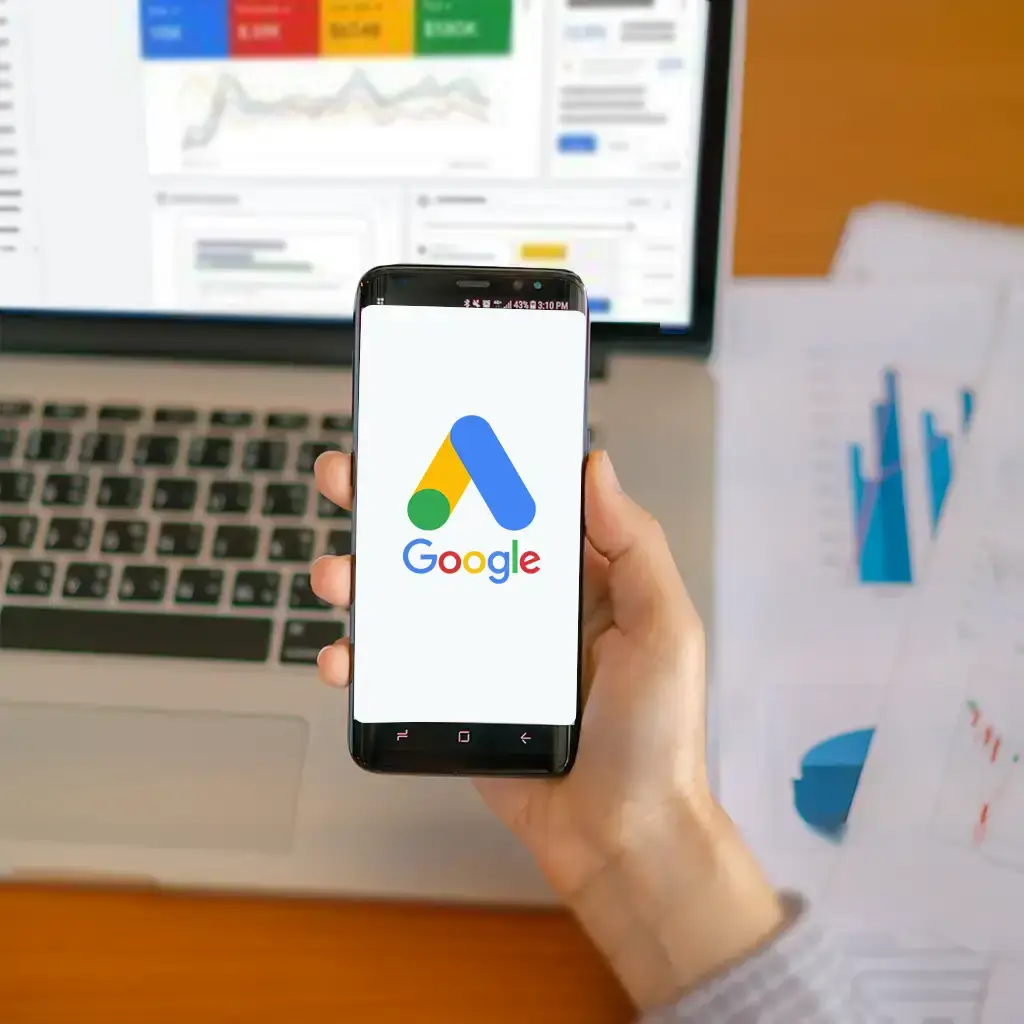
"Person holding a smartphone displaying the Google Ads logo in front of an open laptop showing ad performance dashboards and charts, with printed analytics reports on the desk.

Our Approach & Strategy

Data-Led Campaigns. Human-First Execution.

First, Fatcow Digital ran a comprehensive audit of GRMC’s ad account, data, and campaigns. The next step was rebuilding their keyword structure and drafting all new ad copy to focus on their strongest differentiators: eco-friendly treatments, 24/7 availability, municipality approvals, and a 30-day money-back guarantee.

Our strategy included the following:

  1. Full-service campaign rebuild and restructure across service verticals.
  2. Localized targeting by area, demographic, and property type
  3. Real-time performance monitoring and enhanced conversion tracking
  4. Consistent A/B testing of ad variations across headlines, sitelinks, and callouts for the best CTR

Fatcow Digital also further improved lead quality with tightly themed ad groups for each service and audience segment, including separate campaigns for target locations, like Dubai and Abu Dhabi.

As results rolled in, custom landing pages were built to boost relevance and reduce cost-per-lead even further.

Results And Impact

Performance That Sparked a Full Digital Transformation

GRMC Pest Control saw immediate gains in lead quality, CTRs, and ROI. All this with their old website, and campaign performance continued to exceed expectations. So much so, they decided to partner with Fatcow Digital for a complete website rebuild.

Today, GRMC Pest Control operates with a conversion-focused website built by the Fatcow team with doubled Google Ads effort to support their growth across the UAE.

Results Achieved:

  • 2x increase in qualified leads
  • Lowered cost-per-conversion (despite non-optimized website)
  • Fully redesigned, conversion-focused website
  • Google Ads spend doubled with full-funnel strategy
  • SEO launch in progress for long-term organic growth

Reach out to Fatcow Digital today and give your own business a boost just like GRMC Pest Control.

Click here to explore our entire portfolio

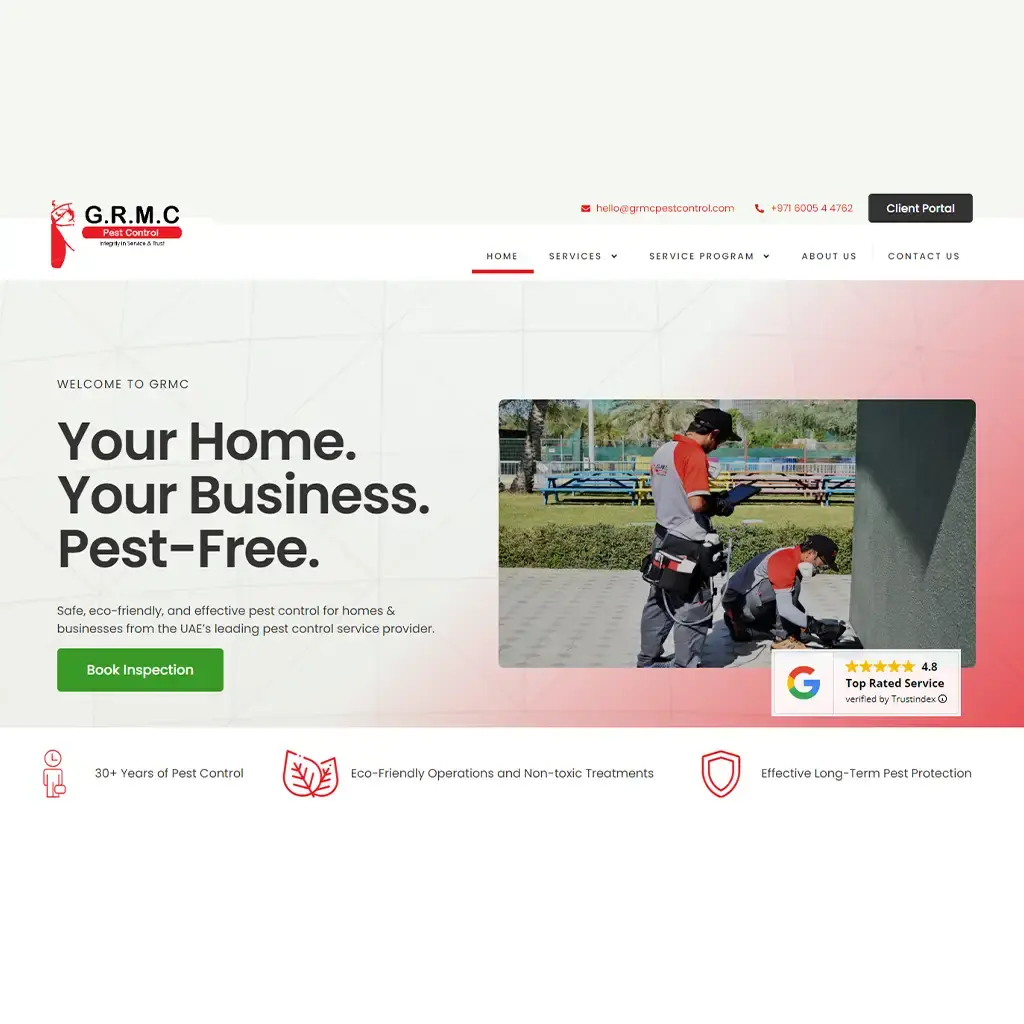
Homepage of GRMC Pest Control’s website showing two technicians performing pest control services outdoors, alongside bold text reading 'Your Home. Your Business. Pest-Free.' and a green 'Book Inspection' button. Includes TrustIndex badge showing a 4.8-star Google rating.

Amy’s Wall

A Beautiful Repaint of
Amy's Wall

A Brand that Outgrew it’s Name

Amy’s Wall had grown past its initial product offering

Amy’s Wall began as a small studio focused on handcrafted wall art. Over time, the brand started offering functional and decorative home accent pieces, like vases, candle holders, and small furniture.

But, while more products were being offered, the branding stayed the same; still stuck to the idea of “wall-only” decor.

Amy’s Wall gave Fatcow Digital a clear goal: Upgrade the brand to reflect the broader vision without forgetting its roots behind.

Clients:

AMY’S WALL

Project Type:

Branding

Date:

2024-11-19

Address:

BEIRUT

Handle:
A pink element of or motif representing Fatcow Digital Branding

Logo Design: Balancing Elegance With a Flexible Design

A Logo That Acts Like Art

Fatcow Digital designed a new logo from scratch.

At the heart of the rebrand is a modular, rectangular logo designed to feel like a piece of art. The logo reflects Amy’s Wall’s mission to help curate expressions of personality in everyday spaces.

The built-in versatility let’s the logo pop wherever it’s displayed. Large displays, packaging, social icons – it is able to keep its artistic presence.

Brand Guidelines: Supporting Growth

Consistency and Creativity, Hand in hand

A color palette was defined to evoke comfort and character was define. Monochrome versions of the logo and rules on when to use them were also explained.

These guidelines let Amy’s Wall stay visually cohesive across mediums and placements.

Hamawi Jewelery

Hamawi Jewelery Marketing Boost

Revitalizing Marketing Strategy for Hamawi Jewelery

Uplifting Their Traditional and Digital Footpring

Hamawi Jewelery partnered with Fatcow Digital to transform its marketing to with the launch of their new direct-to-consumer product line. In alignment with this goal, we worked closely with them to create a new scial image for them, uplift their website to a more modern look and feel, and provided them with the content and guidance needed to support their goals and reach their targets.

Clients:

HAMAWI JEWELERY

Project Type:

Social Media Marketing, Web Development

Date:
2022-11-16
Address:

LEBANON

Link:
A pink element of or motif representing Fatcow Digital Branding

A Digital Media Makeover

Creating Cohesion and Symmetry

When looking at its social presence, Hamawi Jewelery needed more cohesion and symmetry on its socials to exude the luxury and quality of its jewelry products. It also needed more post-cohesion across its platforms to remain consistent with its branding to keep users engaged and its messaging clear.

Additionally, the website uplift led to a better and smoother functioning website that pushed a more modern and luxurious feel to Hamawi Jewelery’s presence while paying tribute to its longstanding history in the jewelry market.

Marketing Strategy Overhaul

Impactful Mixed Media Launch and Consistent Growth

Hamawi Jewelery has seen consistent growth across its socials with a noticeable increase in user engagement across its posts. With a more active social presence including regular static posts, video reels, and static and video stories. Alongside the social efforts, Fatcow Digital was also able to assist Hamawi Jewelery with its launch of traditional marketing campaigns, notably its billboard campaigns for its new direct-to-consumer line of products with striking visuals and clear CTAs for immediate interest-based action.

Moreover, Hamawi Jewelery’s website was given a complete uplift, allowing it to rank higher, load faster, and provide a better user experience for traffic landing on the page.

Results Achieved:

Better brand cohesion across all socials and increased user engagement and account growth.

Increased website traffic and user conversions.

Better brand visibility across traditional and digital media channels.

Follow in Hamawi Jewelery’s footsteps and grow alongside your marketing partner, Fatcow Digital.

Click here to explore our entire portfolio

Influencer Marketing for Small Business in 2025: Your Full Guide​

In this guide to influencer marketing for small business, you’ll learn how to find the right creators, run affordable campaigns, and track ROI for maximum growth.

Introduction

Influencer marketing is one of the fastest-growing digital strategies, valued at $24 billion globally (Statista, 2025). For small businesses, it’s no longer optional it’s essential. Influencers help brands reach audiences authentically and build trust where traditional ads fall short.
In 2025, small businesses that leverage influencer marketing gain an edge in visibility and credibility. It’s a low-cost, high-trust channel that strengthens brand authority and helps even the smallest brands stand out online.

influencer marketing ROI small business

The Strategic Advantage: Why Influencer Marketing Matters

Influencer marketing isn’t just for big corporations it’s a growth catalyst for small businesses. By collaborating with creators who already have their audience’s trust, small brands can amplify reach and conversions affordably.

  • Gain authentic exposure: Go beyond traditional ads by using trusted voices.

  • Build brand awareness: Influencers act as amplifiers for your brand message.

  • Scalable strategy: Works for startups and small local businesses with limited budgets.

Finding Your Tribe: Identifying the Right Influencers

The secret to successful influencer marketing for small businesses lies in choosing the right partners, not the biggest names.

Focus on relevance, engagement, and shared values rather than just follower count.

Micro-Influencers: The Secret Weapon

Micro and nano-influencers often outperform large creators in engagement. They maintain close relationships with their followers, making them ideal for affordable influencer campaigns.

  • Micro and nano influencers have higher engagement rates.

  • They’re cost-effective and perfect for small business influencer marketing.

  • Use tools like Collabstr, Aspire.io, or Upfluence to find creators who match your niche.

Local Influencers: Building Community Trust

Local influencer marketing strategy is a game-changer for small businesses with a physical presence. Local creators can build familiarity and loyalty in your immediate area.

  • Engage influencers in your city or region to reach nearby audiences.

  • Encourage store visits, local awareness, and community-based recommendations.

Vetting Influencers: Before You Collaborate

Authenticity matters more than numbers. Before partnering, evaluate each influencer’s tone, values, and follower engagement.

  • Look for genuine engagement (comments, shares, saves).

  • Ensure visual and ethical alignment with your brand.

  • Choose influencers who share similar values or causes.

Crafting Impactful Campaigns: Strategy, Budget & Content

A successful influencer marketing strategy for small business starts with clear goals, measurable KPIs, and well-planned budgets.

Defining Goals and Measuring Success

Set goals that align with your marketing funnel brand awareness, traffic, or conversions.

  • Define KPIs like engagement rate, CTR, CPA, or ROAS.

  • Track impressions, reach, and branded search growth.

  • Use UTM links or affiliate codes for precise ROI tracking.

Budgeting for Affordable Influencer Campaigns

Influencer marketing can fit nearly any budget when managed strategically.

  • Use flexible payment models: flat fees, affiliate links, or product exchanges.

  • Match budget to influencer tier (nano, micro, macro).

  • Collaborate on creative ideas that offer mutual value.

Creating Authentic Content

Let influencers create content that feels native to their audience while staying true to your brand message.

    • Use short-form videos (Reels, TikToks) for awareness.

    • Leverage YouTube or blogs for tutorials and deep storytelling.

    • Repurpose influencer content for ads and newsletters.

Legalities and Logistics

Transparency and structure protect your brand and the influencer relationship.

FTC Disclosure Rules

  • Always follow FTC or regional disclosure guidelines for sponsored content.

  • Require hashtags like #ad, #sponsored, or #gifted for transparency.

  • Educate influencers on compliance—it builds credibility.

Contracts and Agreements

  • Always sign an agreement, even for gifted collaborations.

  • Include scope, timeline, content rights, and payment details.

  • Define content review and revision terms before launch.

Measuring ROI & Scaling Your Program

The success of small business influencer marketing lies in measurement. Tracking key performance metrics allows you to see what works and where to improve.

  • Evaluate engagement, traffic, and conversions.

  • Repurpose influencer-generated content across paid ads.

  • Expand partnerships with high-performing creators.

FAQ

Yes.

With strong ROI and low entry costs, it’s one of the most effective ways for small businesses to grow visibility and trust.


Micro-influencers charge between $100–$500 per post, but many are open to gifted or affiliate-based collaborations.

Micro-influencers: 10k–100k followers, steady engagement.
Nano-influencers: Under 10k followers but extremely loyal, local audiences.

Use influencer discovery platforms like Collabstr or Aspire.io, search niche hashtags on Instagram, and engage with creators already mentioning your products or region.

Ready to Grow with Influencer Marketing?

Start small, stay authentic, and measure everything.

Influencer marketing is the new word-of-mouth for the digital age.

References

Brainery

A Brand That Thinks Differently

Visual Identity for the Future of Learning

For a modern learning academy

Brainery offers flexible, private courses in fields like AI, Forex, and design among others.

Their initial branding was too generic and misaligned with their digital-native learners. It didn’t fit the ambition of a modern learning academy.

Brainery partnered with Fatcow Digital to create a future-forward, meaningful identity to stand out and grow.

Clients:

BRAINERY

Project Type:

Branding, Web Development

Date:

2025-04-31

Address:

BEIRUT

Link:
A pink element of or motif representing Fatcow Digital Branding

Embedding Meaning in Every Letter

A Logo That is Digital Native

Fatcow Digital crafted a modular logo to reflect Brainery’s mission.

Rectangular frames convey open-mindedness and structured growth. The custom-made “A” and “I” nod to AI, tech, and continuous learning. The rounded letterforms also used balanced clarity with approachability.

Guidelines for Clarity, Energy, and Confidence

Consistency and Creativity, Hand in hand

Fatcow Digital chose a bold, vibrant palette to keep branding consistent across print and digital format.

The typefony chosen kept a modern touch that is easy to read.

Iconography and layout rules were also set to ensure Brainery’s values of accessibility, clarity, and progress.

Le Club Pilates

A Brand That Thinks Differently

From Idea to Refined Wellness Brand

Turning a studio idea into a brand

Pilates Club approached Fatcow Digital before they had even opened their doors.

With only a name, a wellness brand was built.

We crafted a unique voice capturing their approach and spoke to their audience.

Fatcow Digital did more than create a simple logo.

Clients:

PILATES CLUB

Project Type:
Date:

2024-10-31

Address:

BEIRUT

Link:
A pink element of or motif representing Fatcow Digital Branding

Building Movement into the Logo

Inspired by movement and balance

Pilates Club’s logo captures the essence of the studio’s exercise.

The “I” was stylized to picture a person mid-Pilates pose on the reformer machine.

Placed within a rectangular frame, the logo communicates alignment and control. The essence of a well-executed Pilates sequence.

The soft, feminine palette of pink and gray is elegant and empowering to define the wellness space of the studio.

Guidelines With Ready-to-Launch Content

Launching with impact

After defining the core identity, the visual style was established.

A month of social content in the newly-defined brand voice was ready to launch.

Modern typography and thoughtful spacing allowed design elements to support a brand that focused on more than fitness.

Wellness, balance, and beauty in motion became the core.

A Simple Guide to Creating a Successful Video Content Strategy

Building a strong video content strategy is essential for brands of all sizes in 2025.

With video dominating online engagement, a thoughtful approach ensures you reach your audience, boost interaction, and drive measurable results.

Here’s a step-by-step guide to crafting a strategy that works.

1. Set Clear Objectives & Know Your Audience

A successful video content strategy starts with clear goals. Decide what you want your videos to achieve: brand awareness, education, lead generation, or direct sales, and tie each goal to measurable KPIs.

For example:

  • Awareness: Impressions, views, watch time, engagement rate

  • Consideration: Comments, clicks to product pages, view-through rate

  • Lead Generation: Form fills, webinar signups

  • Sales: Add-to-cart actions, purchases, conversions

Understand your audience by developing detailed personas using data and segmentation to uncover their needs, pain points, and preferences.

With those personas in hand, build your content calendar around them to maximize relevance and impact.

If your personas like to read, create articles, e-books, and knowledge bases for them to explore on your website or word-heavy carousels for socials.

If they like to watch, prioritize video content for your YouTube channel and plan to go live on other platforms. This keeps them engaged and watching you – whether you’re on or offline.

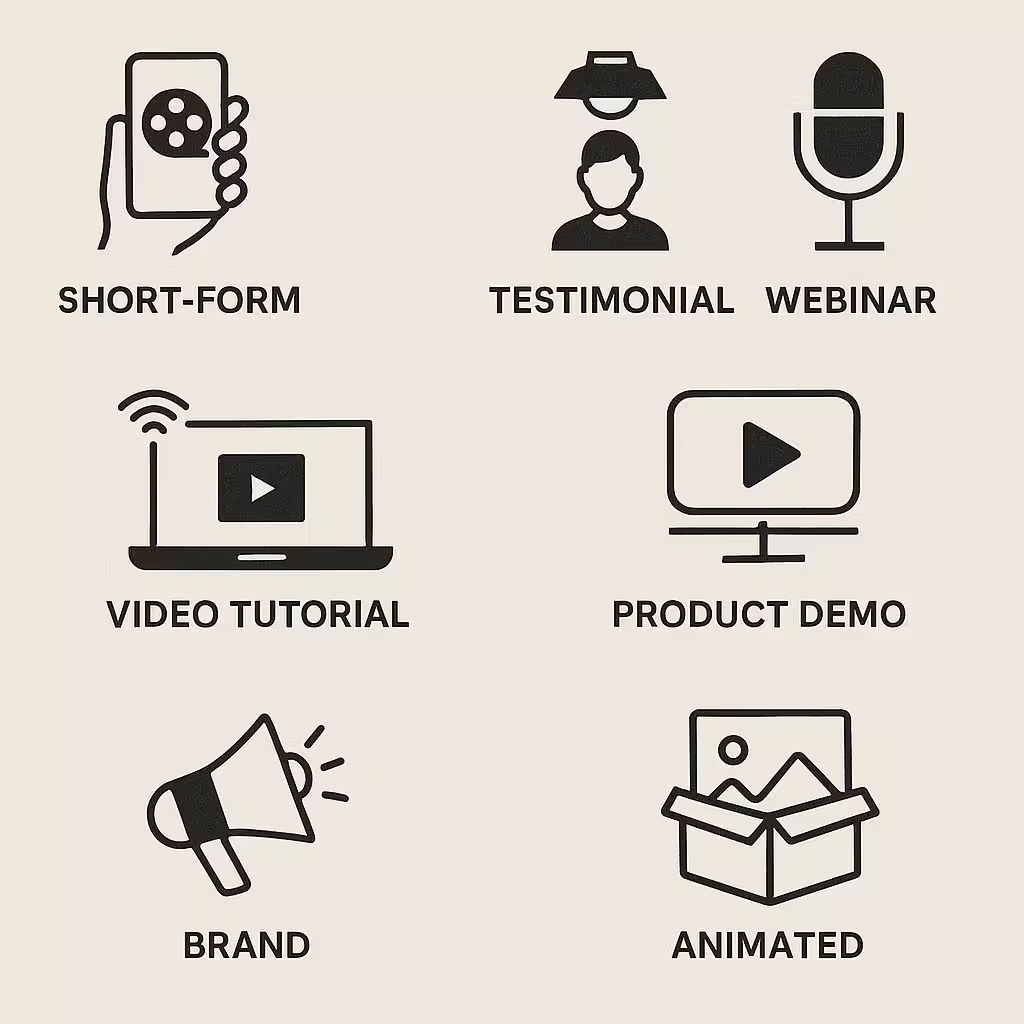
A clean, icon-based infographic. Use a 2x4 or similar grid showing a small, representative icon for each video type mentioned (e.g., a hand holding a phone with a reel for short-form, a spotlight on a person for testimonials, a microphone for webinars).

2. Select the Right Video Types & Formats

Choose video formats that align with your objectives and audience. Common options include:

  • Explainer videos: Clarify your product’s value on homepages or landing pages.

  • Short-form content (Reels, TikTok, Shorts): Capture attention quickly for brand awareness.

  • Product demos: Guide viewers through features mid-funnel.

  • Customer testimonials: Provide social proof and credibility.

  • Behind-the-scenes: Strengthen brand story and trust.

  • User-generated content (UGC): Build authenticity through creator partnerships.

  • Webinars/live streams: Offer deep dives and real-time Q&A.

According to HubSpot’s video marketing report, short-form videos now deliver the highest ROI.
Google’s video SEO guide also provides best practices for optimizing titles, descriptions, and transcripts.
 
Pro tip: Plan vertical (9:16) for social, horizontal (16:9) for site/YouTube.

3. Plan Your Video Content

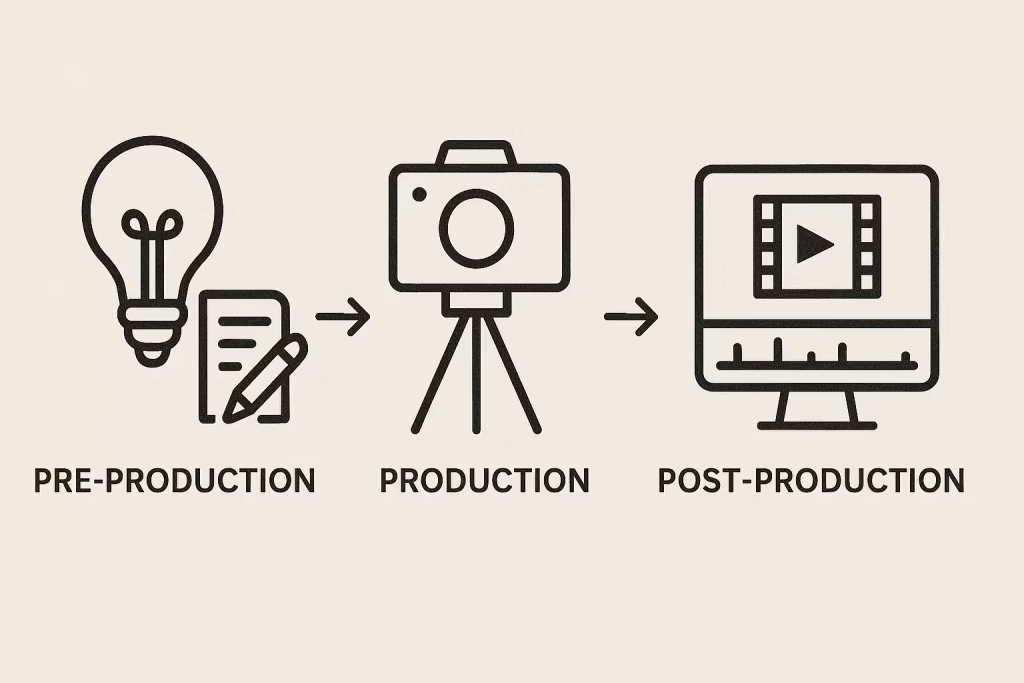
Effective planning bridges strategy and execution. Organize your process into three phases:

Important: If you’re looking to use AI for script writing and content programming, this blog provides valuable insights.

Post-Production

  • Define objectives and KPIs, and secure approvals.

  • Draft scripts and storyboards, ensuring brand elements and clear CTAs are included.

  • Prepare assets: locations, equipment, timelines, and stakeholder roles.

  • Plan for accessibility with captions and readable on-screen text.

Production

  • Focus on proper lighting, framing, and clear audio.

  • Capture B-roll footage for editing flexibility.

  • Record multiple versions of CTAs for testing.

Post-production

  • Edit; add visual effects and color correction.
  • Add closed captions & on-screen text (accessibility + retention).
  • Export platform-specific versions; prepare thumbnails with clear copy.

Free templates (copy/paste)

Creative Brief Goal: | KPI: | Audience: | Pain Points:
Format: (Explainer / Demo / Testimonial / Short) | Key Message:
CTA: 
| Branding: (Logo, Fonts, Colors) | Deliverables: (16:9, 1:1, 9:16) + Captions + Thumbnail
Stakeholders & Approval: | Timeline:

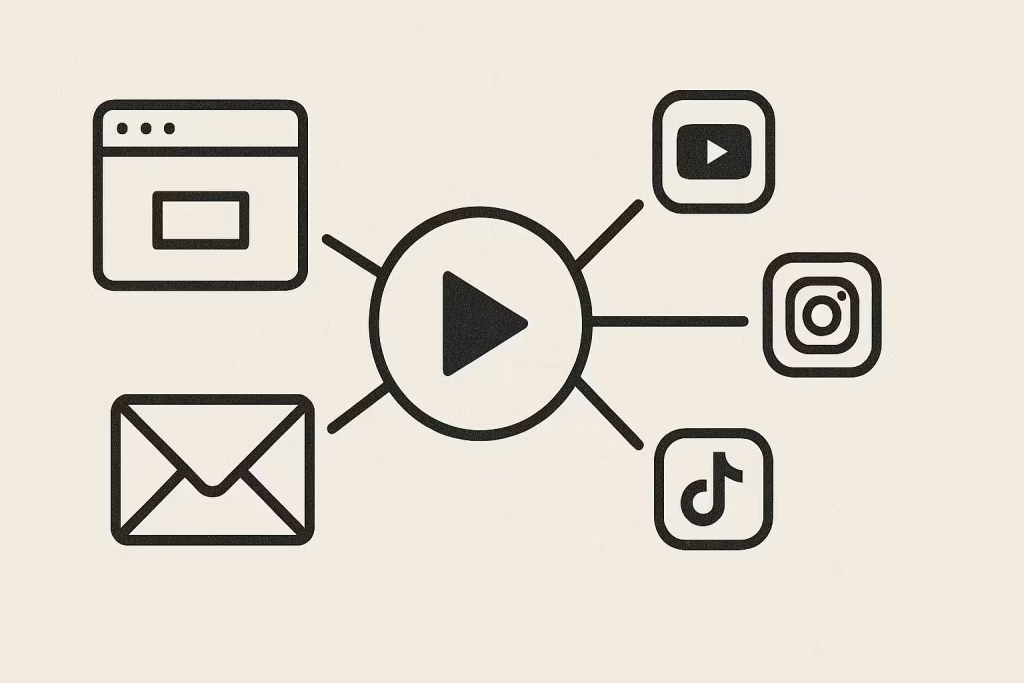
A graphic of a video play button at the center, with spokes radiating outward to icons of different distribution channels: a website browser, an email envelope, and various social media logos (YouTube, Instagram, TikTok, LinkedIn).

4. Distribute & Promote Your Videos

A strong distribution plan ensures your videos reach the right viewers:

  • Owned channels: Website, blog, YouTube, email newsletters.

  • Social media: Instagram, TikTok, Facebook, LinkedIn, X.

  • Collaborations: Work with creators, partners, and customers.

  • Live streams: Host events, Q&As, or product launches then repurpose as clips.

Encourage engagement by pinning comments, adding polls, or asking questions at the end of your videos. Route feedback to your support or CRM systems for follow-up.

Video Marketing Funnel

TOFU

Story-driven shorts; promote webinars.

MOFU

Explainer + testimonials; collect leads.

BOFU

Comparison demos, ROI clips, objection-handling.

5. Integrate Video Across the Marketing Funnel

  • Video content should reinforce your brand story and support each stage of the customer journey:

    • Top of Funnel (TOFU): Story-driven shorts, educational content, and webinar promotions.

    • Middle of Funnel (MOFU): Explainers and testimonials, lead capture forms.

    • Bottom of Funnel (BOFU): Comparison demos, ROI-focused clips, objection-handling videos.


Tip: Track “video-assisted” conversions in analytics to prove influence across the funnel.

A visual representing A/B testing. Show two identical videos side-by-side with different thumbnails or titles. One video has a checkmark over it, and the other has an 'X' to indicate the winning version.

6. Optimize for Engagement & Conversion

  • SEO: Use keywords in titles, descriptions, tags, and transcripts.

  • CTAs: Test placement (mid-video vs. end) and format (on-screen vs. verbal).

  • Creativity: Experiment with thumbnails, hook lines, and pacing.

  • Personalization: Use tailored videos for account-based marketing (ABM).

  • Social proof: Rotate testimonial and case study snippets.

7. Measure Performance & Iterate

Track key metrics to understand what’s working:

  • Views and watch time

  • Engagement rate (likes, comments, shares, saves)

  • Click-through and conversion rates

  • Attribution (connect video analytics with CRM outcomes)

Run A/B tests on hook lines, thumbnails, and CTA placement to continuously improve results. Leverage analytics tools and AI-powered insights for deeper understanding.

8. Leverage Technology & Tools

  • Use AI for scripting, editing, and analytics.

  • Batch metadata, titles, and descriptions for SEO efficiency.

  • Manage assets with cloud-based DAM for versioning and brand safety.

  • Choose enterprise platforms (like Kaltura) for internal sharing and advanced analytics.

  • Prioritize accessibility for broader reach and compliance.

Accessibility = growth: captions, readable on-screen text, contrast-safe branding.

Step-by-Step: From Idea to Publish

  1. Define your goal, KPI, and audience segment.

  2. Pick the right format (explainer, demo, testimonial, short).

  3. Write a script with a strong 5–7 second hook; storyboard visuals.

  4. Record A-roll and B-roll; keep takes concise.

  5. Edit with captions, graphics, and branding; export variants.

  6. Publish and distribute across owned, social, and partner channels.

  7. Measure performance and iterate on thumbnail, hook, and CTA.

Conclusion

A well-structured video content strategy empowers your brand to connect, engage, and convert in a crowded digital landscape. By following these steps, you’ll build a foundation for video marketing success in 2025 and beyond.

Let me know if you’d like any section expanded, more templates, or specific examples!

FAQ